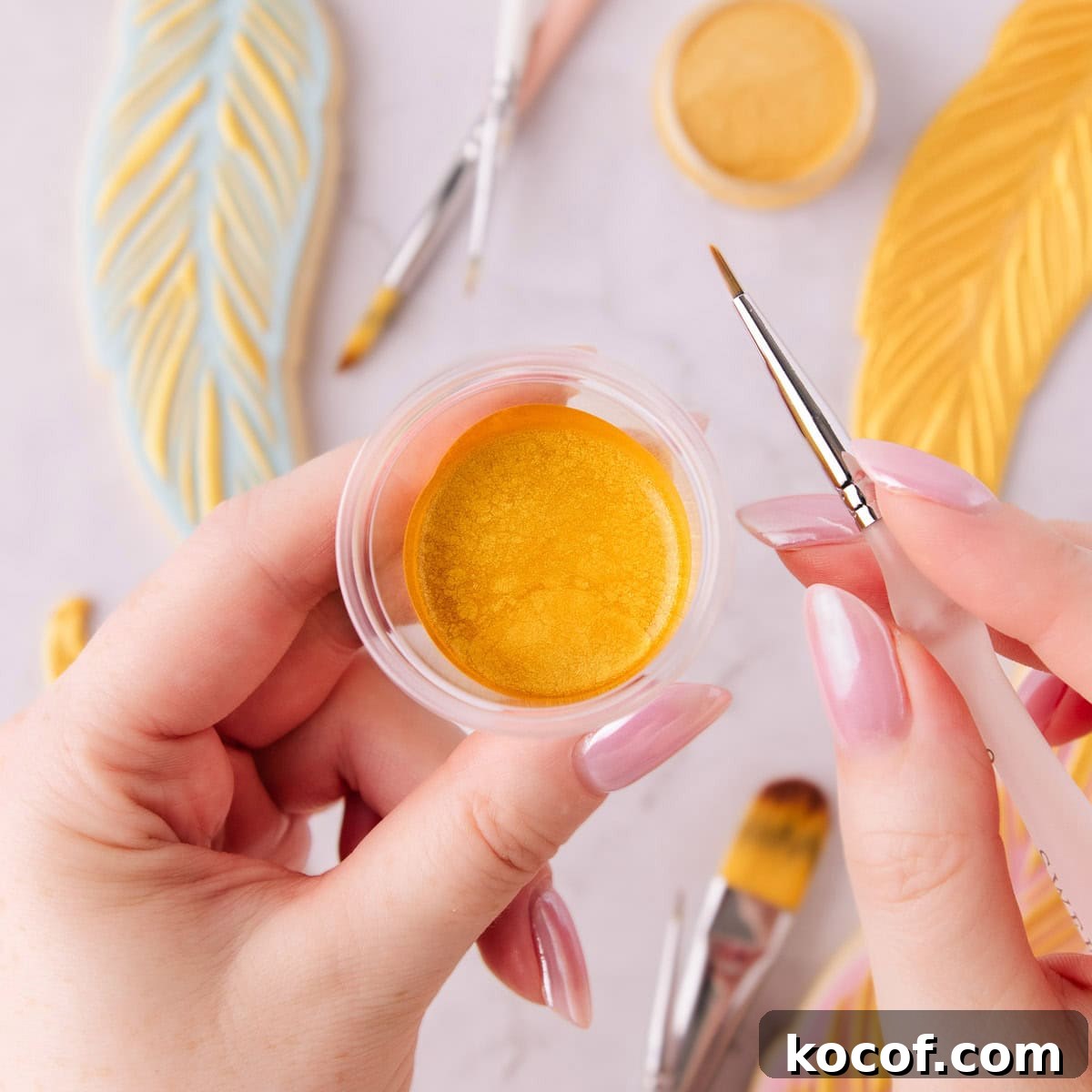
Learn how to make the shiniest edible gold paint for cake and cookie decorating that won’t smudge or rub off. This glaze-based paint can be adapted to any metallic color you need.
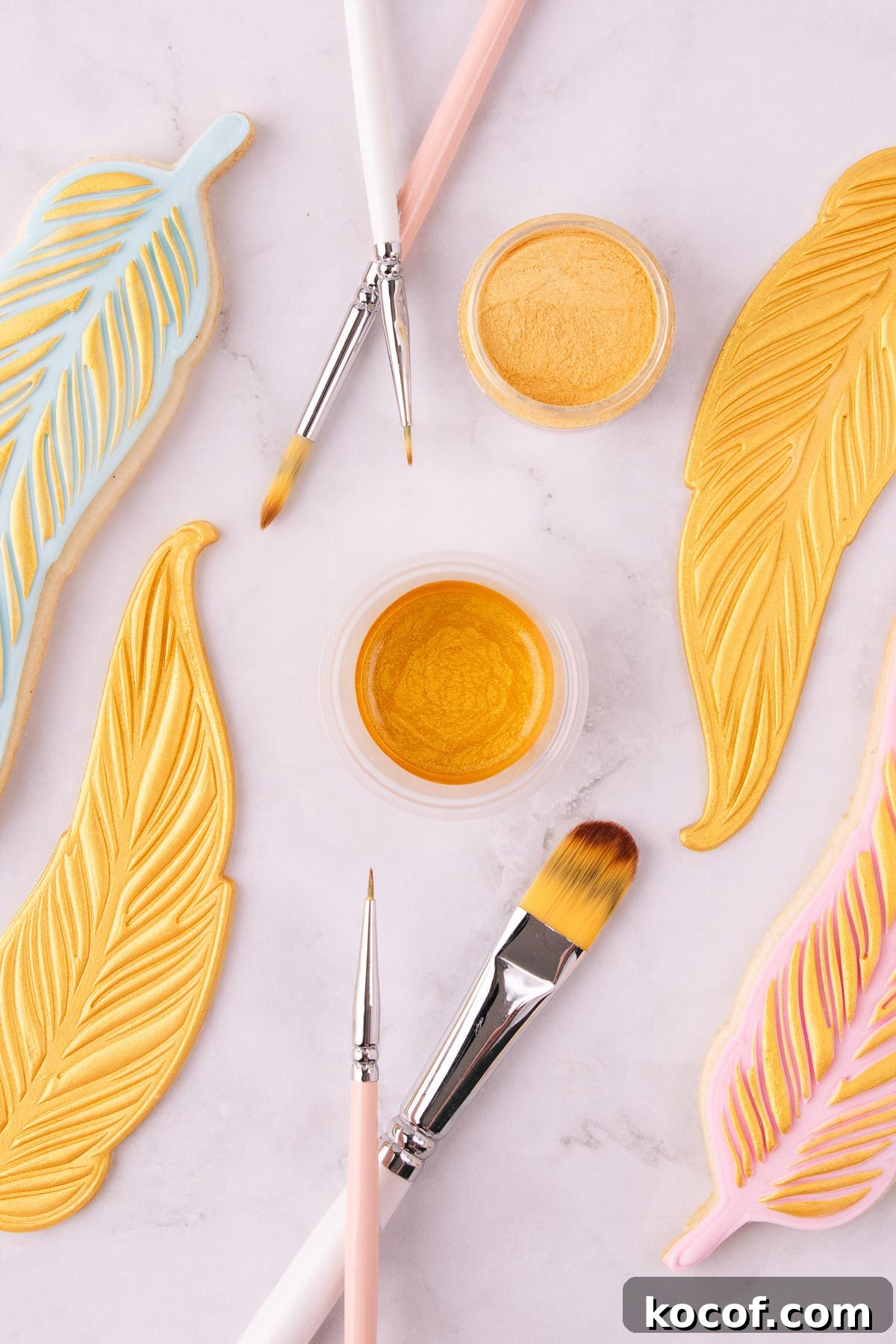
Making brilliant, transfer-proof edible gold paint at home is simple and uses only a few ingredients. The usual method—mixing powdered food color with alcohol—can produce a dusty, smudge-prone finish. By adding one extra ingredient you can create a paint that seals, shines, and resists smudging.
This glaze-based technique works for metallic paints in any shade: swap the gold lustre for other metallic powders or combine powdered colors to get bronze, copper, rose gold or silver.
Why make your own edible metallic paint?
Ready-made edible paints are convenient, but there are reasons to mix your own:
- Higher pigment and opacity — homemade paint lets you control concentration and consistency so you can get a richer, less watery finish.
- Custom shades — mixing powders and lustres allows you to match invitations, decor or other references when premade shades don’t quite fit.
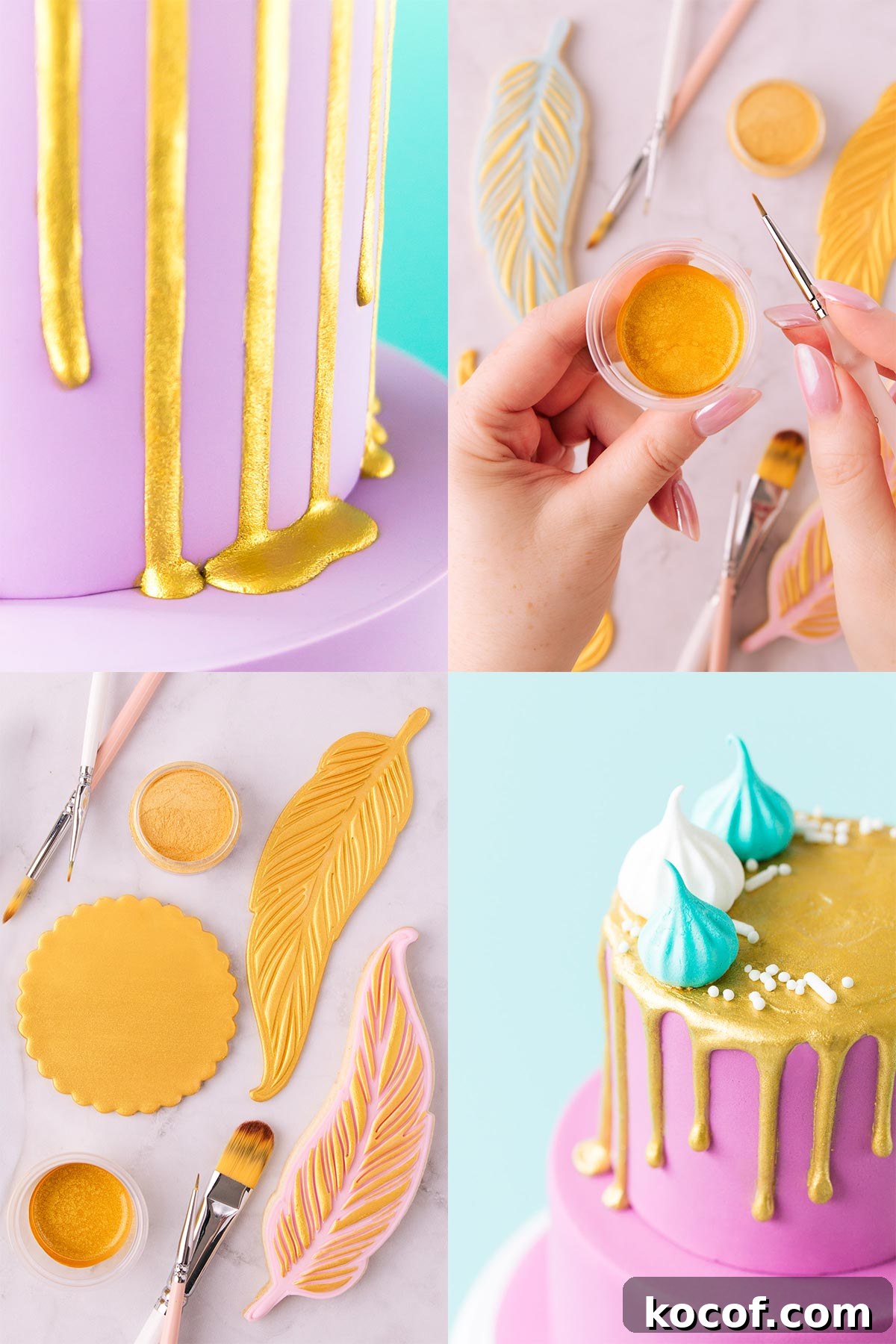
This paint adheres well to many edible surfaces including fondant, ganache, chocolate, modelling chocolate, royal icing and macarons. Before painting a final piece, always test on a spare decoration to check color, opacity and consistency.
Gold Paint Ingredients
Three basic ingredients create the shiniest edible gold paint:
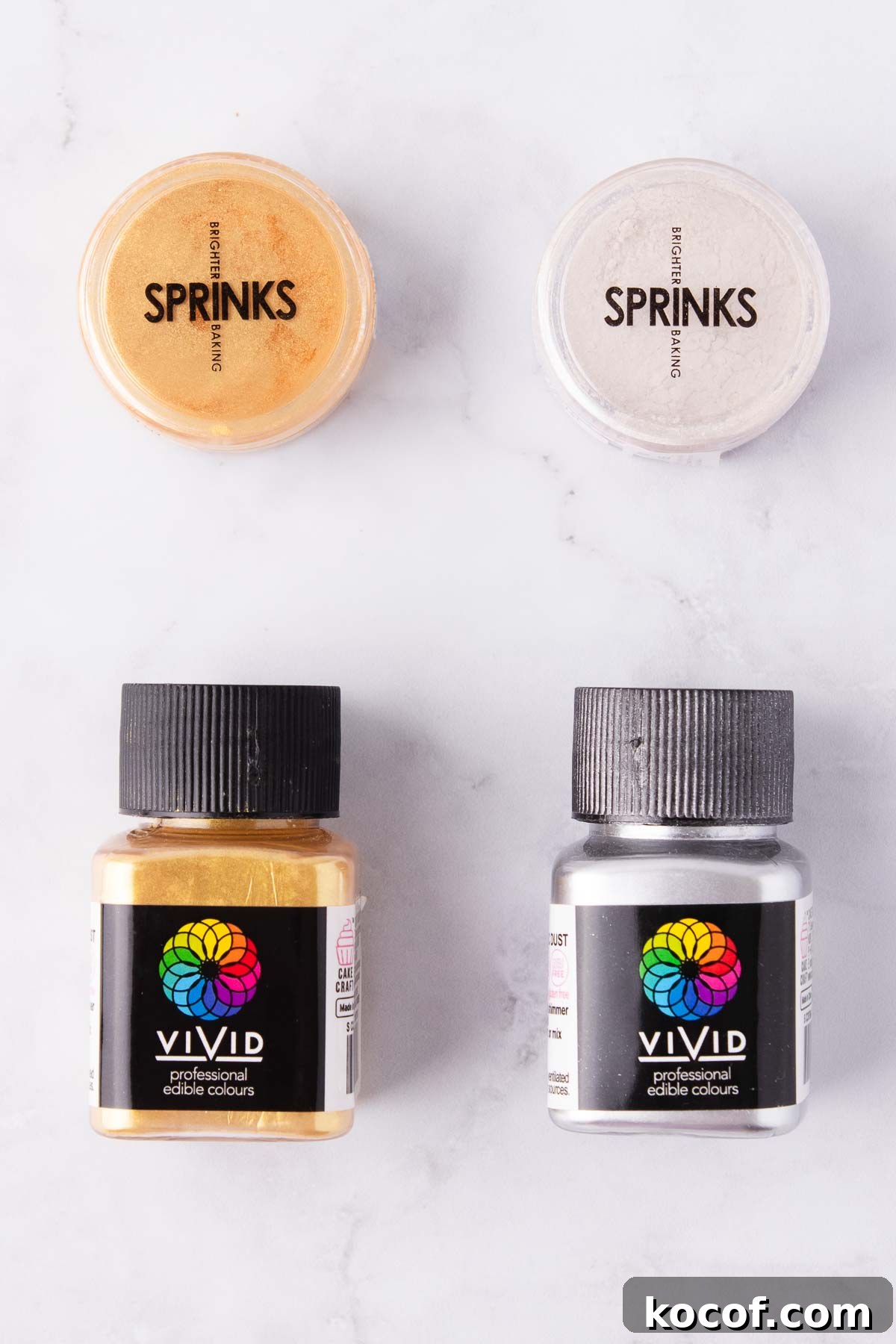
Edible Gold Dust
Choose a metallic lustre powder that is approved as edible in your country. Some products are labeled non-toxic for decorative use only and are not intended to be consumed. If you plan to paint something that will be eaten—fondant, royal icing, cookies—use a lustre dust explicitly classed as edible.
Brands vary in shade and intensity, so try a few to find the hue and coverage you prefer.
Confectioner’s Glaze & High-Proof Alcohol
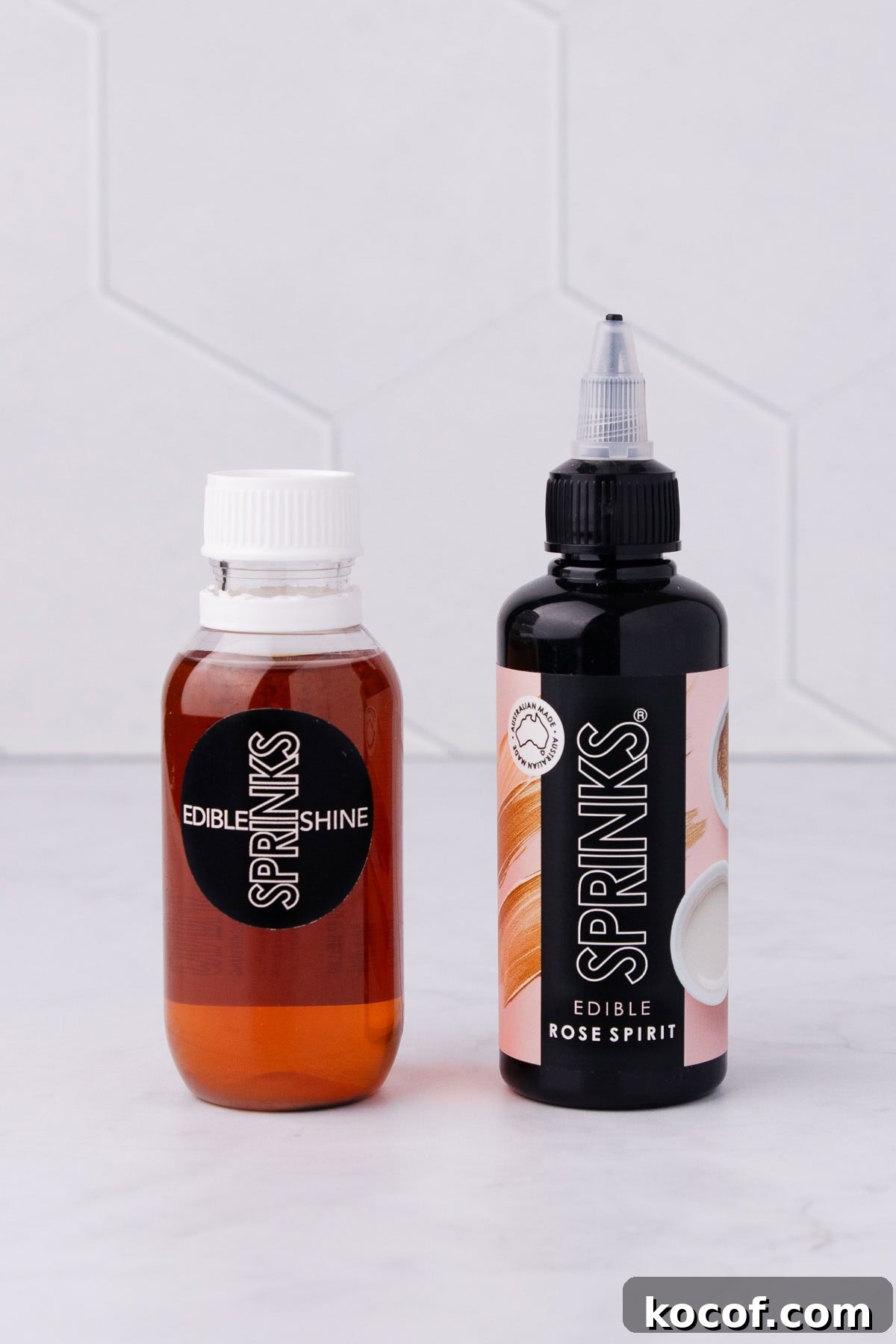
Confectioner’s glaze (edible glaze or food glaze) is the key ingredient that seals the paint and creates that mirror-like shine. It’s commonly used on candies and some pharmaceuticals to form a durable, glossy coating.
Confectioner’s glaze is typically made from food-grade shellac, so it is not vegan and contains alcohol. If you need a vegan or alcohol-free option, choose a water-based edible paint instead.
Because the glaze is alcohol-based, use a high-proof food-safe alcohol—such as cake decorator’s alcohol (rose spirit) or Everclear—to thin the paint and clean brushes. Standard vodka is often too low in alcohol percentage to give the same results.
Optional: Gold Food Colouring

For large painted areas or a gold ganache drip, tint the base (ganache or fondant) with gold gel coloring first. This provides a warm yellow base so your metallic paint needs fewer layers to reach full opacity. If gold gel isn’t available, mix yellow with a touch of brown to warm the tone.
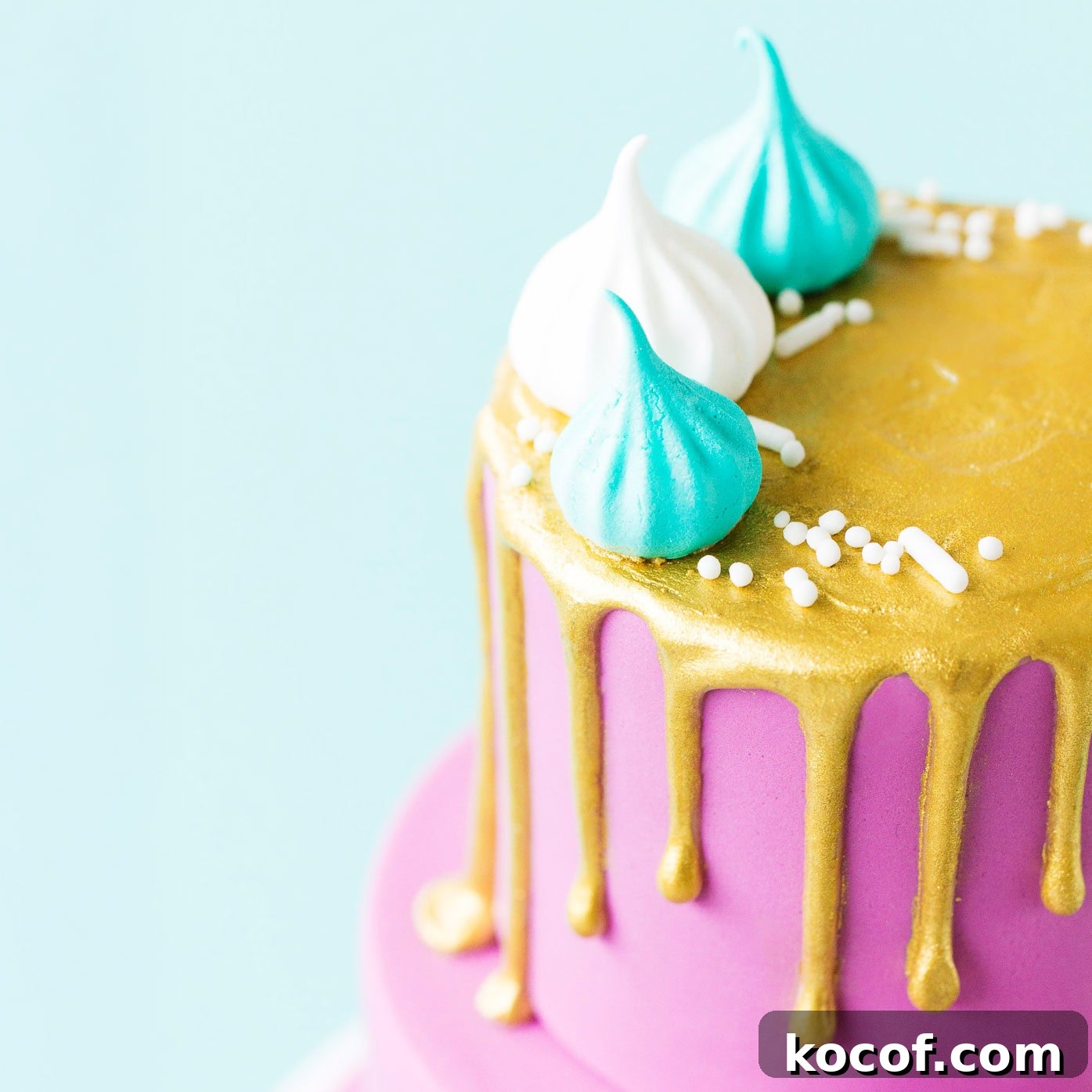
Gold Ganache Drip
To create a gold ganache drip, color the ganache with gold gel (or yellow + a small amount of brown), allow it to set completely, then paint over the set ganache with your edible gold paint for a glossy metallic finish.
Tools and Supplies
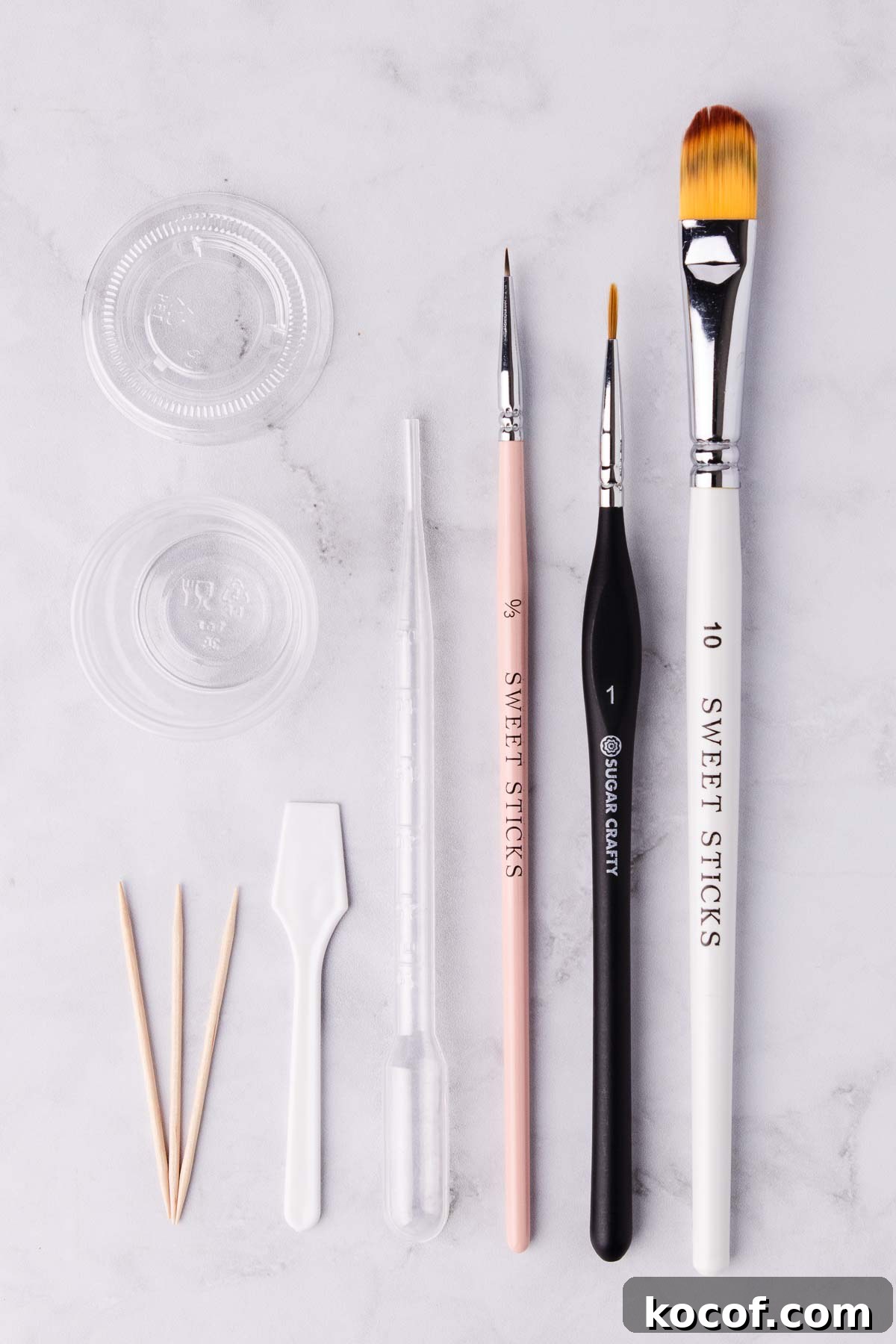
- Paintbrushes – Use quality brushes: fine pointed brushes for details and lettering, and a wide flat brush for larger areas.
- Stirring tools – Toothpicks, flat plastic spoons or ice cream sticks work well to mix paint.
- Droppers/pipettes – Helpful for adding glaze and alcohol a few drops at a time to reach the right consistency.
- Small container with lid – Mix in a lidded pot so you can store unused paint; otherwise use a palette or bottle lid and mix small batches.
How to Make Edible Gold Paint
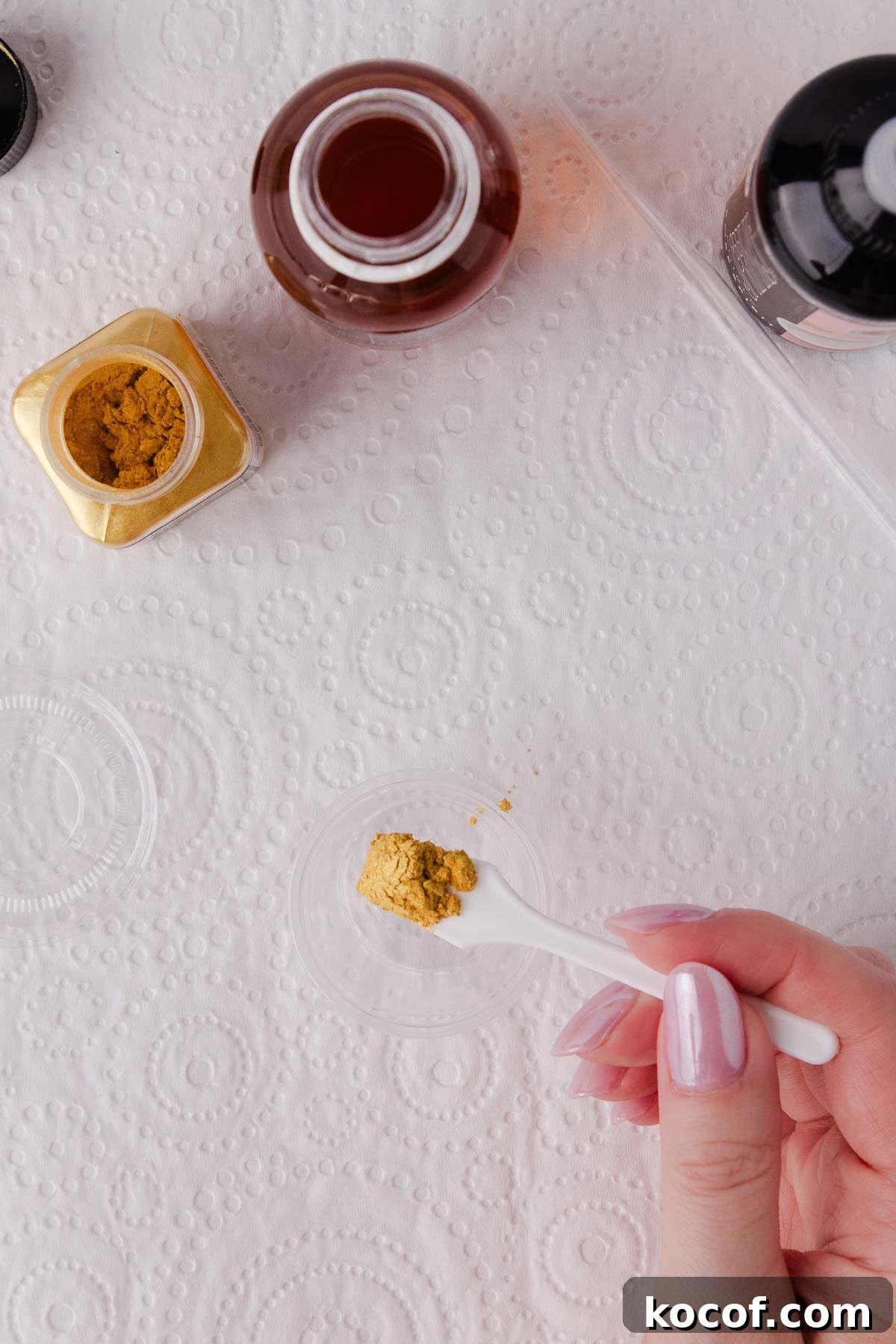
1. Measure the gold lustre powder into a small mixing container. For fine details, start with roughly 1/4 teaspoon; increase the amount for larger areas.
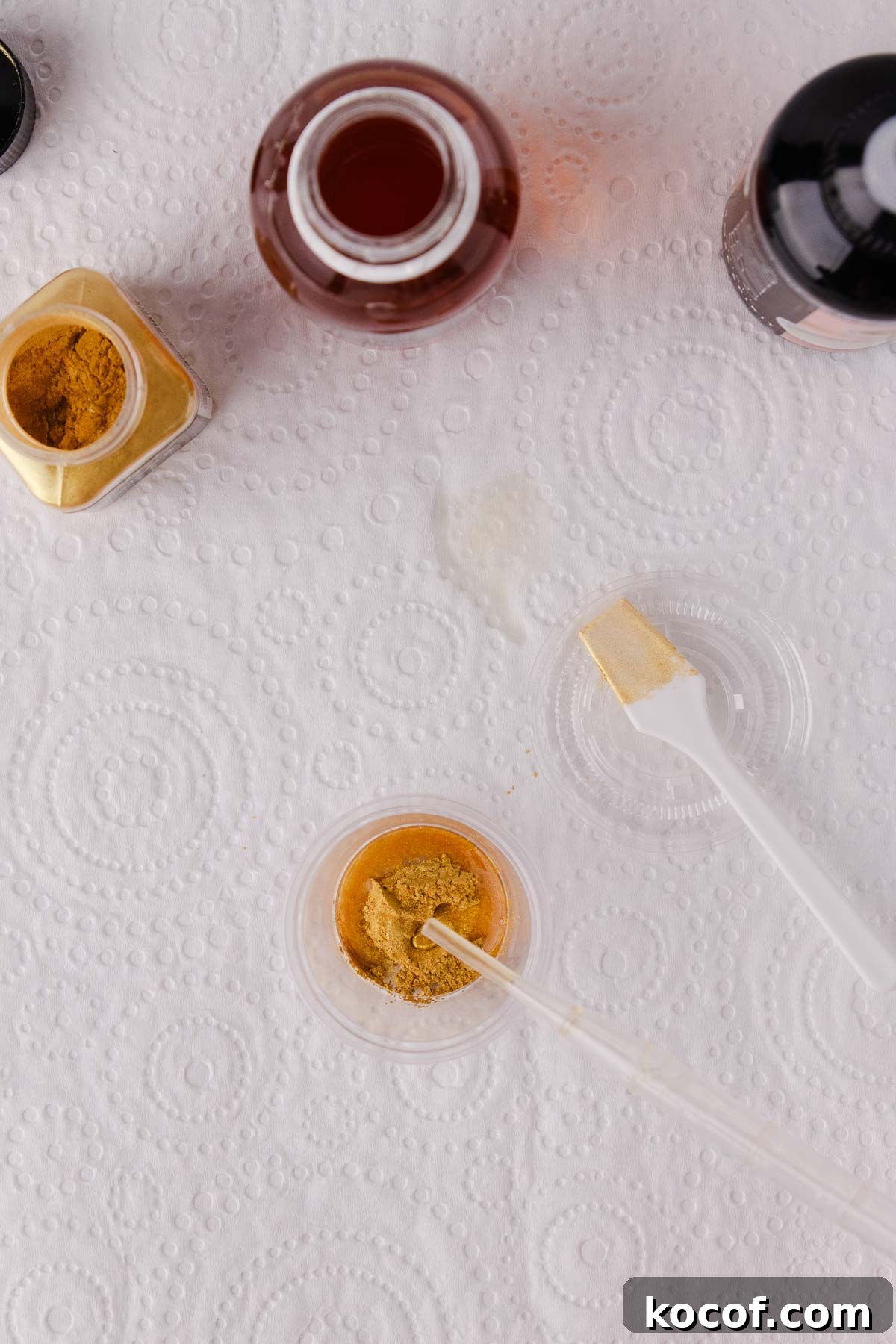
2. Add confectioner’s glaze a few drops at a time. Thicker consistency is best for fine lines and detail work; slightly thinner works better for larger surfaces. If desired, add a tiny amount of gold gel coloring to warm the base.
Always test your mix on a spare piece of fondant or a cookie to check coverage and drying behaviour before painting your final piece.
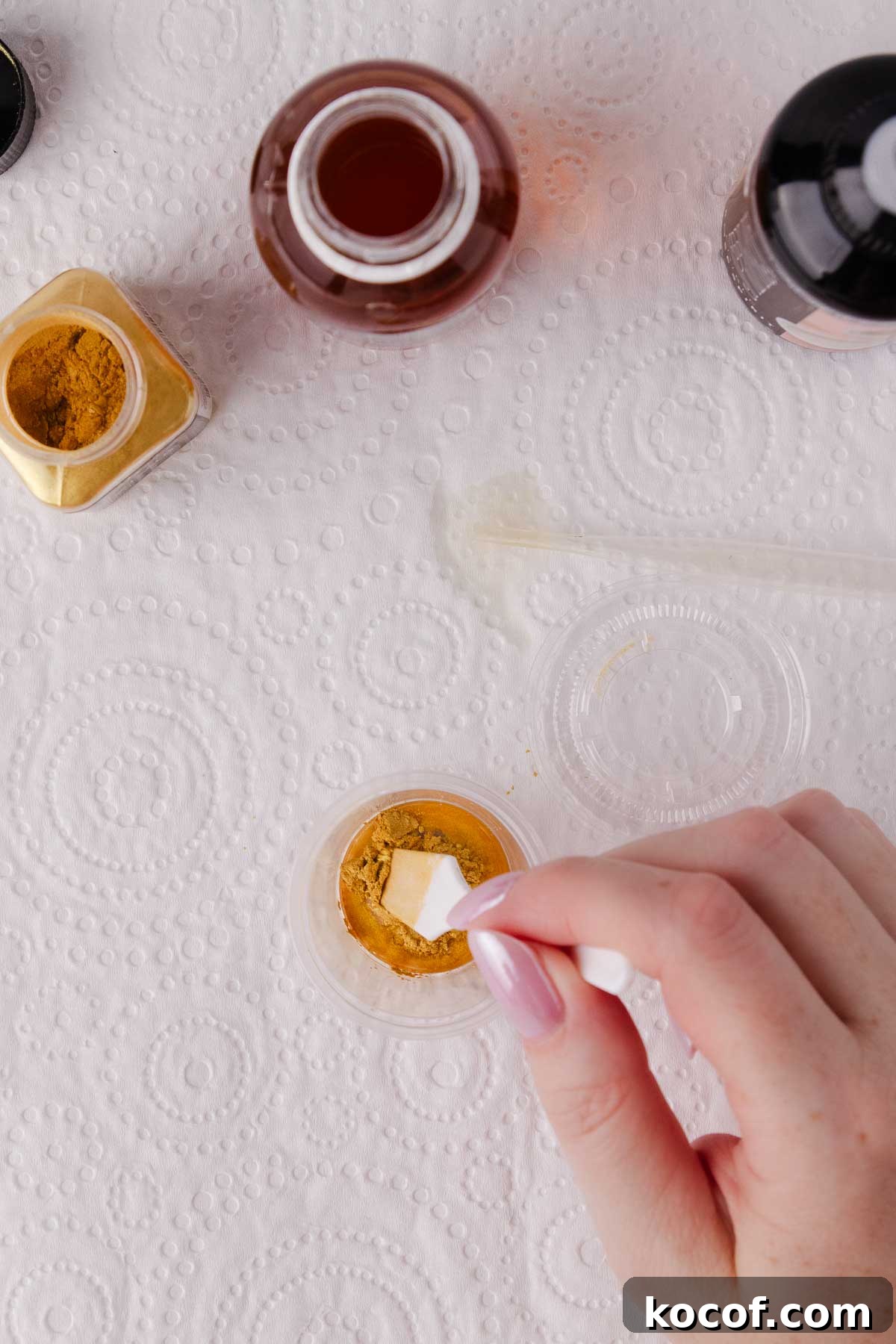
3. Stir gently until the powder and glaze are fully combined. Stir occasionally while painting, as pigments can settle.
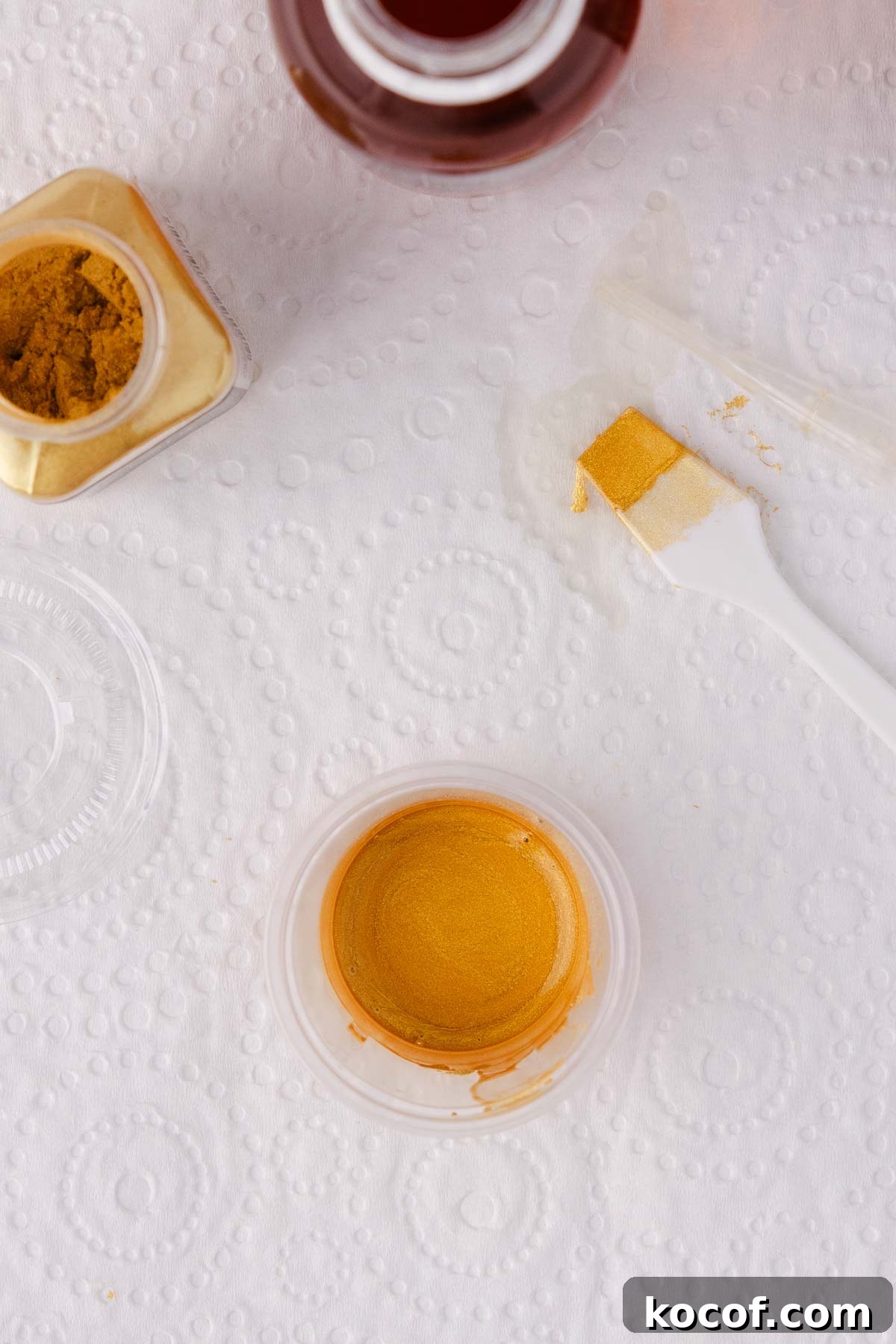
4. Close the lid between uses. If the paint thickens or dries, loosen it with a few drops of glaze or high-proof alcohol until you reach the desired consistency.
Tips for Painting With Metallic Edible Paint
- Stir regularly while painting to keep pigments suspended.
- Adjust consistency by adding glaze or a few drops of alcohol if the paint dries or you want a lighter wash.
- Allow layers to dry fully between coats to avoid lifting or patchiness.
- Clean brushes by swishing them in high-proof alcohol, then washing with warm water and mild detergent. Reshape bristles and let dry flat or upright.
Examples of this technique include gold drips, hand-painted fondant details, stenciled metallic designs and painted cookies—all achieved with the same glaze-based paint, adjusted for scale and coverage.
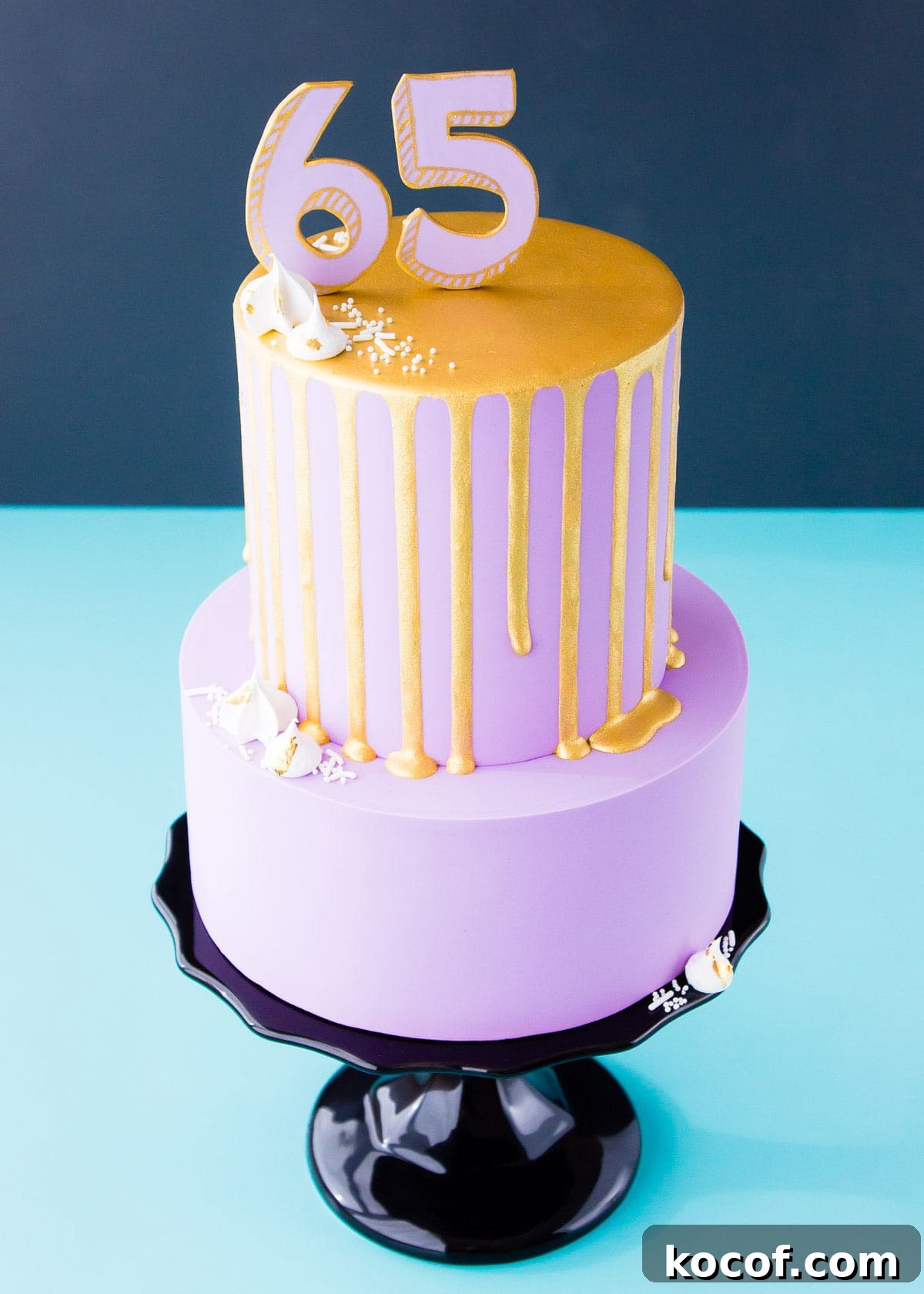
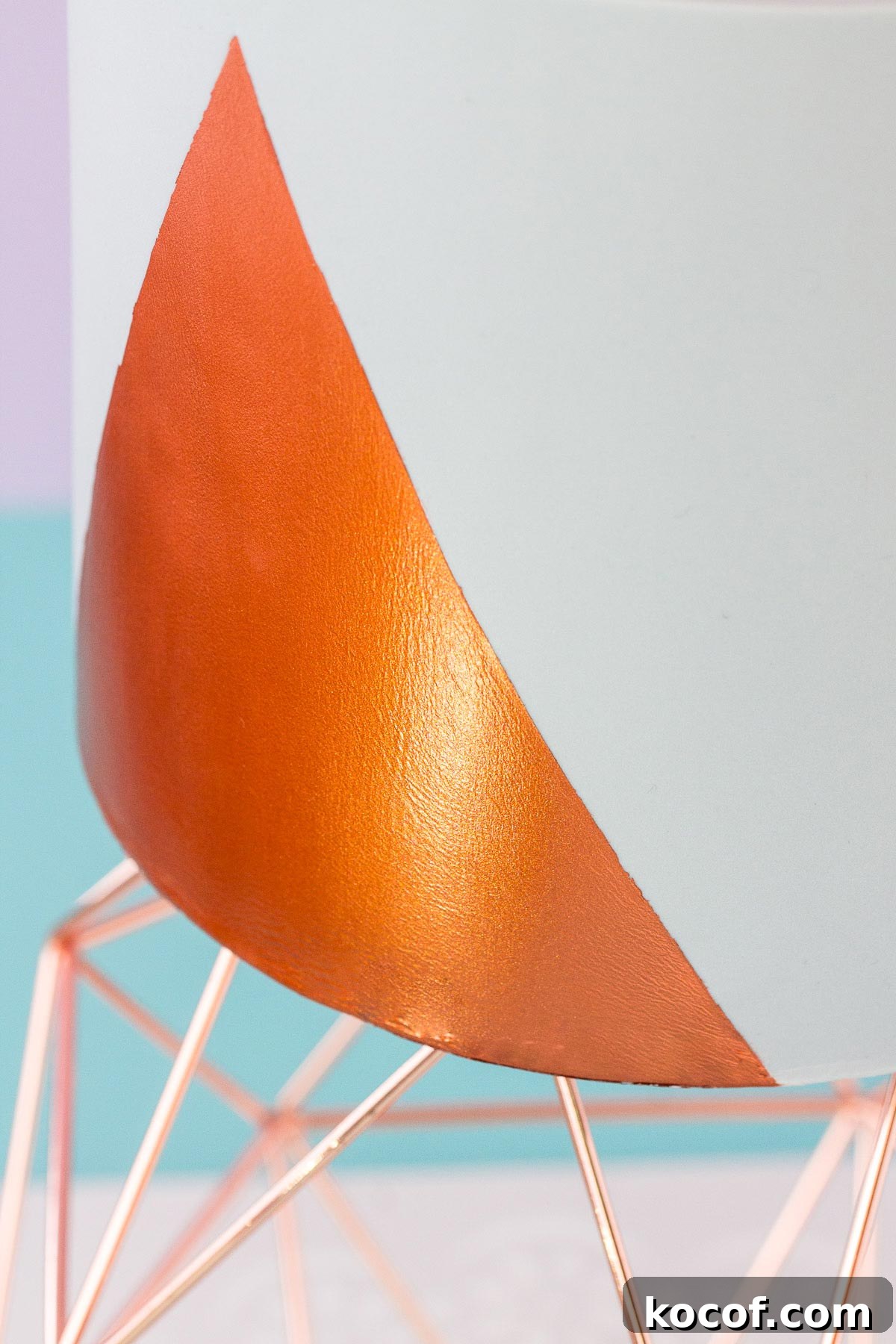
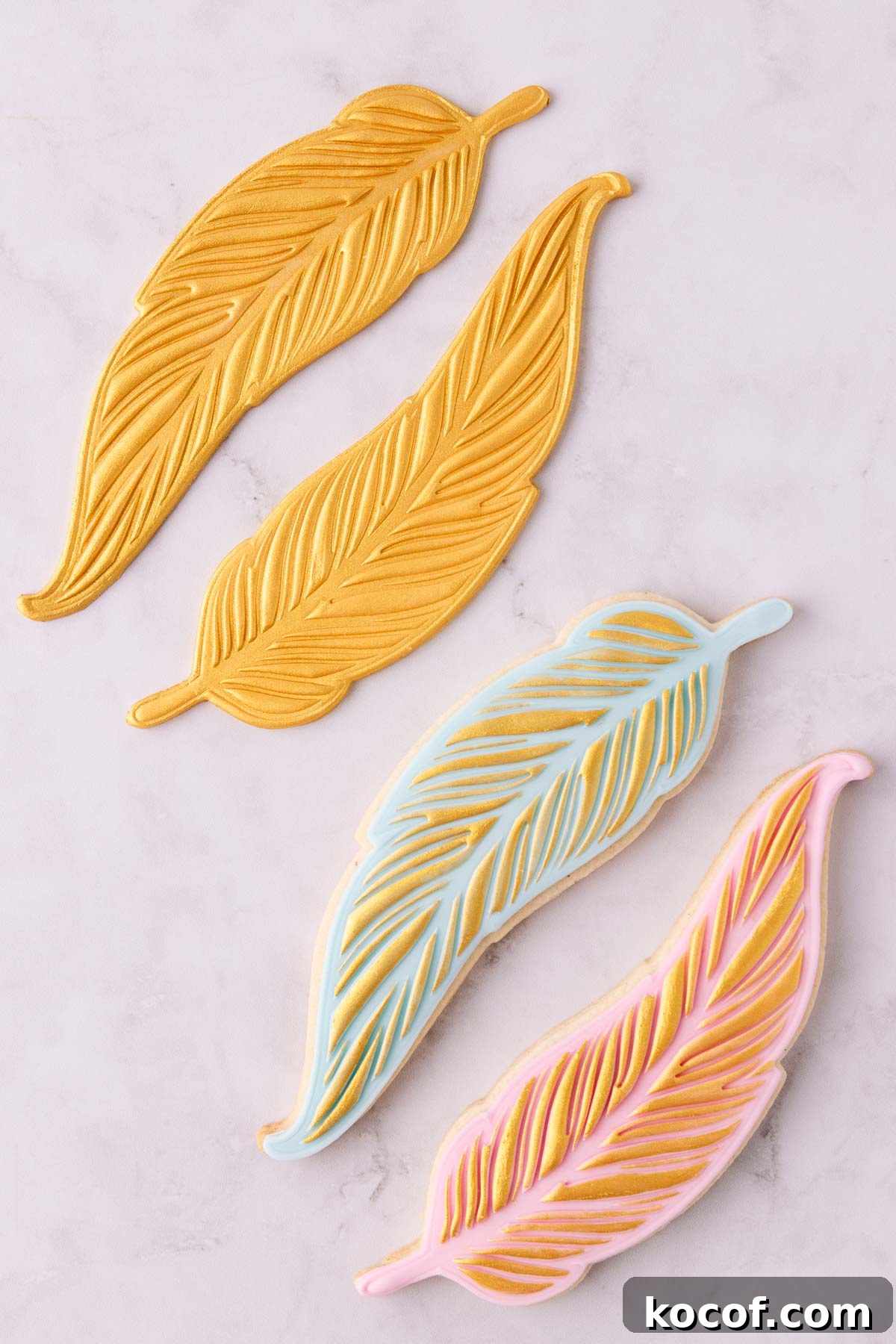
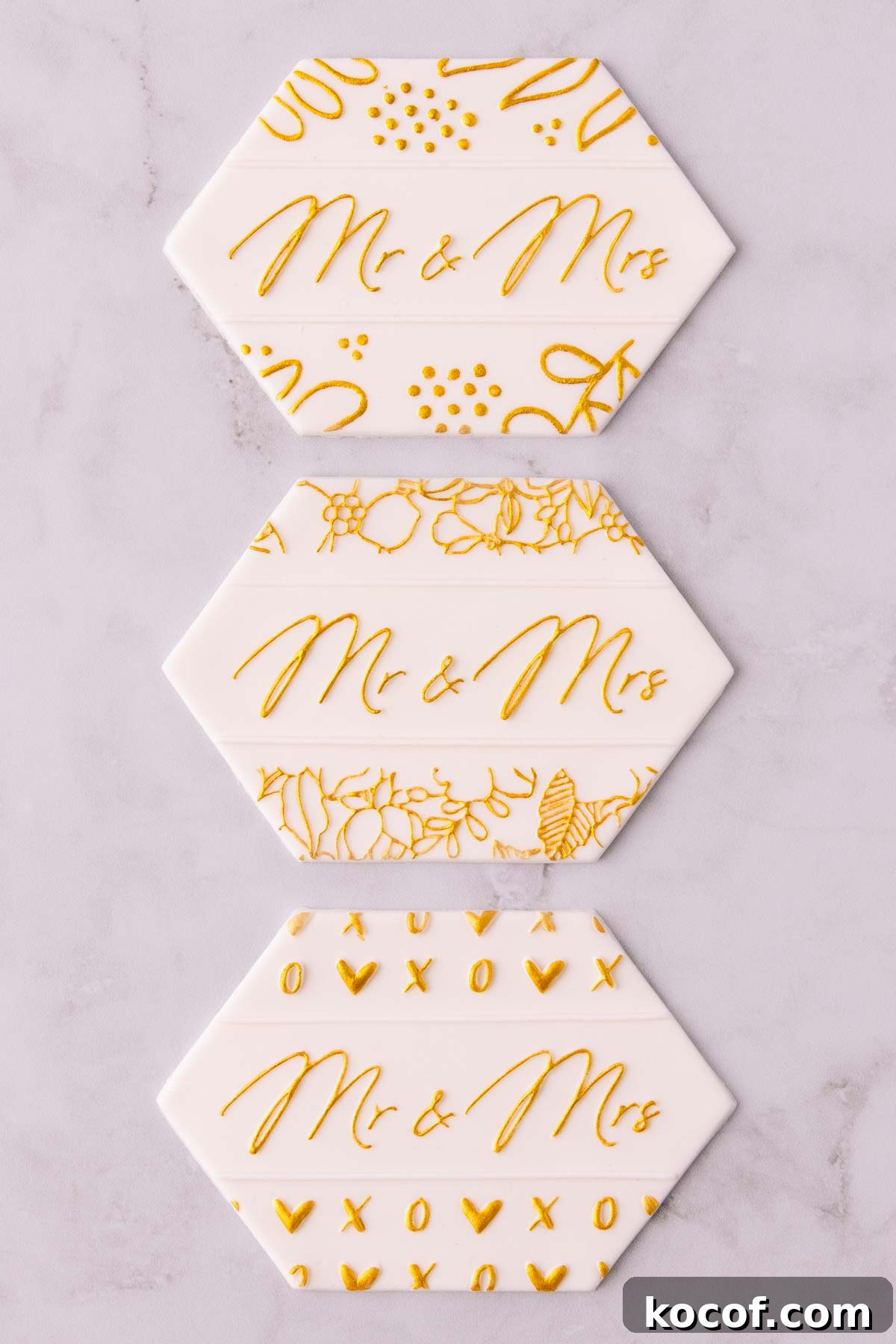
The glaze-based paint method was originally developed to solve coverage and durability issues when layering metallic paints. Mixing glaze into the paint seals the pigment and allows multiple coats without patchiness, producing a long-lasting, glossy finish.
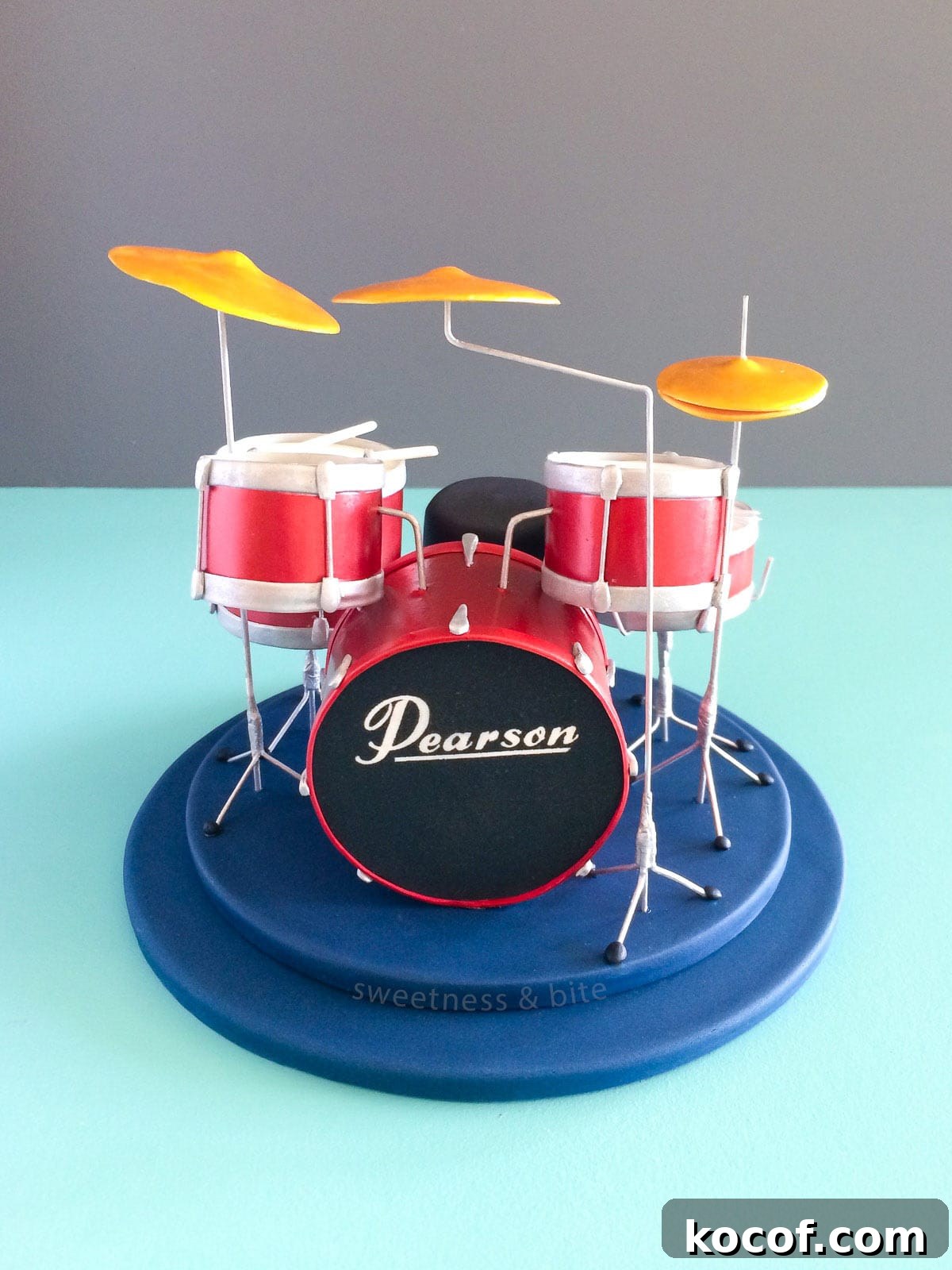
Used correctly, this technique produces durable, vibrant metallic finishes that hold up well over time.
More Cake and Cookie Decorating Posts You May Like
Recommended next reads on related techniques:
- How to Make Edible Glue – two methods for glue used to attach fondant and gumpaste decorations.
- How to Make Edible Sand for Cakes and Cookies – an easy golden edible sand for seaside themes.
- Watercolour Cookies – techniques for painting cookies with a watercolour effect.