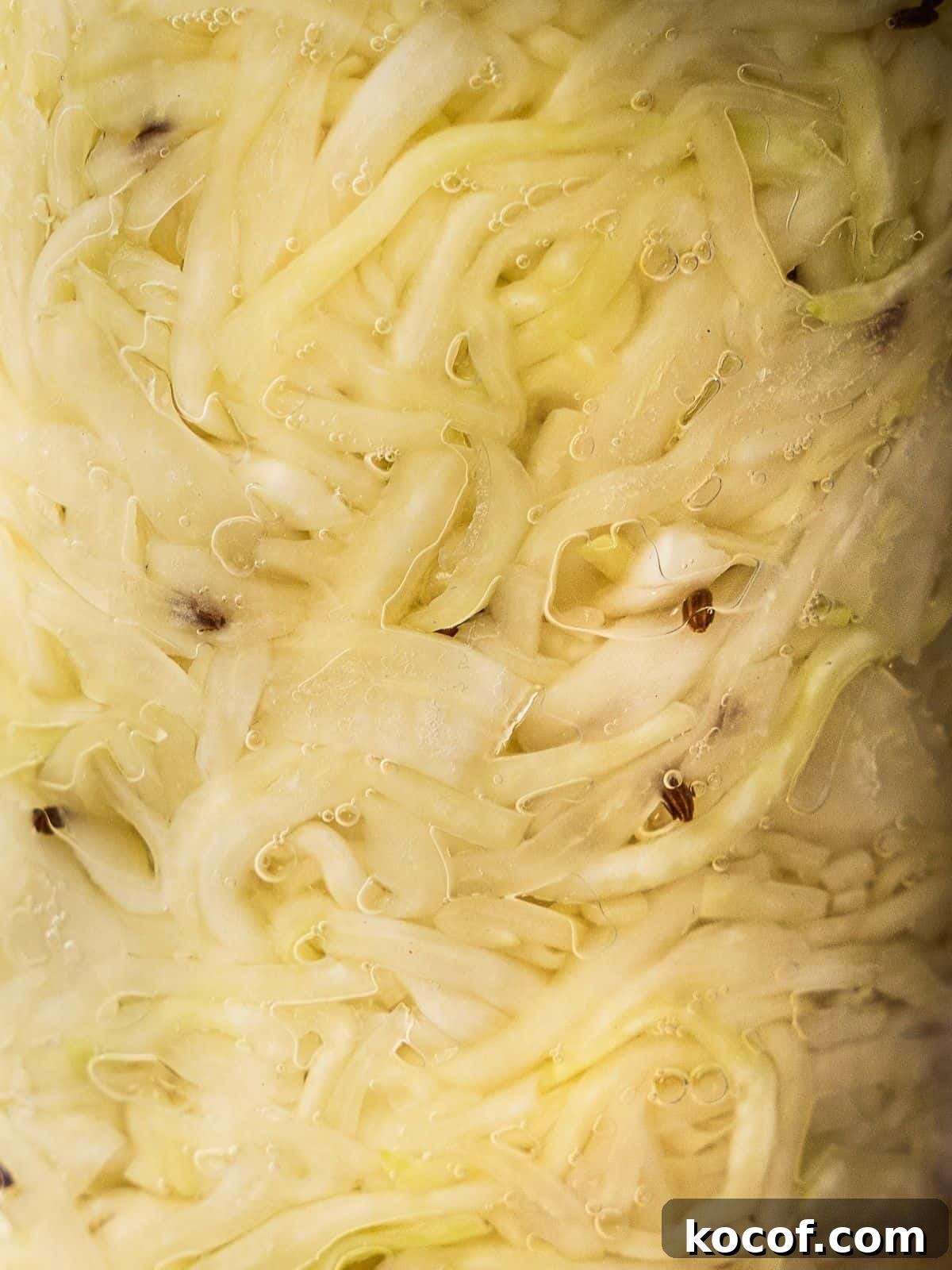
This simple 3-ingredient Homemade Sauerkraut (Lacto-Fermented Cabbage) is a perfect introduction to fermentation. It’s easy to make, delicious, and rewarding.
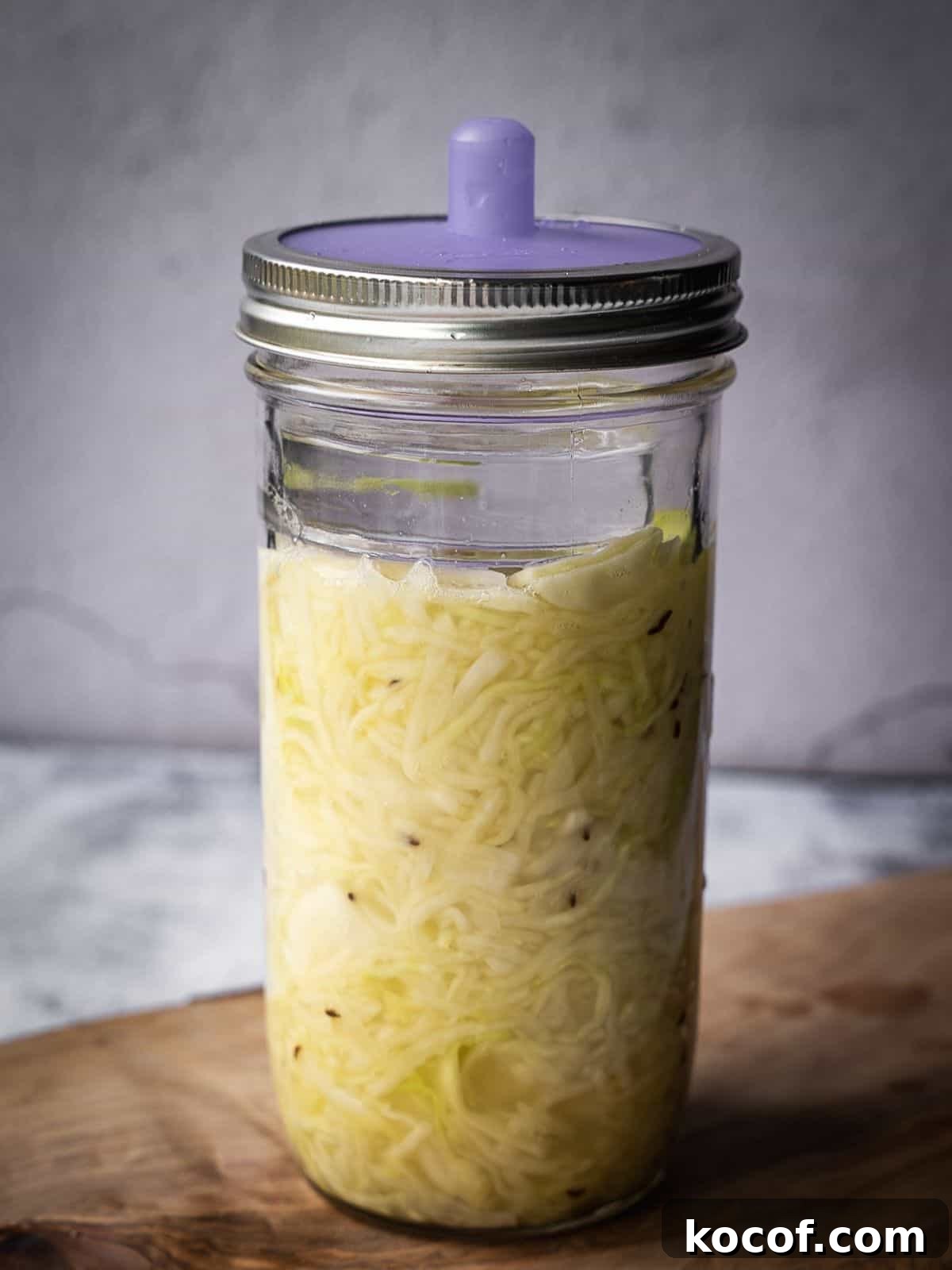
Table of Contents
- A Note on Lacto-Fermentation
- Ingredients
- How Much Salt to Use by Weight
- Equipment and Supplies
- How to Make this Lacto-Fermented Cabbage (Sauerkraut Recipe)
- Fermenting Time, Storage and Safety
- Expert Tips
- Recipe FAQs
- Other Pickling and Fermenting Recipes
- How to Make Sauerkraut (Lacto Fermented Cabbage) Recipe
Sauerkraut is a versatile ingredient used worldwide. In Germany it’s a classic side with meats and sausages; in the U.S. it’s a favorite topping for hot dogs and sandwiches. It also brightens salads, soups, and casseroles with tang and crunch, and provides probiotic benefits thanks to the live cultures produced during fermentation.
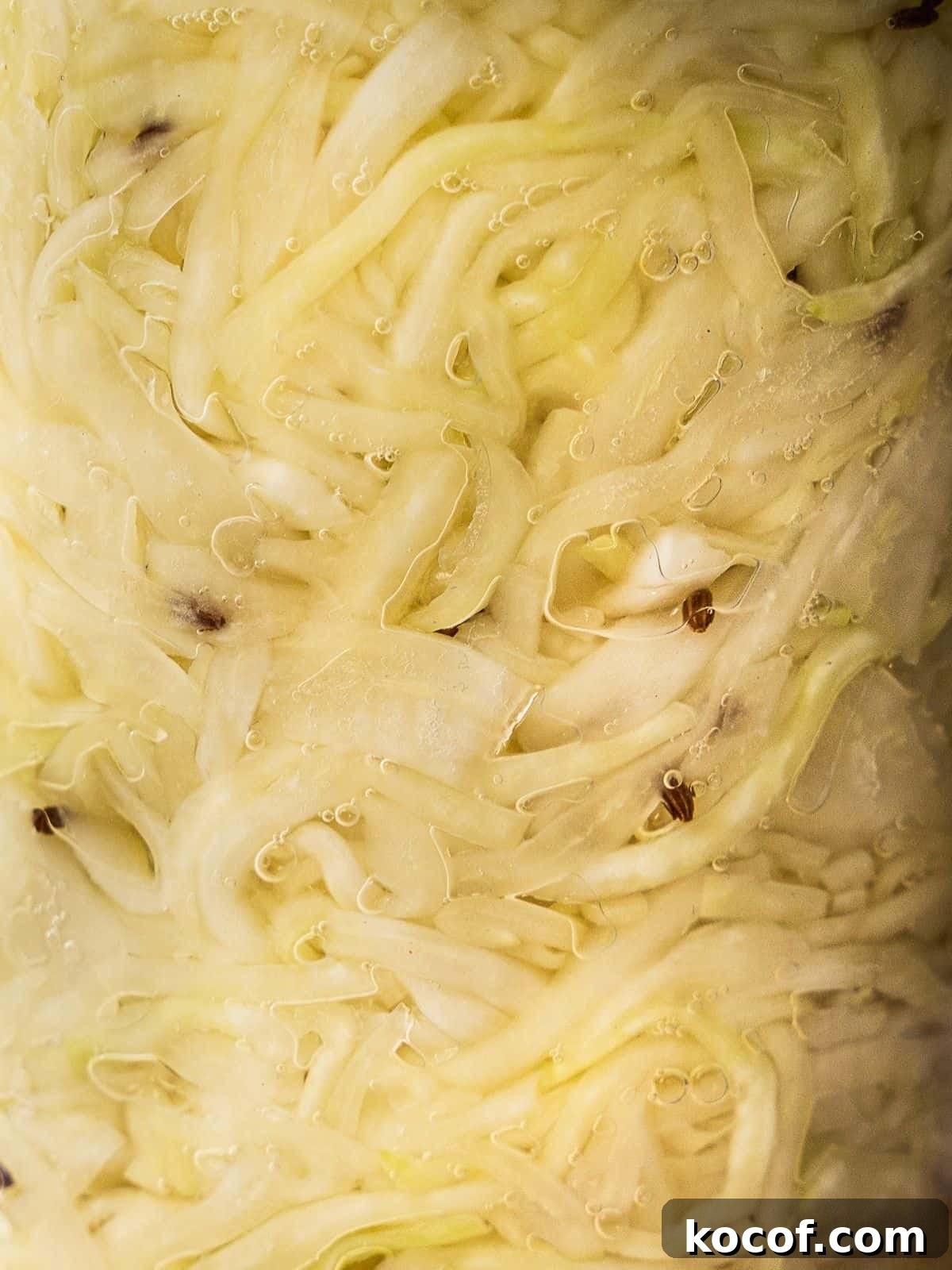
Fermentation (more specifically lacto-fermentation) preserves vegetables by encouraging beneficial lactic acid bacteria. Unlike vinegar pickling, fermentation creates tangy, slightly effervescent flavors from natural acids and carbon dioxide produced by microbes.
A Note on Lacto-Fermentation
Lacto-fermentation relies on salt and natural microbes present on the produce. Salt either added directly or used in a brine limits harmful bacteria while allowing lactic acid bacteria to thrive. The result is a probiotic-rich, tangy product with a distinct acidity and light fizziness from fermentation gases.
If you’re new to fermenting, this sauerkraut recipe is one of the easiest places to start. It uses just cabbage, salt, and an optional spice. Read fermentation basics before you begin if you want more background on safety and technique.
Ingredients
Only three ingredients are needed for a classic sauerkraut.
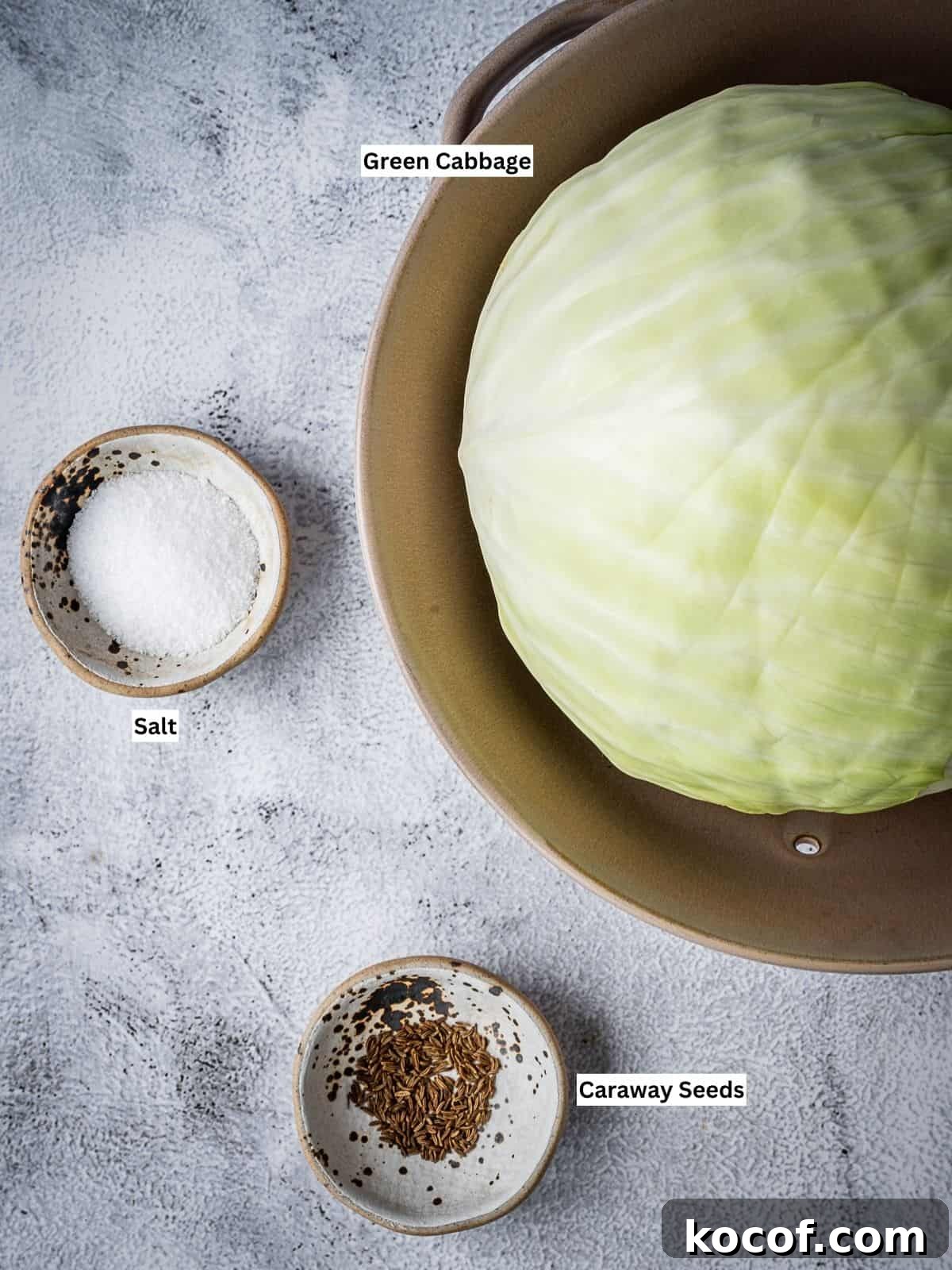
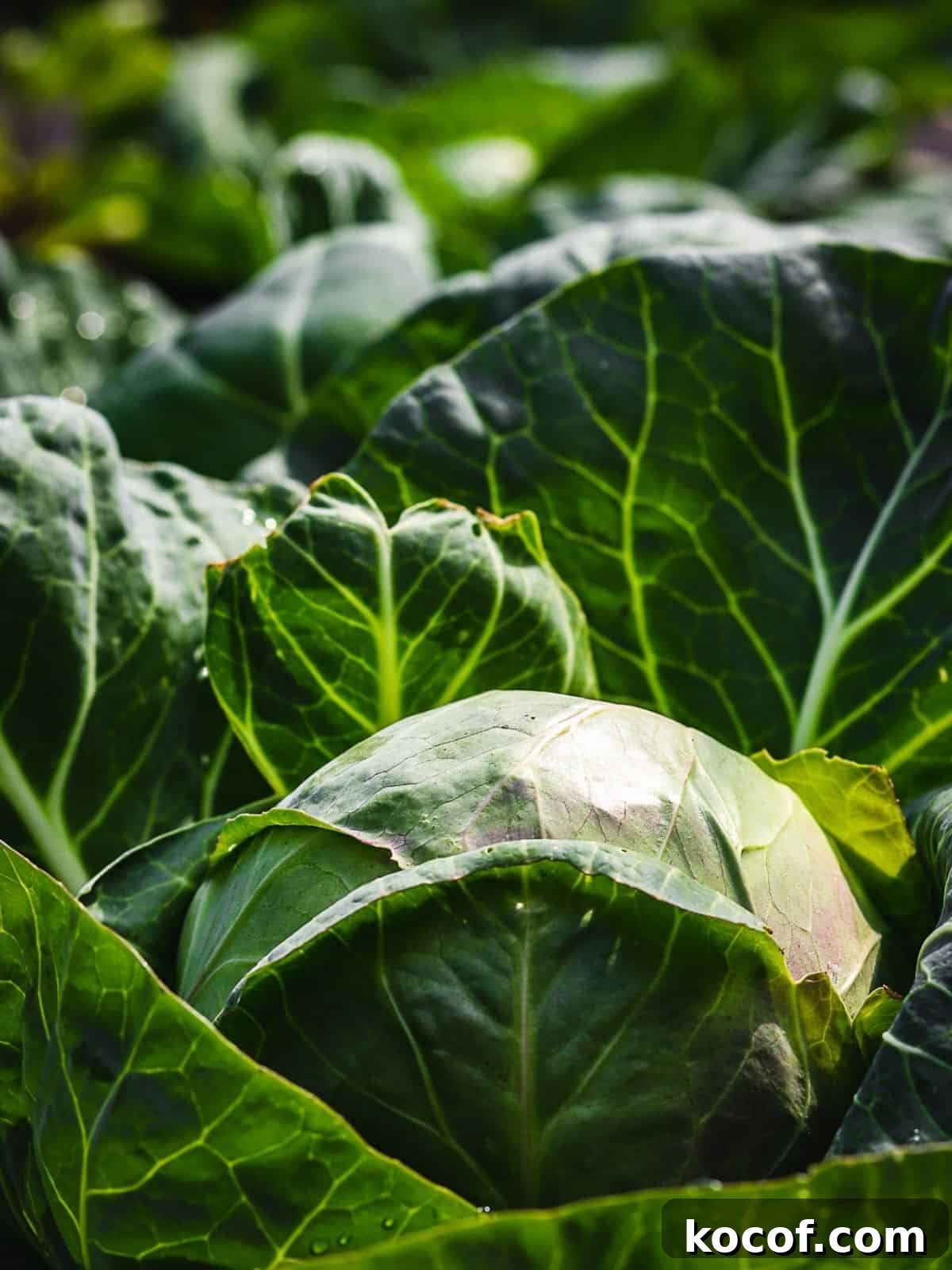
- Cabbage. Use fresh, firm, dense green cabbage for the best texture. Red cabbage also works but will yield a different color and flavor.
- Salt. Use kosher, pickling, or sea salt. Avoid iodized table salt as additives can affect fermentation.
- Caraway Seeds. Optional, but traditional. They add a warm, aromatic note.
See the recipe card below for exact quantities.
How Much Salt to Use by Weight
A common guideline is 2–2.5% salt by weight of the vegetables. To calculate: weigh your cabbage, then multiply that weight (in grams) by 0.02–0.025. For example, 600 grams of cabbage needs about 12–15 grams of salt; 15 g yields a 2.5% concentration. A kitchen scale makes this easy and more reliable than measuring by volume.
This recipe uses the dry-salting method: salt is massaged into the shredded cabbage and it releases its own juice to create the brine.
Equipment and Supplies
A few simple tools make the process easier. A fermentation lid or airlock is helpful but not required; it allows gases to escape while limiting oxygen exposure. You can also burp a standard lid once or twice daily.
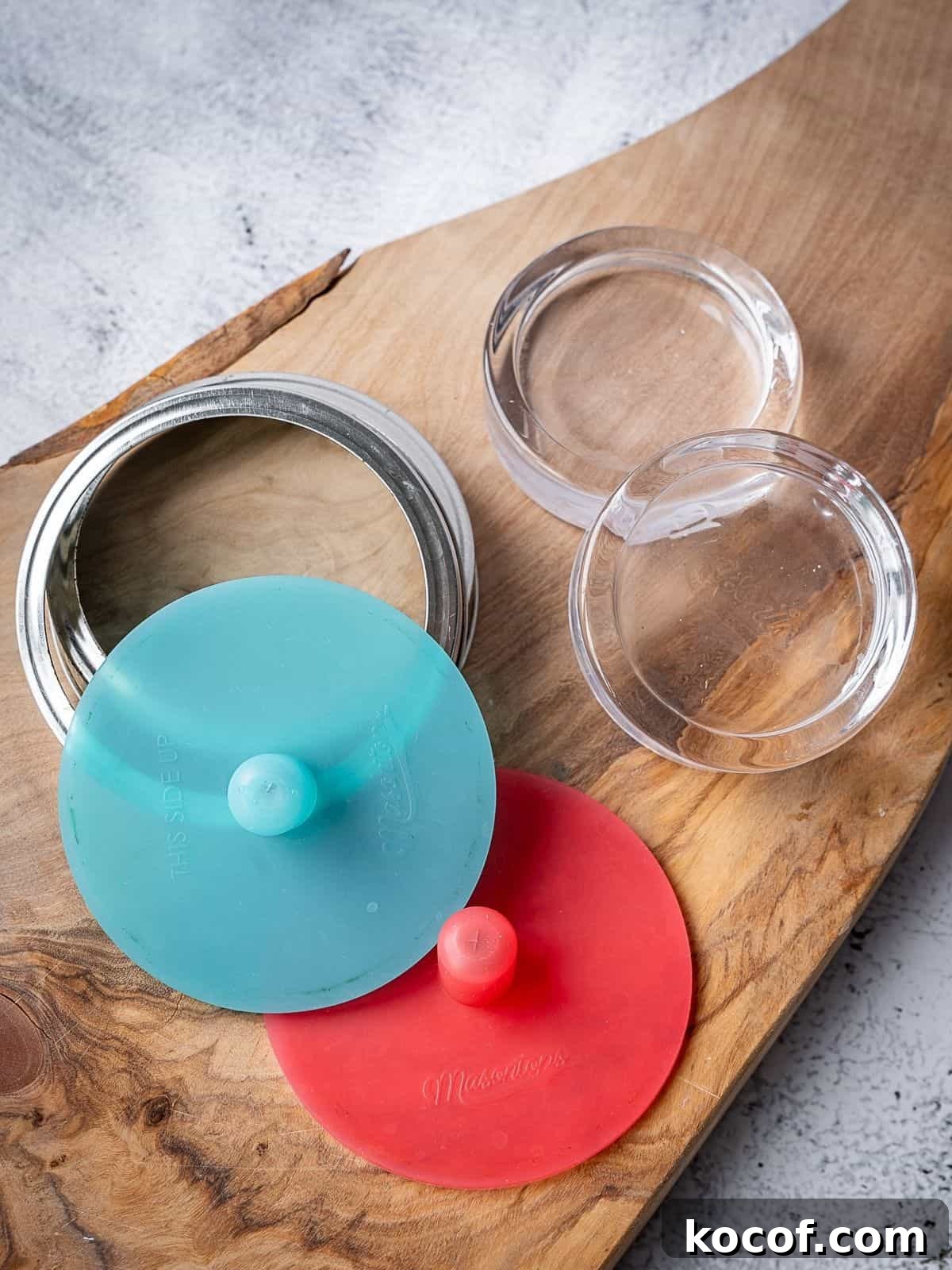
Use a glass jar if possible; many fermentation lids and weights are designed for mason jars. Fermentation weights keep the cabbage submerged—alternatives include a zip-top bag filled with brine or clean marbles. Keep all equipment clean: wash in warm soapy water and air dry. Sterilizing isn’t necessary for fermentation, but good hygiene reduces contamination risk.
How to Make this Lacto-Fermented Cabbage (Sauerkraut Recipe)
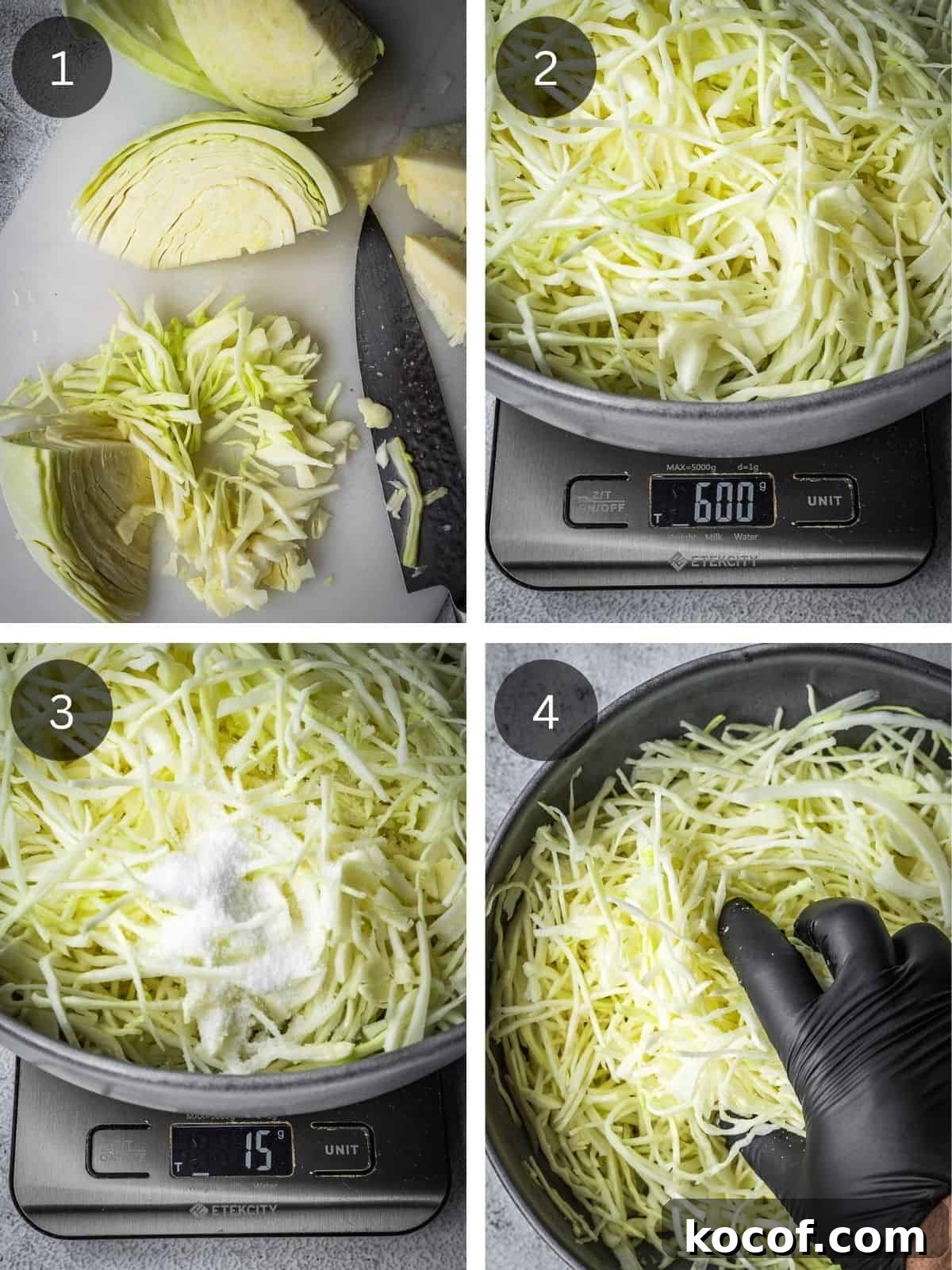
1. Chop. Remove outer leaves, halve the cabbage and cut one half into quarters. Remove the core and finely shred the cabbage.
2. Weigh. Put a bowl on a kitchen scale, zero it, and add the shredded cabbage to measure its weight.
3. Salt. Multiply the cabbage weight (grams) by 0.025 for a 2.5% salt concentration. Add that amount of salt and zero the scale before measuring salt.
4. Massage. Massage the salt into the cabbage for 2–3 minutes until it begins to soften and release liquid. Set aside.
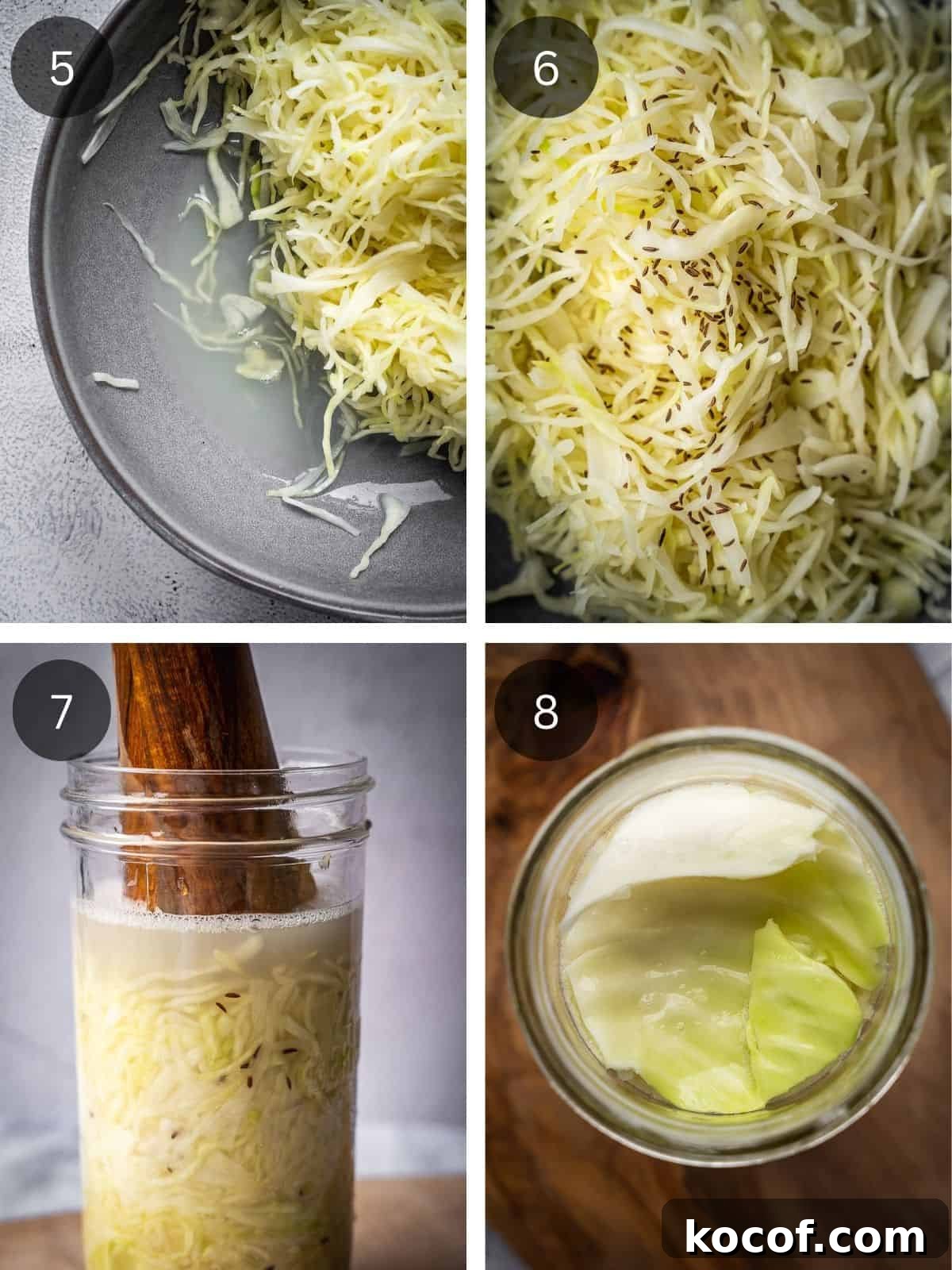
5. Liquid. After about 15 minutes you should see liquid collect at the bottom of the bowl.
6. Season. Mix in caraway seeds if using.
7. Pack. Pack the cabbage and its liquid into a clean mason jar. Use a tamper or spoon to press it down so the liquid rises and covers the cabbage.
8. Cover. Place a cabbage leaf over the shredded cabbage to help keep small pieces from floating up.
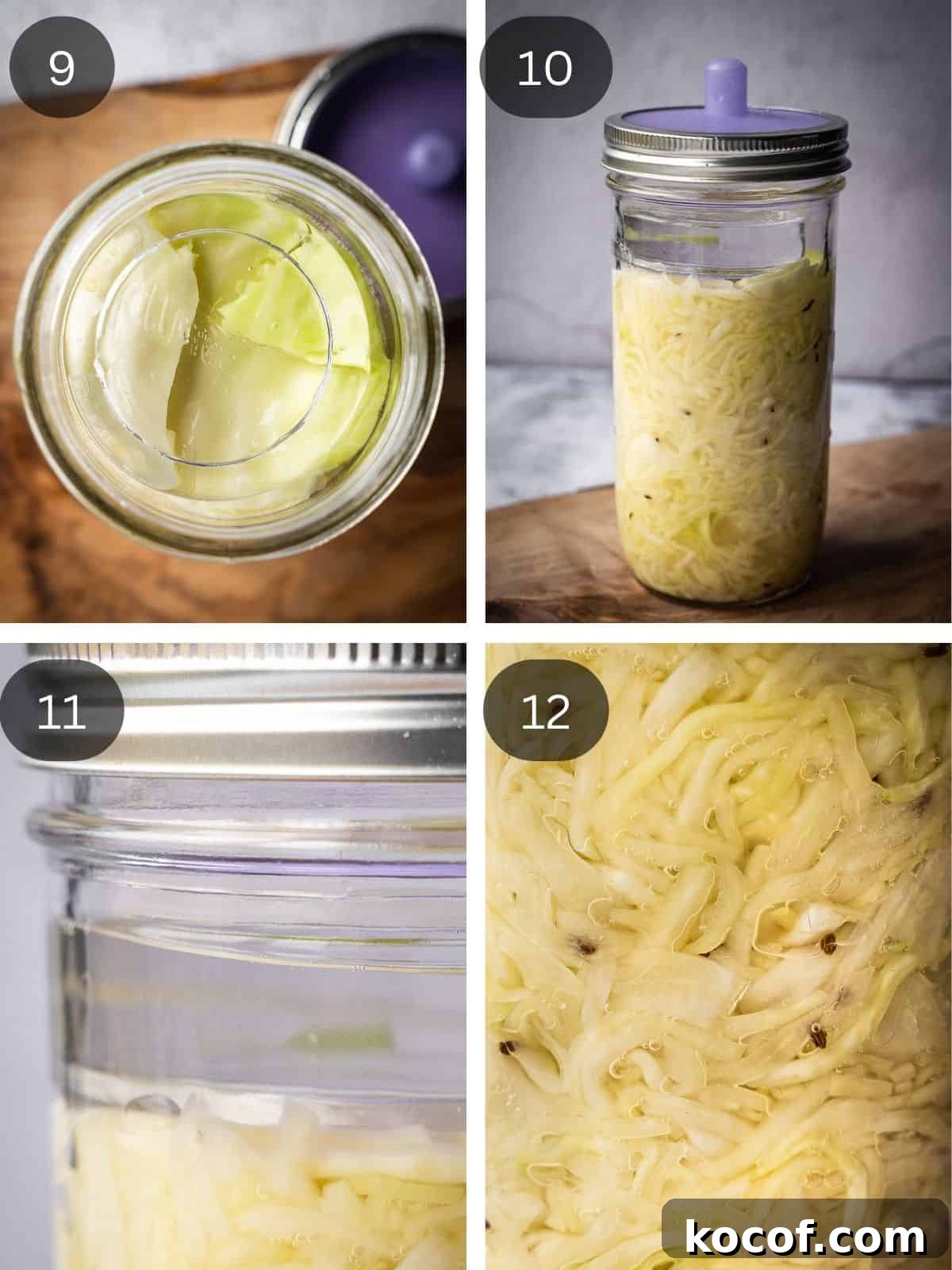
9. Weight. Add a fermentation weight and press down so the cabbage stays submerged.
10. Lid. Cover with a fermentation lid or a standard lid (if using a standard lid, loosen it once or twice daily to release gas).
11. Check the liquid. The next day confirm the cabbage is fully submerged. If needed, top off with lightly salted water to cover.
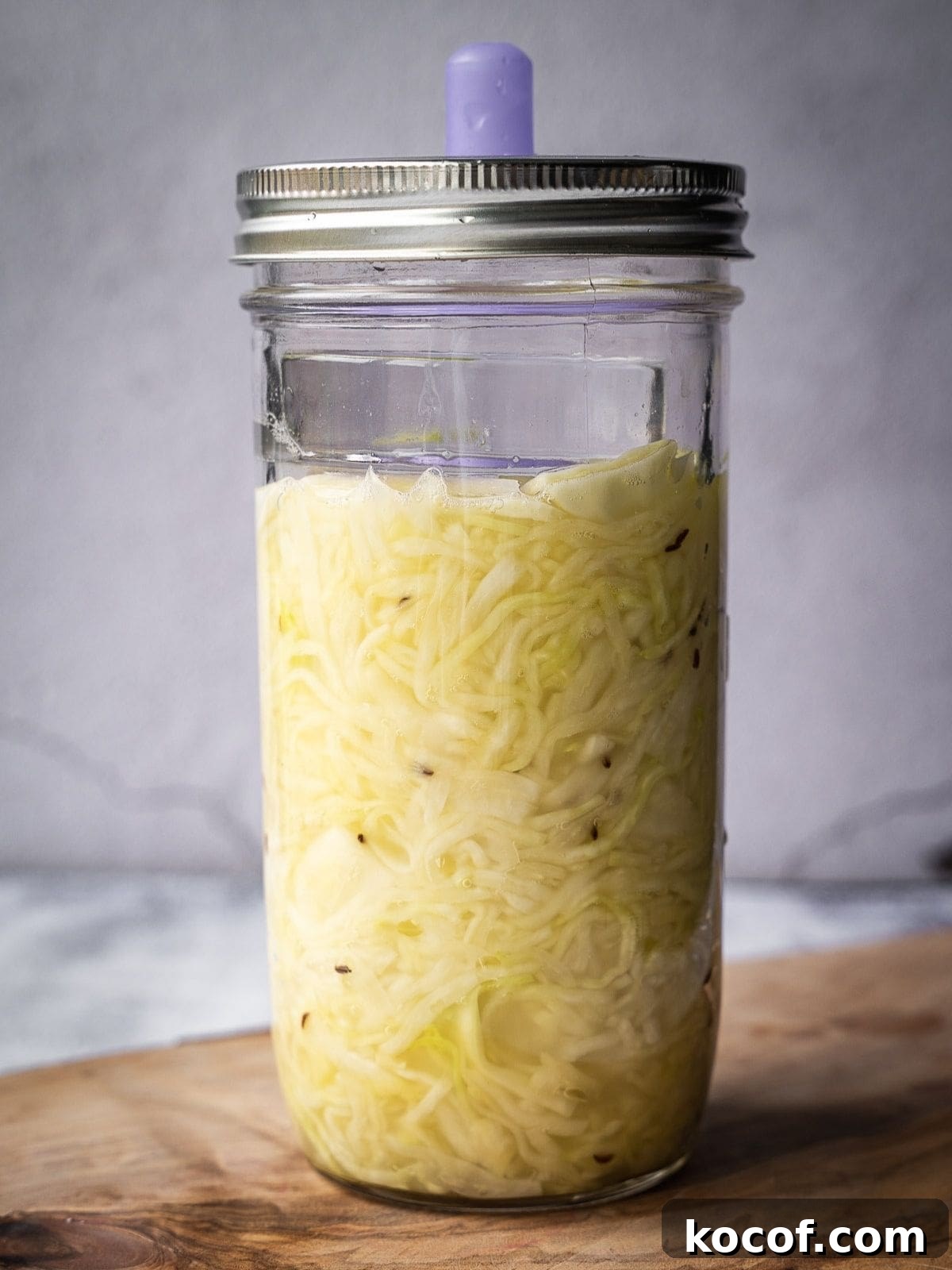
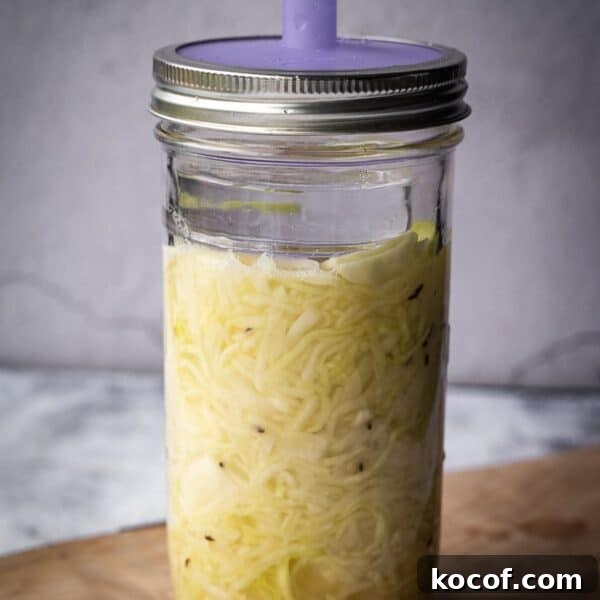
12. Ferment. Keep the jar at room temperature away from direct sunlight and ferment at least 7 days. Taste after a week and continue fermenting until it reaches the acidity you prefer. When finished, remove the weight and leaf, seal with a standard lid, and refrigerate.
Fermenting Time, Storage and Safety
Ideal fermentation temperature is about 60–75°F (15–24°C). Fermentation time is a matter of taste: 3–4 days yields a mild kraut, while 2 weeks or longer produces a tangier, more developed flavor. Once you’re happy with the taste, keep finished sauerkraut refrigerated—this slows fermentation and preserves flavor for several months.
This recipe is straightforward and forgiving, but maintain cleanliness and monitor the ferment. Cloudy brine is common; if anything smells or looks off, discard it.
Expert Tips
- Save time: Use a food processor with a shredding disc to slice cabbage quickly.
- Choose glass: Use glass jars to avoid reactions with acidic brine.
- Keep tools clean: Wash jars and utensils in hot, soapy water before use.
- Refrigerate finished kraut: Once it’s at your preferred flavor, store it in the fridge.
Recipe FAQs
Sauerkraut means “sour cabbage.” Fermented cabbage has a long history, developed as a nutritious preserved food. Its characteristic tang comes from lactic acid produced during fermentation.
Select fresh, firm, and dense cabbages without wilting or browning. Avoid napa/Chinese cabbage if you want a classic sauerkraut texture.
Medium heads are easiest to handle. Very large heads may have a tougher core and different texture.
Organic cabbage avoids pesticide residues, but if you use conventional cabbage, remove the outer leaves and wash well.
Ferment 3 days for a mild flavor, or up to 2 weeks (or longer) for a more pronounced sourness. Taste frequently to decide when it’s right for you.
Cloudy brine is usually normal and comes from microbial activity or dissolved solids from the cabbage. If it smells or looks rotten, discard the batch.
If too salty, rinse before serving or drain some brine and replace with fresh water after fermentation is complete. Do not alter brine during active fermentation.
Other Pickling and Fermenting Recipes

Condiments
Pistachio Pesto (with Basil and Mint)

Condiments
Spring Pea Pesto (with Mint and Arugula)
Condiments
Arugula Pesto with Almonds

Condiments
Maple Peach Chutney
If you make this Sauerkraut Recipe (Lacto-Fermented Cabbage), please consider rating the recipe and leaving a comment. Feedback helps others who want to try it.
How to Make Sauerkraut (Lacto Fermented Cabbage)
Equipment
-
¾ quart mason jar
-
Fermentation weight – Optional but recommended
-
Fermentation lid or airlock – Optional but recommended
Ingredients
- 600 grams Cabbage, shredded finely – about half a medium cabbage
- 15 grams Kosher, pickling, or sea salt – about 1 tbsp (for 2.5%)
- 2 grams Caraway seeds – 1 tsp (optional)
Instructions
-
Chop. Remove outer leaves, halve the cabbage, cut quarters, remove the core, and finely shred the cabbage.
-
Weigh. Place a large bowl on a scale, zero it, then add the shredded cabbage to determine weight.
-
Salt. Multiply the cabbage weight (g) by 0.025 for 2.5% salt. Measure and add the salt.
-
Massage. Massage the cabbage and salt for 2–3 minutes until it softens and releases liquid. Set aside.
-
Liquid. After ~15 minutes you should see brine at the bottom of the bowl.
-
Season. Stir in caraway seeds if using.
-
Pack. Pack the cabbage and liquid into a clean jar and press down until the brine rises to cover the cabbage.
-
Cover. Place a cabbage leaf on top to keep small pieces down.
-
Weight. Add a fermentation weight or a sealed bag of brine, and press down to keep the cabbage submerged.
-
Lid. Fit a fermentation lid or loosely tighten a standard lid (if using a standard lid, open it once or twice daily to release gas).
-
Check the liquid. Next day ensure the cabbage is submerged. Top with lightly salted water if needed.
-
Ferment. Keep the jar at room temperature away from direct sun for at least 7 days. Taste after a week and continue until you reach the desired tang. When ready, replace the lid with a standard lid and refrigerate.
Video
Notes
Additions: Optional additions include juniper berries or a bay leaf for subtle complexity.
Fermenting time is flexible; a short ferment yields a mild kraut, long fermentation produces a stronger sourness.
Important notes:
- Keep the ferment at room temperature (about 60–75°F / 15–24°C) and out of direct sunlight.
- Store finished sauerkraut in the refrigerator; it will keep for several months when chilled.
Nutrition
Nutrition information is an approximation.
 Like this recipe? Rate & comment below!