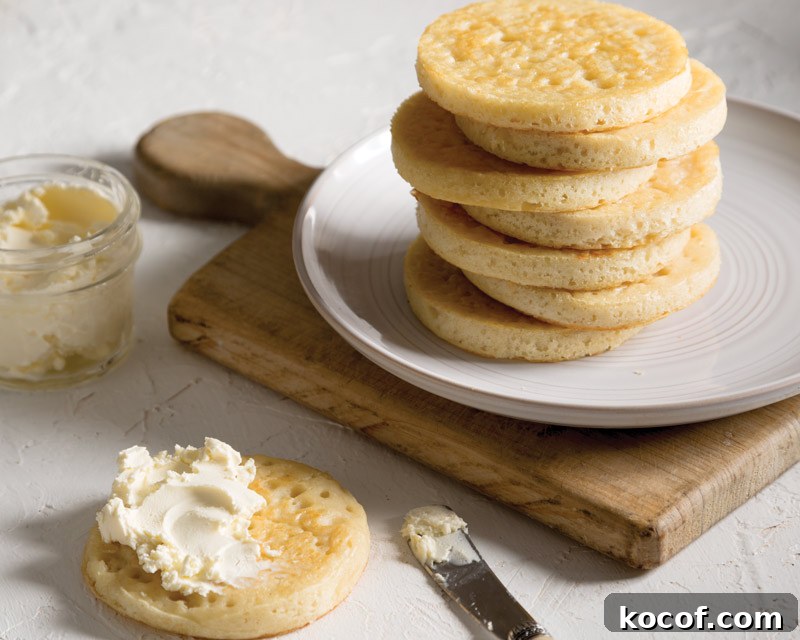
A question that has long divided breakfast lovers: what exactly is the difference between crumpets and English muffins? Originating on opposite sides of the Atlantic and made with different techniques, these two griddle-cooked breads have distinct textures, shapes, and recipes. Below we outline the defining features of each so you can choose the right one for your morning toast or baking project.
Traditional Crumpets:
- Origin: British.
- Form: Served unsplit — crumpets are presented whole rather than torn or halved before toasting.
- Cooking method: Prepared on a griddle using rings to hold the batter in place while it cooks.
- Dough consistency: High-hydration batter, typically around 90–100% hydration, which creates a loose, sponge-like mixture.
- Cooking tools: Require muffin rings because the batter is thin and would otherwise spread across the griddle like a pancake.
- Surface finish: Not dusted with cornmeal or semolina.
- Leavening: Baking powder is an important component, contributing to the characteristic open, cratered top and helping the batter rise into a light, airy texture.
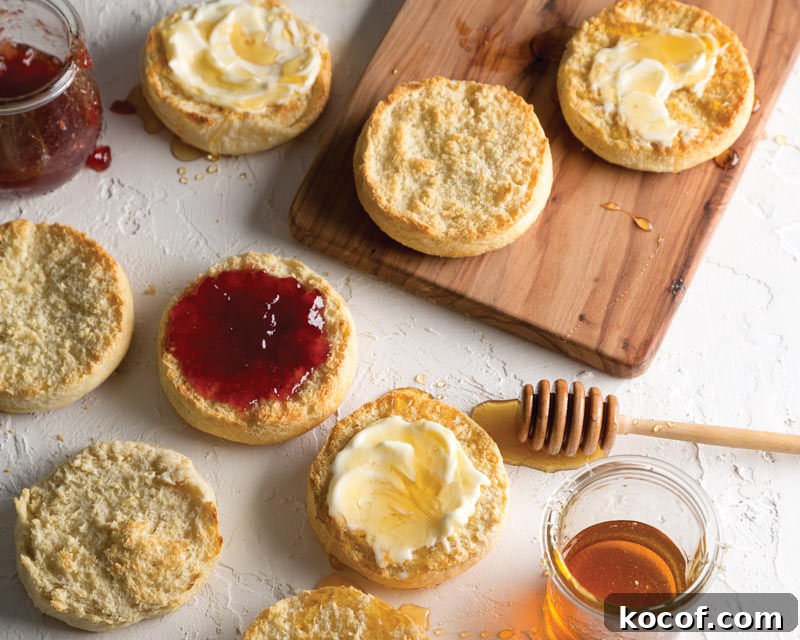
English Muffins:
- Origin: Developed in America by a British expatriate, later becoming a staple of American breakfasts.
- Form: Typically split before toasting, revealing a nooks-and-crannies interior.
- Cooking method: Cooked on a griddle and sometimes finished in the oven for even doneness.
- Dough consistency: Lower-hydration dough, usually around 50–57% hydration, giving a firmer, bread-like texture.
- Cooking tools: Don’t strictly require muffin rings, though rings are often used to achieve uniform shape and size.
- Surface finish: Commonly dusted with cornmeal or semolina to prevent sticking and add texture.
- Leavening: Baking powder isn’t essential, but many recipes include it to boost rise and contribute to flavor and softness.
Common Ground
Despite their differences, crumpets and English muffins share a beloved quality: both develop crags, craters, and holes that trap melting butter and toppings, producing a satisfyingly textured bite. Whether you prefer the soft, batter-like structure of a crumpet or the firmer, split-and-toasted crumb of an English muffin, each shines when toasted and served warm.