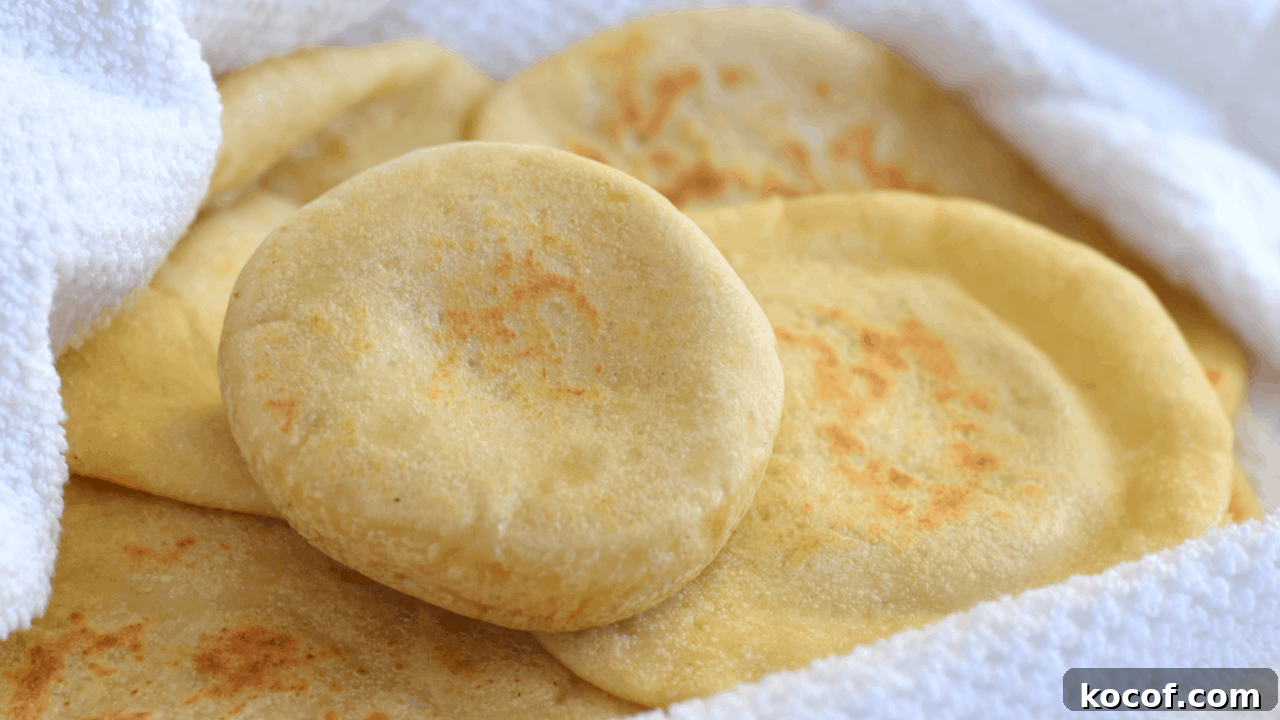
HOW TO MAKE HOMEMADE PITA BREAD
This pita bread recipe is simple and reliable. It produces soft, chewy pitas with excellent flavor and a light pocket perfect for stuffing.
Although pita is widely available in stores where we live in Qatar, homemade pita is noticeably better: softer, fluffier, and fresher than store-bought loaves.
The dough uses basic pantry ingredients—flour, water, salt, oil, sugar and yeast. Roll it thin and bake at a high temperature. As it cooks, the pita puffs and forms a pocket that’s ideal for hummus, salads, or your favorite fillings.
Pita bread Ingredients
- 1 cup warm water (not hot or cold; just slightly warm)
- 1/2 teaspoon active dry yeast (or instant yeast)
- 2 cups all-purpose flour
- 3/4 cup whole wheat flour (or use all-purpose instead)
- 1 teaspoon salt
- 1 tablespoon sugar
- 1-2 teaspoons olive oil (optional)
Which flour is best for making pita bread?
You can use all-purpose flour, whole wheat flour, or a combination. All-purpose gives better structure and puffing, while whole wheat adds flavor and nutrition. In this recipe I use a mix—mostly all-purpose with about one-third whole wheat—for balance. Choose the ratio you prefer.
Why I use both kinds of flour
Different flours bring different properties. Whole wheat contains more nutrients that help yeast ferment faster and contributes a pleasant nutty flavor and a slightly denser but more flavorful crumb. White flour (the endosperm) creates strong gluten networks that trap gas and give volume. Combining them gives both structure and nutrition.
Benefits of whole wheat in this pita
- Whole wheat ferments faster because it offers more nutrients for the yeast.
- It adds a nutty flavor and slightly superior texture, making the dough easier to roll.
- It increases the nutritional value with more fiber, vitamins and minerals.
Because whole wheat contains bran and germ, it can limit gluten development if used in high proportions, which may reduce volume. That is why a mixture works well: you get nutrition from whole wheat and structure from white flour.
Step by step Instructions
Step 1. Form the Pita Dough
To make the dough:
- If using active dry yeast, activate it first in warm water with the sugar. If using instant yeast, it can be mixed directly with the flour.
- Combine the warm water, sugar and yeast and let sit about five minutes until foamy. Add the flours, salt and olive oil and stir until a shaggy mass forms.
Step 2. Knead the Dough
- Turn the dough onto a lightly floured surface and knead about 6–8 minutes until smooth and elastic, adding just enough flour to keep it from sticking. If tired, let the dough rest a few minutes and continue.
- You may use a stand mixer with a dough hook for 8 minutes, or knead by hand to better feel the dough’s texture.
Kneading aligns the proteins so gluten strands form, creating the structure needed to trap gas and allow the dough to rise.
How to knead by hand
- Push the dough away with the heel of your hand, fold it back toward you, then press and stretch.
- Continue folding and turning until smooth and supple. The dough will be sticky at first but should become tacky, not wet, as you knead.
If the dough remains sticky, let it rest 5 minutes so the flour can fully absorb the water, then continue kneading.
How do you know the dough is well kneaded?
The dough should be soft, smooth and elastic. Press a finger into it—the dough should feel soft but push back slightly. A full windowpane test may not always pass when whole wheat is included, but the dough should still be resilient enough to puff when baked.
Step 3. Let the Dough Rise
- Lightly oil a clean bowl, place the dough inside and turn to coat with oil. Cover and let rise until doubled, about 1–2 hours.
- You can refrigerate the dough after the first rise for up to a week and bake a few pitas at a time as needed.
Step 4. Divide the Pitas
- Gently deflate the dough and turn onto a floured surface. Divide into equal portions and flatten each into a thick disk. Dust with a little flour and cover with a towel while you shape them.
Step 5. Shape the Pitas
- Roll each piece into a 6-inch circle about 1/4 inch thick, turning and lifting to prevent sticking. If the dough springs back, let it rest briefly before continuing.
- Cover the shaped disks with a damp towel and let rest 20–30 minutes to relax and puff slightly.
Step 6. Bake the Pita Bread
You can bake pitas in a very hot oven or on the stovetop.
How to bake pita bread in the oven
- Preheat the oven to 450°F (230°C). If you have a baking stone, place it on the lowest rack while preheating. Otherwise, use a heavy baking sheet placed on the lower rack.
- Place rolled pitas directly on the hot stone or sheet. Bake 3–4 minutes until they puff. If they don’t fully puff, bake another minute or increase oven temperature for the next batch.
- When pitas have puffed, move them to a higher rack for 1–2 minutes to brown slightly. Remove and wrap in a clean towel to keep soft. Repeat with remaining dough.
How to bake pita bread on the stovetop
- Heat a cast iron or heavy skillet over medium-high until water sizzles on contact. Lightly oil and wipe excess.
- Cook each rolled pita 30 seconds until bubbles form, flip and cook 1–2 minutes until spots appear, then flip again for another 1–2 minutes. The pita should puff; if not, press gently to help it inflate. Keep finished pitas covered with a towel.
Now your homemade pita breads are ready to serve.
How do pitas puff up when baked?
Puffing is caused by steam building inside the thin dough disk. High heat sets the outside while moisture turns to steam in the middle, inflating the dough into a pocket. Adequate moisture in the dough and a hot surface are the keys to good puffing.
How to store pita bread?
- Pitas are best fresh but will keep in an airtight bag for several days and can be reheated in a toaster oven or on a skillet.
- Freeze cooked pitas with wax paper between layers for up to three months.
Pita bread Recipe: Additional Notes
Storing the dough: After the first rise, the dough can be refrigerated for up to a week. Bake as many pitas as you need and keep the rest chilled.
Pitas that won’t puff: This is usually due to insufficient heat. Make sure your oven or skillet is properly preheated. Unpuffed pitas are still delicious as wraps or torn for dipping.
Simple tips to make the best pita bread
- Knead until the dough is soft and smooth; softer dough generally yields softer pitas.
- Avoid adding too much extra flour while kneading.
- Ensure your oven or skillet is very hot before baking.
Enjoy making soft, fluffy homemade pita bread!
Pita Bread Recipe
Ingredients
- 1 Cup warm water (not hot or boiling)
- Half Tsp active dry yeast or instant yeast
- 2 Cups all-purpose flour
- 3/4 Cup whole wheat flour
- 1 Tsp salt
- 1 Tbsp sugar
- 1-2 Tsp olive oil (optional)
Instructions
-
Form the dough: Mix the warm water, sugar and yeast and let sit about five minutes until foamy. Add the flours, salt and olive oil and stir until a shaggy dough forms.
-
Knead the dough: Turn onto a lightly floured surface and knead 6–8 minutes until smooth and elastic, adding flour sparingly to prevent sticking. Rest if needed.
-
Let the dough rise: Lightly oil a clean bowl, place the dough inside and turn to coat. Cover and let rise until doubled, 1–2 hours. You can refrigerate the dough at this point for up to a week.
-
Divide the dough: Deflate gently, divide into equal pieces and flatten into thick disks. Dust with flour and cover until ready to shape.
-
Shape and rest: Roll each piece into a 6-inch circle about 1/4 inch thick. Let the shaped disks rest 20–30 minutes until slightly puffed.
-
Bake: Oven method—preheat to 450°F, bake on a hot stone or sheet 3–4 minutes until puffed, then move to a higher rack 1–2 minutes to brown. Stovetop method—cook on a hot skillet 30 seconds to form bubbles, then flip and cook until spots form and the pita puffs. Keep cooked pitas covered to stay soft.
-
Serve and enjoy: Use warm pitas for sandwiches, dipping, or alongside your favorite Mediterranean dishes.