What is bread flour and how does it differ from all-purpose flour? The main distinction comes down to gluten content and how that affects dough performance.
Updated December 21, 2025 – Originally posted on September 21, 2009
When you start baking bread, package instructions and bread machine manuals often recommend using bread flour. That recommendation is not arbitrary: the functional difference between bread flour and all-purpose flour is the amount and quality of gluten-forming proteins. Understanding this difference helps you choose the right flour for the texture and rise you want in your loaves.
What is gluten and why does it matter?
Gluten is a network of proteins created when water is mixed into wheat flour and the dough is worked. This network traps the carbon dioxide produced by yeast during fermentation, allowing dough to rise and hold its shape. Flours with higher gluten content create stronger, more elastic doughs that can trap gas more effectively, producing a higher rise and a chewier crumb—qualities often desired in sandwich loaves and artisan-style breads.
If the flour has lower gluten content or the dough lacks strength, gas escapes more easily and the loaf will not rise as tall. That’s why recipes aimed at soft cakes, tender cookies, or flaky pastries call for low-gluten flours: they produce a more delicate, less elastic structure.
How bread flour compares to all-purpose flour
Bread flour is milled from wheat varieties selected for higher protein content and is formulated to develop a stronger gluten network. In general terms, all-purpose flour typically contains about 9% to 12% protein, while bread flour usually ranges from about 10% to 13%. There is overlap between the two ranges, so some all-purpose flours with higher protein figures will perform well in yeast breads, and some milled bread flours will give a noticeably stronger structure.
If you use your usual all-purpose flour in a bread machine and get good results, it likely falls toward the higher end of the protein scale. When a recipe specifically calls for bread flour, it’s recommending a flour that will give stronger dough and a better rise, but in many home baking situations you can adapt by adjusting technique or ingredients.
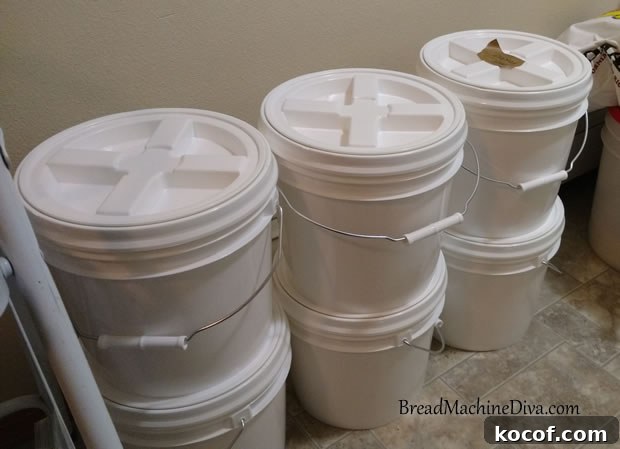
Storing a lot of flour is much easier with airtight lids and proper containers.
Many home bakers who produce most of their household bread prefer buying flour in bulk. Proper airtight storage, cool temperatures, and rotation help keep bulk flour fresh and free from pests and off-odors. Using food-grade buckets with tight lids, glass jars, or resealable containers and storing them in a cool, dry place will extend shelf life and preserve baking performance.
What if you only have all-purpose flour?
First, check the flour packaging or the manufacturer’s information for protein or gluten percentage. If that detail isn’t available, test the flour by making a single loaf and evaluating the rise and crumb. The worst outcome from using lower-protein all-purpose flour is a loaf that doesn’t rise as tall or has a softer crumb than one made with bread flour, but it will still usually be edible and tasty.
All-purpose flour can often be used successfully in bread machines and most home bread recipes. If your results show underperformance—dense loaves or poor oven spring—you can improve structure by increasing kneading time slightly or by supplementing the flour with added gluten.
Using vital wheat gluten to boost strength
Vital wheat gluten is a concentrated form of gluten protein derived from wheat. It looks similar to flour but is almost entirely protein. Adding small amounts to lower-protein flours strengthens the dough’s gluten network and improves rise and texture.
A common starting guideline is to add about one teaspoon of vital wheat gluten per cup of flour. So, if a recipe calls for four cups of flour, add about four teaspoons. You may need to adjust slightly depending on your flour brand and recipe. When adding gluten, watch the dough during the kneading cycle—sometimes a dough that becomes tighter may need a touch more liquid to reach the proper consistency.
Other flour types and their uses
Cake flour has the lowest protein, typically around 5% to 8%. It is often bleached, which affects starches and weakens gluten development. Cake flour creates tender, soft baked goods and is not suitable for yeast breads.
Pastry flour sits between cake and all-purpose flour, usually around 8% to 9% protein. It’s ideal for pie crusts, tarts, and many cookies but is also not recommended for standard yeast bread recipes.
You can approximate pastry flour by blending about 1 1/3 cups all-purpose flour with 2/3 cup cake flour to yield a lighter protein mix for delicate pastries.
Self-rising flour contains baking powder and salt, designed for quick breads, biscuits, and pancakes. To make a substitute, combine one cup of all-purpose flour with 1 1/2 teaspoons baking powder and 1/4 teaspoon salt.
Whole-wheat flour uses the entire wheat kernel, increasing fiber and nutrients and usually offering higher protein levels. Despite this higher protein, whole-wheat flour can struggle to form a strong, elastic gluten network because bran and germ interfere with gluten formation. Many whole-wheat recipes therefore call for added vital wheat gluten or a blend with bread flour to improve rise and texture.
Gluten-free flours are not made from wheat and include options like almond flour, buckwheat, and sorghum. Because bread structure normally depends on gluten, gluten-free baking requires different techniques and often blends of alternative flours and binders to mimic the elastic qualities of wheat-based dough.
In summary, choose bread flour when you want a stronger dough and better rise for yeast breads. If you only have all-purpose flour, check its protein content or test it in a loaf; you can always add vital wheat gluten to improve results. Different flours serve different purposes—matching the flour to the recipe will help you achieve the texture and rise you expect in your baked goods.