If you read my last post, you know I’ve been spending a lot of time on the road between Amarillo and Austin. In the Texas Panhandle, long drives are normal and we often describe distance in hours rather than miles — it just sounds shorter that way.
This spring I made my first solo 500+ mile road trip with a two-year-old and a five-month-old. While preparing, I searched for tips about driving solo with a toddler and a baby but didn’t find much that felt practical. Here are the strategies that work for our family.
Safety
Safety comes first. Before I start driving, I remind myself that I will not take my eyes off the road for dropped toys, sippy cups, or other distractions. If a child needs attention, I wait until I can safely pull over. I also set this expectation with the kids by saying things like, “It’s just Mommy in the car today — can you wait until we stop?” Teaching them this in advance helps reduce sudden demands while I’m driving.
Snacks
Packing plenty of snacks is crucial for a successful trip. After trying different methods, I found filling a gallon-size Ziploc with smaller snack-sized bags works best. The little bags are easier for small hands to open and reach into compared with larger sandwich bags. Individually wrapped commercial snacks are convenient but often hard for kids to open while you’re driving.
For my younger child, I pre-fill a spill-proof snack cup with dry items that are safe and less likely to cause choking, like baby-sized crackers and dry cereal. Each child gets a refillable, spill-proof cup for water and I carry extra water bottles to refill them. I avoid juice and sugary drinks in the car to prevent sticky messes and sugar crashes.
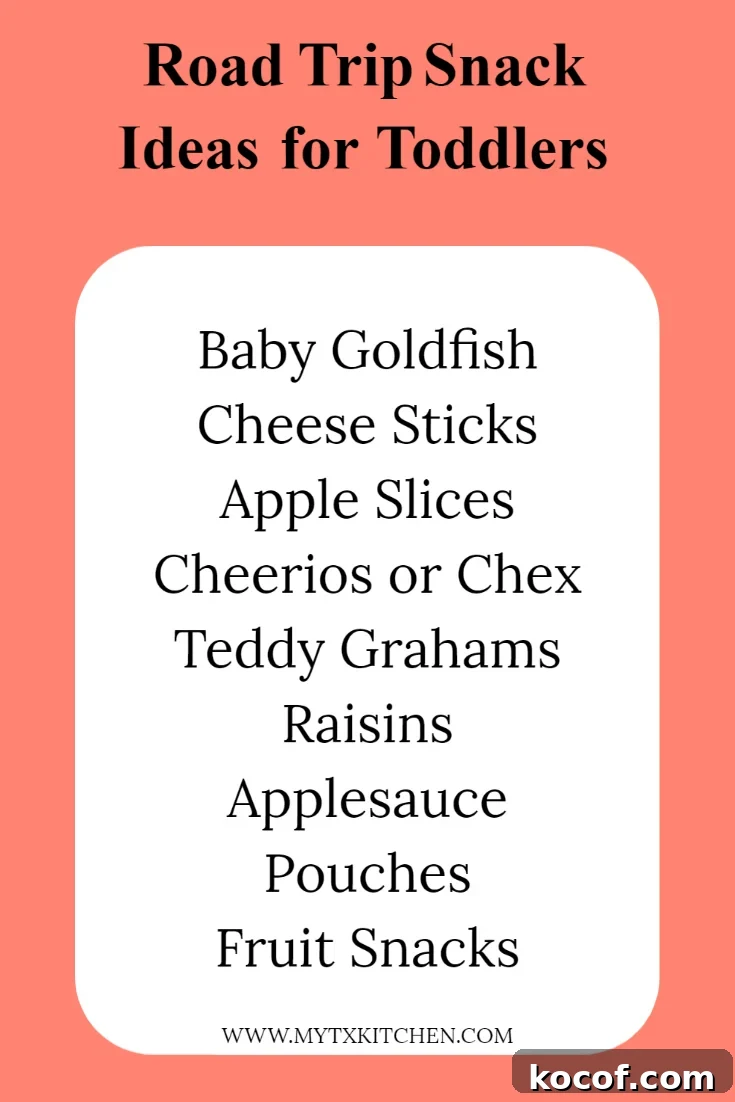
Typical snacks I pack for an 8+ hour drive include cheese sticks, apple slices, applesauce pouches, baby Goldfish, Chex or Cheerios, raisins, Teddy Grahams, and fruit snacks. These options are easy to eat, fairly tidy, and offer variety.
Plan Your Route Ahead
Familiarize yourself with your route before you leave. If your child needs bathroom breaks every couple of hours, work that into your timing and locate parks, rest stops, gas stations, or picnic areas along the way. Knowing where suitable stops are makes it easier to pull over quickly and efficiently.
When I’m traveling alone, I try to stop at parks when possible. Letting kids run and stretch for 15–20 minutes can make the next stretch of driving much smoother. Parks with public restrooms are especially helpful — they’re usually cleaner and more private than truck-stop parking lots, making diaper changes, bathroom visits, and snack distribution easier.
Activities and Toys
My children are young and don’t use personal electronic devices, so most of our drives are screen-free. The night before a trip I give my three-year-old a gallon Ziploc bag to pack the toys he wants to bring. Limiting the toys to what fits in that bag gives him ownership of his choices and prevents overpacking. He usually chooses small toys like trains, cars, and animal figures. I also bring a water coloring book for quiet creative time.
For my younger child, I bring a couple of sturdy lift-the-flap books and one small gadget toy. I avoid buying a bunch of cheap $1 toys specifically for the trip — too many new items can create more fuss and clutter. A few familiar, well-chosen toys are better than a pile of random distractions.
Talk to Your Toddlers
I talk to my kids while we drive and point things out. I believe a little boredom is healthy; it encourages observation and curiosity. Our rural route gives us plenty to notice — wind turbines, trucks, trains, tractors, cows, and horses. If they start to get fussy, I try to redirect their attention by asking if they see something specific. I keep my tone positive and enthusiastic because kids often mirror my energy.
As a last resort, I play toddler music to change the mood. It usually lifts their spirits, though I prefer not to rely on it too often because toddler songs on repeat can be hard for me to listen to while driving.
Notes
I avoid traveling solo at night when possible. Stops that feel safe during the day can be very different after dark.
Parks are also good places for nursing breaks because they offer more privacy than busy parking areas.
If you forget whole milk for a toddler who needs it, a quick stop at a gas station usually solves the problem — you can buy a small container and keep going.
If you need a break, take one. A short stop can refresh everyone and make the rest of the drive easier.
Safe travels!