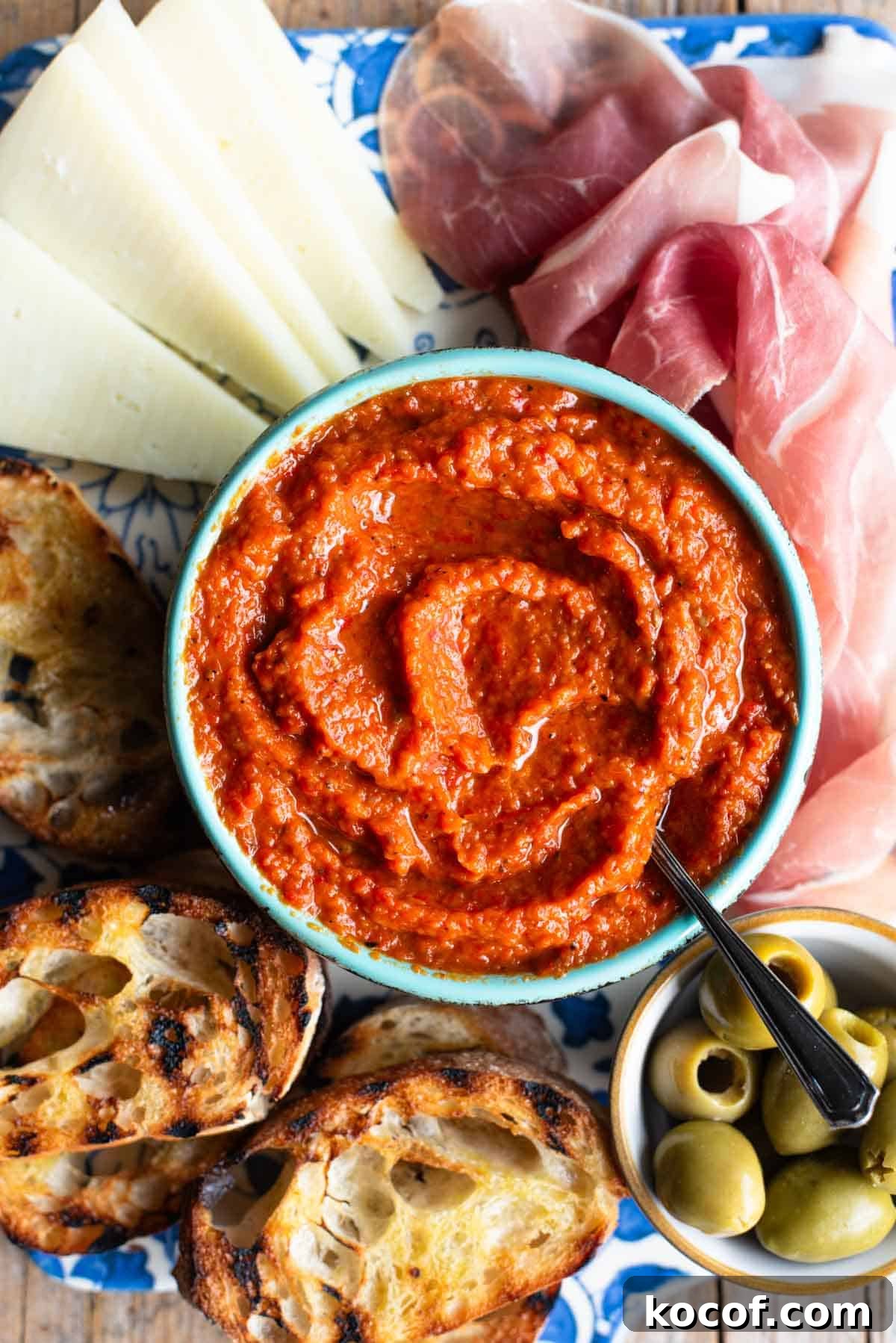
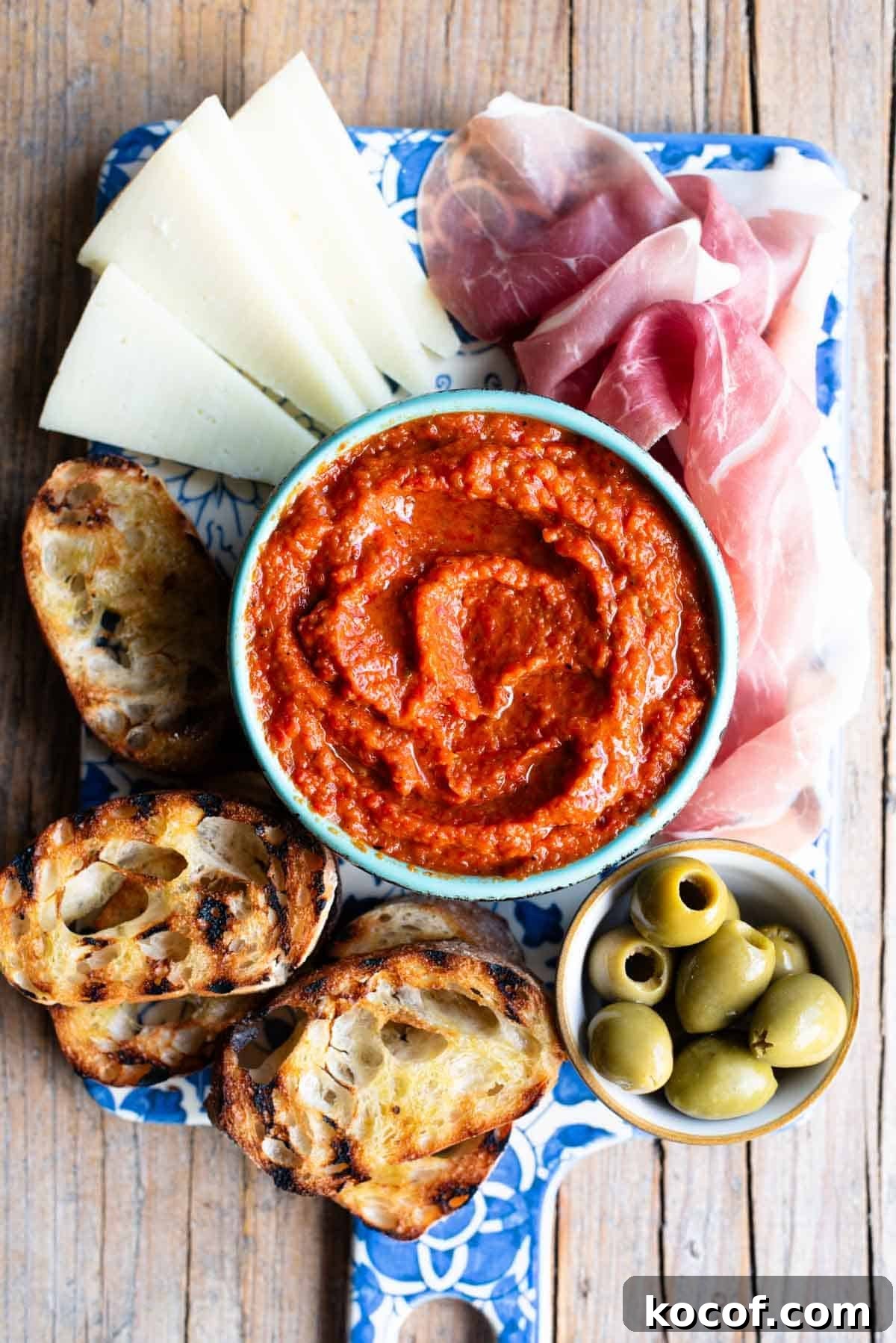
You’ll find Ajvar throughout Friuli‑Venezia Giulia, the mountainous northern region of Italy. This vibrant condiment is made from charred red peppers, roasted eggplant and garlic, delivering a delightful balance of sweet, smoky and savory notes. Serve it with cured meats, cheese, sausages or as a versatile spread.
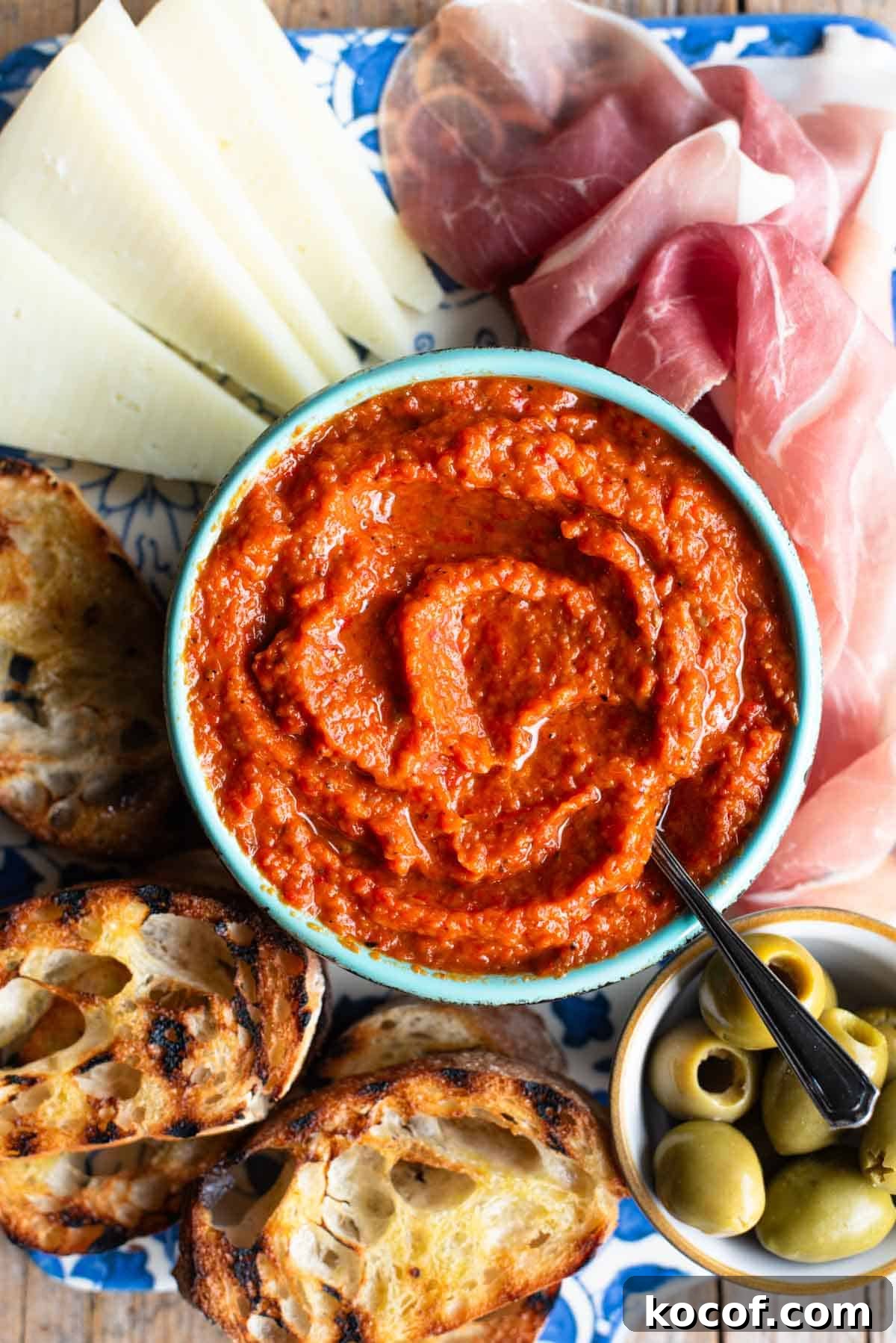
The cuisine of Friuli‑Venezia Giulia is shaped by its neighbours — Austria, Slovenia and Croatia — and Ajvar is one example of those Balkan influences that appear across the region.
Charred peppers are blended with roasted eggplant, garlic, a touch of sugar and white wine vinegar to create a condiment that is smoky, slightly sweet and deeply satisfying.
See the full recipe below, including ingredient notes and tips. If you want to explore more dishes from Friuli‑Venezia Giulia, try Frico or Scallops Gratin for more authentic regional flavours.
Table of Contents
- Ingredients
- Visual walk-through of the recipe
- Ways to use Ajvar
- Recipe Tips
- More dips and pestos to try
- Full Recipe
Ingredients
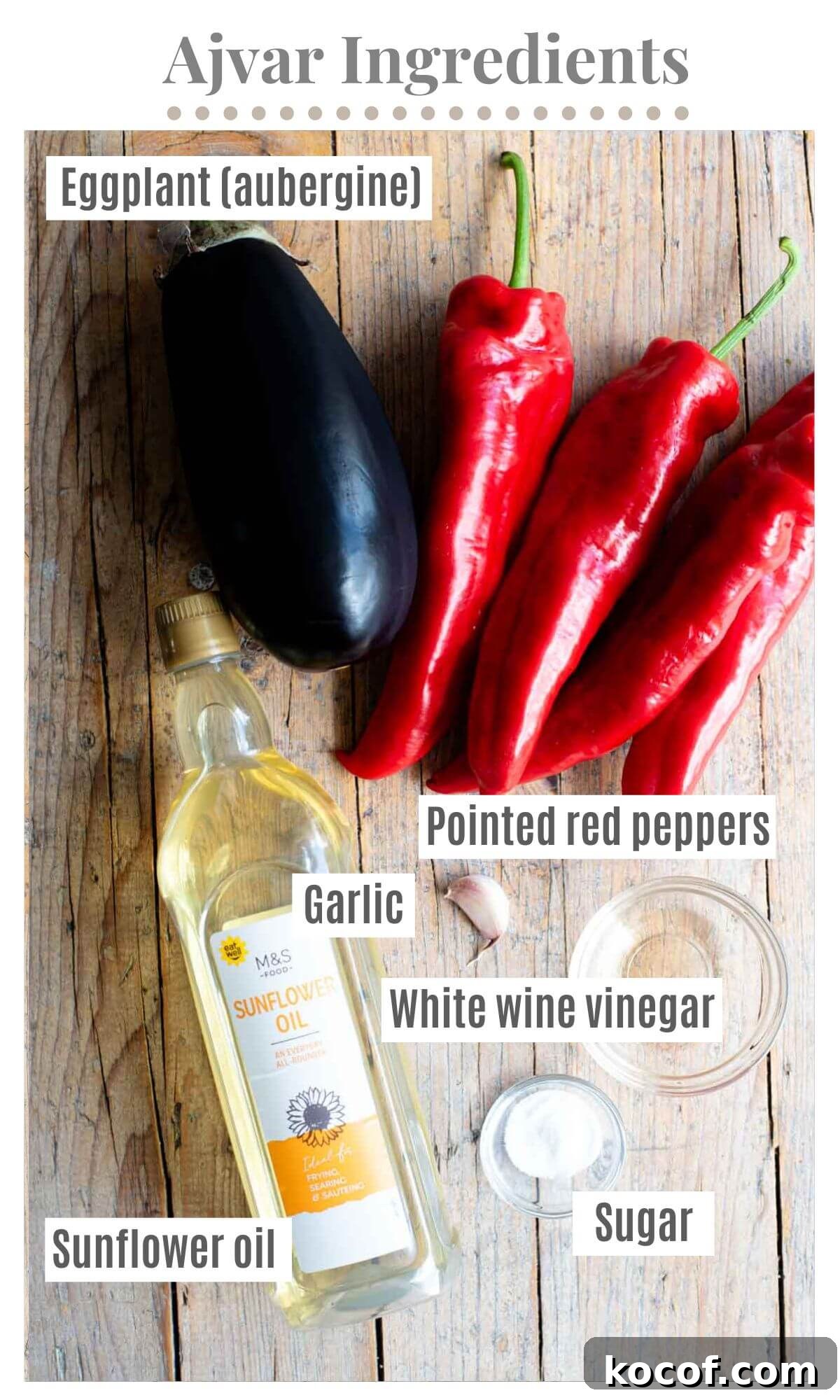
Ingredient notes and substitutions
- Peppers – Pointed (Romano) peppers are traditional and their skins are easier to remove after charring. Bell peppers can be used but may take longer to char and peel.
- Eggplant (aubergine) – Use one large eggplant or two small ones. Choose firm, plump fruit without bruises.
- Sunflower oil – A neutral oil like sunflower is recommended, but any flavorless oil will work.
- Sugar and white wine vinegar – Use the amounts in the recipe, then adjust to taste if you prefer it sweeter or tangier.
Visual walk-through of the recipe
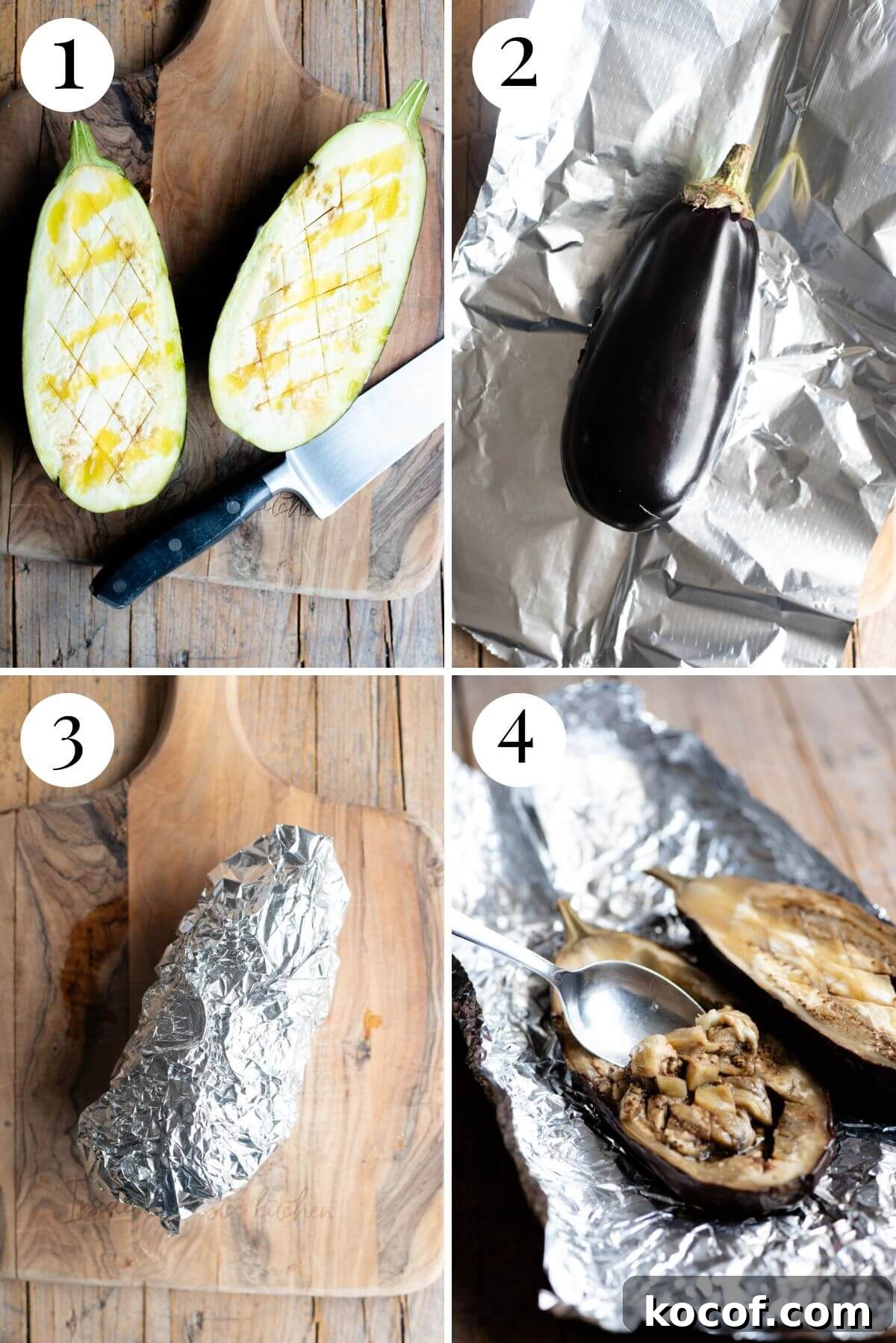
- Roast the eggplant – halve and score the flesh, drizzle with olive oil, reassemble and wrap in foil. Roast for 1 to 1¼ hours until very soft (photos 1–4).
- Char the peppers – place the peppers over a naked flame on the stovetop, turning with tongs until the skins are blackened (photo 5).
- Transfer the charred peppers to a deep dish, cover with cling film and let them steam for 30–60 minutes to loosen the skins (photo 6).
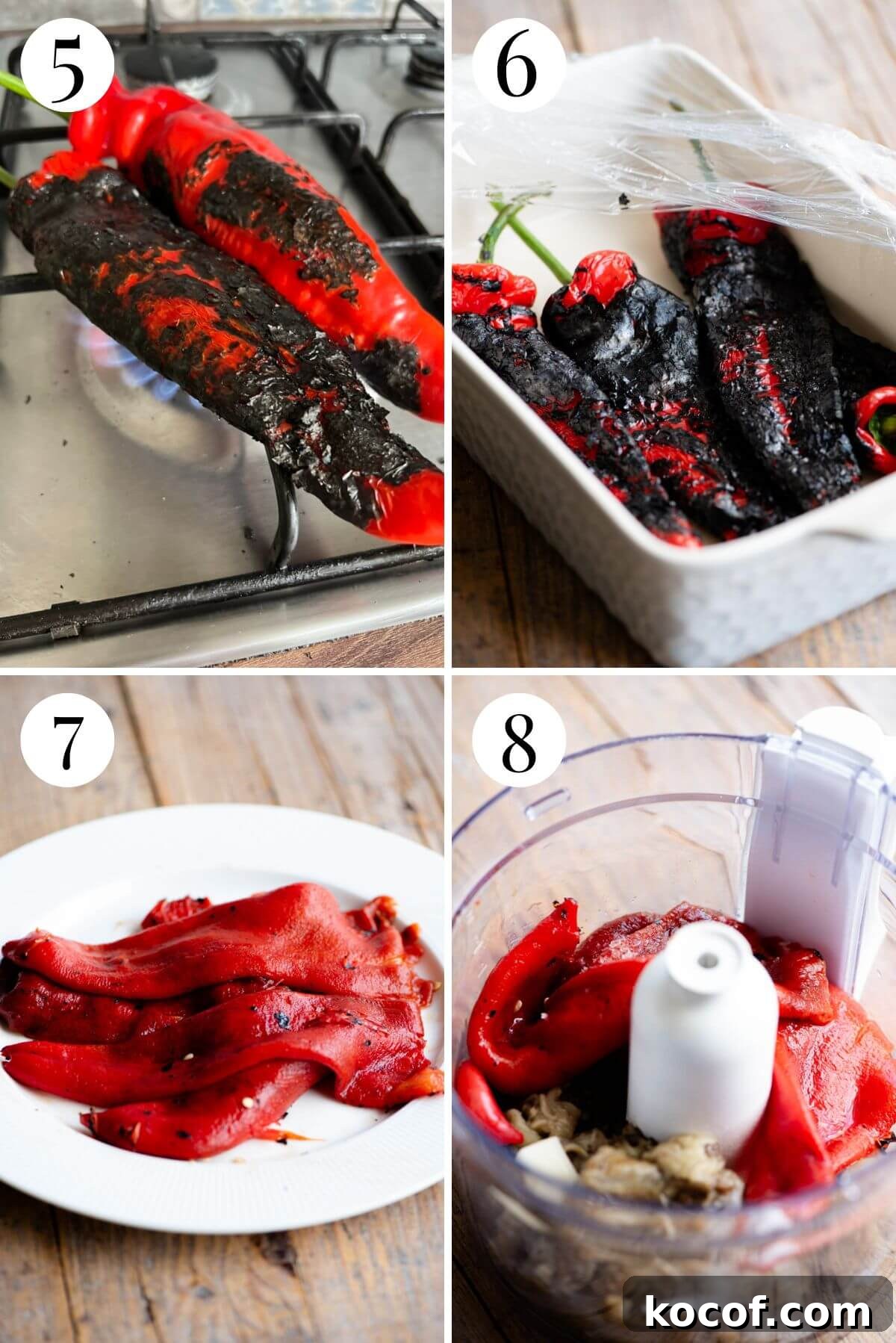
- Remove the skins – peel away the charred skin from the peppers. Use damp kitchen paper to wipe off any remaining blackened bits (photo 7).
- Blend – scoop the roasted eggplant flesh and place it in a food processor with the peeled peppers, garlic, sugar and white wine vinegar. Blitz until smooth (photos 8–9).
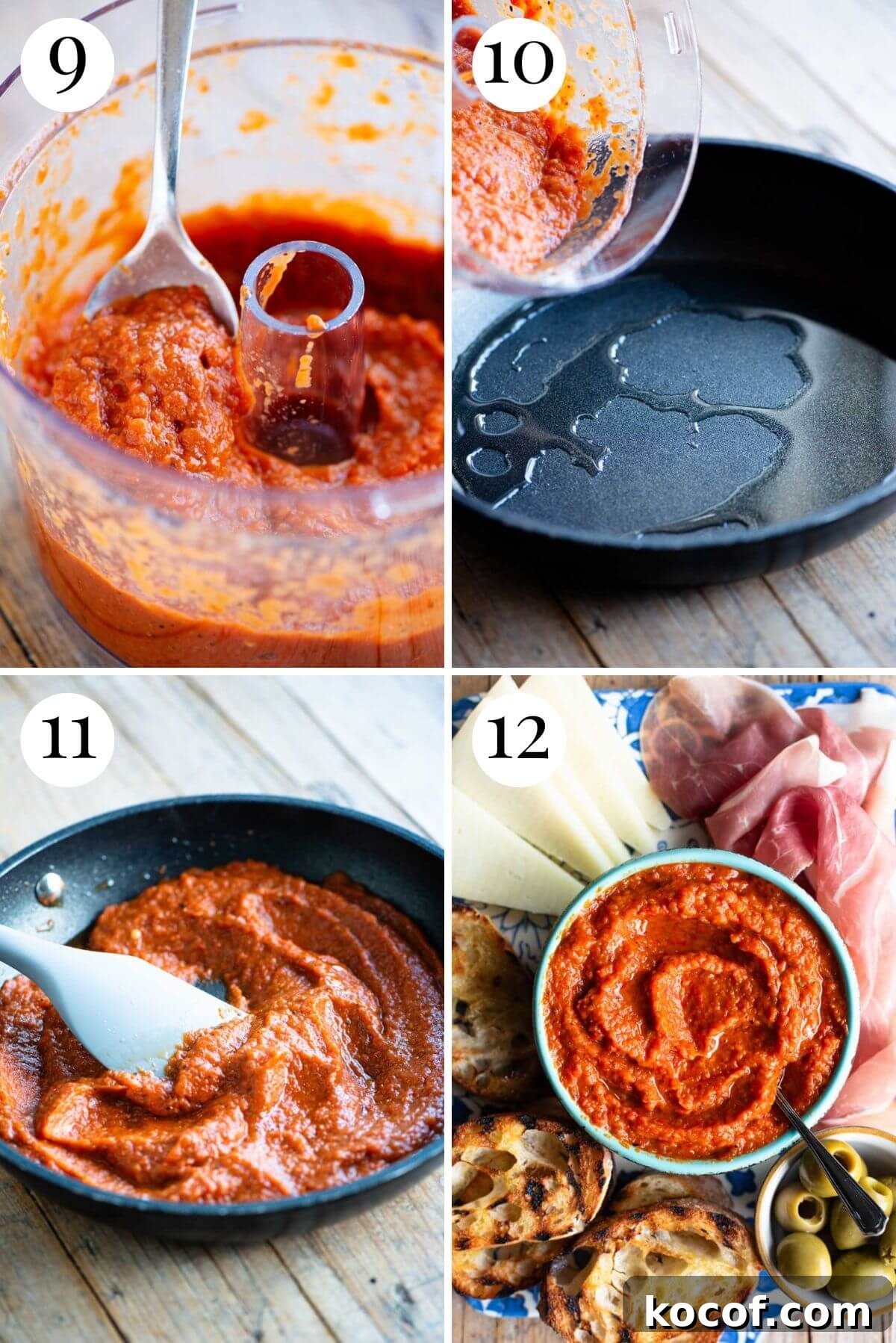
- Cook the Ajvar – heat oil in a frying pan, add the pepper mixture and stir. Simmer gently for 5–10 minutes to deepen the flavour, then remove from the heat and let cool. Serve warm or at room temperature as a sauce, dip or spread (photos 10–12).
Ways to use Ajvar
Here are some simple, delicious ways to enjoy Ajvar:
- As a condiment with grilled meats, chicken, steak or sausages.
- As a spread for crostini alongside cured meats, cheeses and other nibbles.
- On sandwiches topped with grilled vegetables, cheese or your favourite fillings.
Recipe Tips
- Extra smoky flavour – char the eggplant over a flame instead of roasting for a more intense smokiness.
- Manage eggplant moisture – if the roasted flesh is too watery, drain or press it in a sieve to remove excess liquid before blending.
- Peppers – pointed peppers are easier to peel; if using bell peppers expect a slightly longer charring time.
- Adjust consistency – add more oil for a looser texture, or reduce the mixture by cooking longer for a thicker spread.
Ajvar will keep in the fridge for up to 3 days and can be enjoyed warm or at room temperature.
More dips and pestos to try
Dips & Pestos
Pistachio Pesto (Pesto di Pistacchi)
Sauces & Dressings
Italian Salsa Verde (Green Sauce)
Dips & Pestos
Artichoke Pesto (Quick 5 minute Recipe)
Antipasti
Whipped Ricotta Dip with Roasted Tomatoes
If you’ve tried this Ajvar recipe or any other recipe on the blog, please rate it and leave a comment to let me know how it went — I love hearing from readers. You can also follow us on social media or sign up for the newsletter to see more recipes and updates.
Step By Step Photos Above
Most of our recipes include step-by-step photos and helpful tips to make them successful every time.
Ajvar (Red Pepper Spread)
By Emily
Remove Ads
Ingredients
- 4 pointed peppers
- 1 large eggplant or 1.5 medium eggplants, (see notes)
- 1 garlic clove
- 1 teaspoon sugar
- 1 tablespoon white wine vinegar
- 1.5 tablespoons sunflower oil
- olive oil
- salt
Instructions
-
Preheat the oven to 180℃ (350℉). Cut the eggplant in half, score the flesh, drizzle with olive oil, reassemble and wrap in foil. Roast for 1 to 1¼ hours until very soft.
-
Char the pointed peppers directly over a stovetop flame until the skins are blackened. Transfer to a bowl and cover with cling film to steam for 30–60 minutes.
-
When cool, remove as much of the blackened skin as possible, then trim the tops and remove seeds. Wipe any remaining char with damp kitchen paper.
-
Scoop the eggplant flesh into a food processor with the peeled peppers, sugar, garlic and a pinch of salt. Blitz until smooth.
-
Heat sunflower oil in a small frying pan. Add the pepper mixture and cook for 5–10 minutes over medium‑low heat to concentrate the flavours.
-
Allow to cool, then serve as a dip, spread or condiment.
Notes
- Size of eggplant – If you don’t have a large eggplant, roast two medium ones and use the flesh from 1½ of them; the remaining half can be added to other dishes.
- Moisture in eggplant – If the flesh is very wet after roasting, drain it in a sieve and squeeze out excess moisture before blitzing.
- Pointed peppers vs bell peppers – Bell peppers work but can be harder to peel and may require longer charring.
- Consistency – Adjust oil or cooking time to thin or thicken the Ajvar to your liking.
- Smokiness – For a deeper smoky taste, char the eggplant over flame instead of roasting.
- Storage – Ajvar keeps in the refrigerator for up to 3 days and can be served warm or at room temperature.
Helpful Info for All Recipes
- Extra virgin olive oil is used in recipes unless otherwise stated.
- All vegetables are medium-sized unless noted.
- Recipes are tested using a fan (convection) oven.
- Nutrition is automatically calculated and provided as an approximation.
Nutrition
Nutrition information is an approximation.