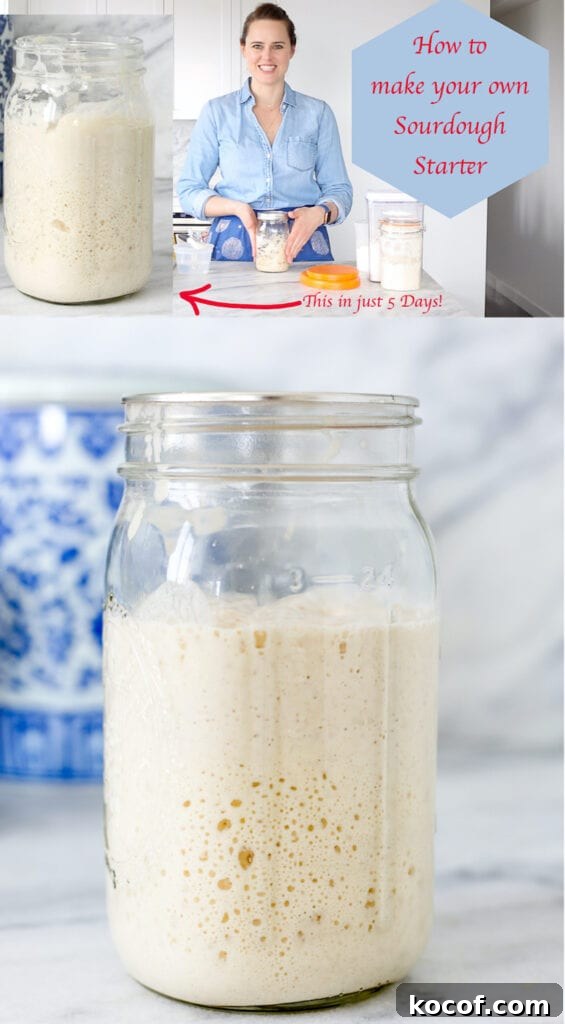
With this easy-to-follow sourdough starter recipe, you can have an active starter and bake fresh sourdough bread in about five days. This day-by-day guide answers common questions and walks you through creating and maintaining a healthy starter.
A Quick Look At The Recipe
This is a brief summary of the recipe. Jump to the recipe for full details.
Jump to Recipe
Prep Time
5 days
Total Time
5 days
Servings
6 servings
Difficulty
Easy — requires patience.
Calories *
417 kcal per serving
Technique
Feed daily with rye to start, switching to all-purpose on Day 4 for a neutral flavor.
Flavor Profile
Mildly tangy, yeasty, and earthy.
* Based on nutrition panel
Summarize & Save this content on
Featured Comment
⭐⭐⭐⭐⭐ Thank you for the clear tips on starting and maintaining a starter! My starter is doubling and looks happy—can’t wait to bake my first loaf! – Mara
Table of Contents
- What is a Sourdough Starter?
- Ingredients & Substitutions
- Professional Tips
- Liquid vs. Stiff Levain
- How to Make This Sourdough Starter Recipe
- Chef Lindsey’s Recipe Tip
- Recipe FAQs
- Recommended Sourdough Bread Recipes
- Sourdough Starter Recipe
- Before You Go
A sourdough starter is the base for naturally leavened bread. With just flour, water, and time, wild yeast and beneficial bacteria will ferment into an active, bubbly starter. Follow this guide and the included video for a straightforward five-day method.
What is a Sourdough Starter?
A sourdough starter is a living culture made by fermenting flour and water. It houses wild yeasts and beneficial bacteria that leaven and flavor bread. An older, well-cared-for starter contributes more complex flavor and better texture.
Ingredients & Substitutions
- Rye Flour: Rye and other whole grain flours contain more natural yeast and can jump-start fermentation. This recipe begins with rye for activity, then switches to all-purpose to keep the starter’s flavor neutral.
- Water: Room-temperature tap water is fine. If your starter is rising too quickly, try using colder water to slow fermentation.
- All-Purpose Flour: Unbleached all-purpose (or bread flour) is used to maintain a versatile starter that works well in a range of breads.
See the recipe card below for exact quantities and full ingredient details.
Professional Tips
- Weigh your starter: Use a kitchen scale. Weight is far more reliable than volume when tracking growth and feeding schedules.
- Be patient: Creating a stable ecosystem takes time. Some flours (bleached or bromated AP) may not develop strong activity.
- Learn your starter’s rhythm: Note how long it takes to double so you can plan dough mixing. Control the rate by temperature or water temperature in the feed.
Liquid vs. Stiff Levain
A stiff levain has roughly equal parts flour and water, while a liquid levain contains more water. Liquid levains ferment and peak faster and add more hydration to dough, creating a more open crumb. You can convert your starter between stiff and liquid by adjusting the flour-to-water ratio. A common liquid levain ratio used here is 100g flour + 125g water + 10g starter.
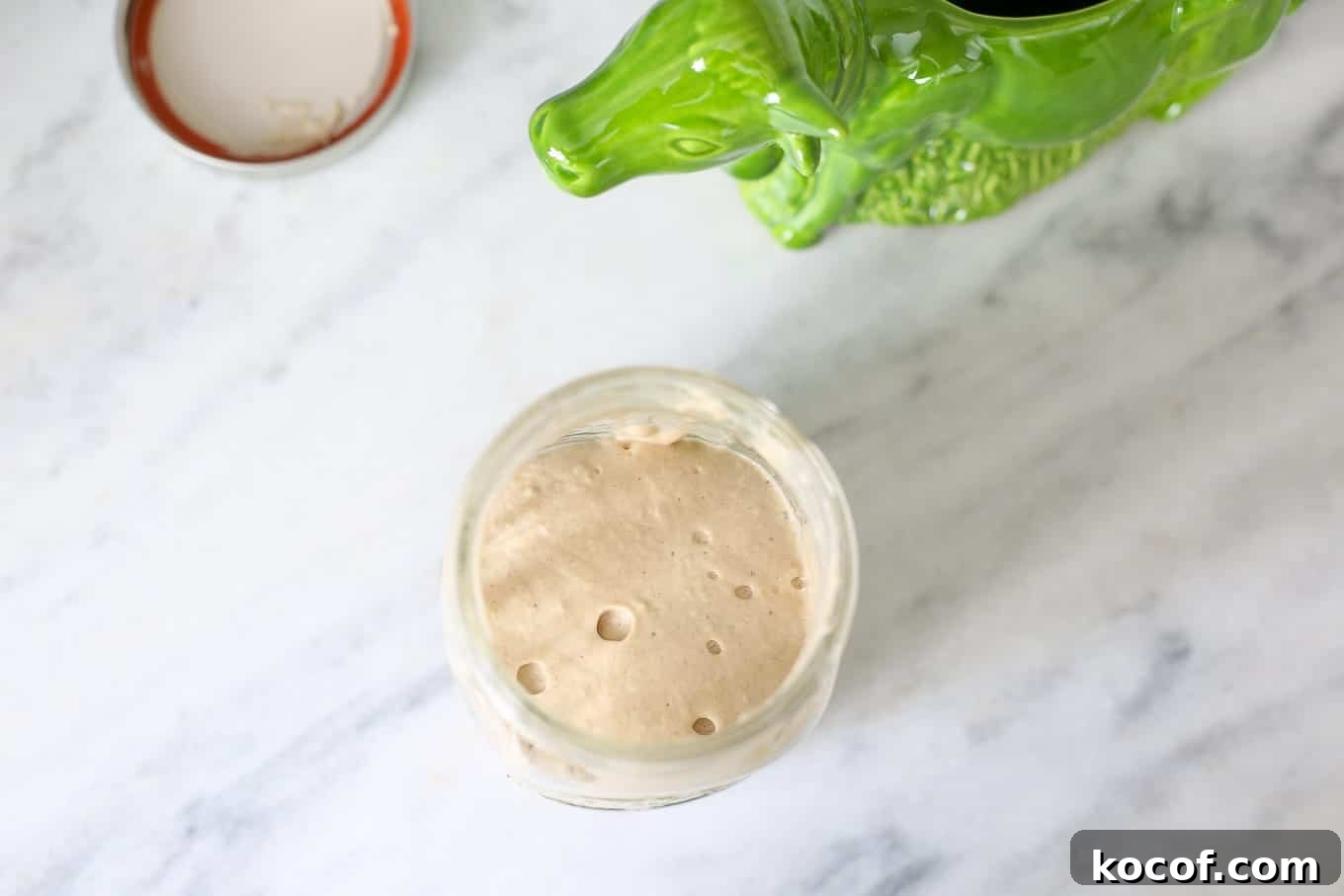
How to Make This Sourdough Starter Recipe
Follow these daily steps to build a robust starter. Exact measurements are in the recipe card below.
Day 1: Combine 100g rye flour and 100g water in a clean container, stir until hydrated, cover, and leave at room temperature for 24 hours.
You can start with unbleached all-purpose flour, but whole grain flours jump-start activity faster due to higher natural yeast content.
Day 2: Mix 100g rye flour, 100g water, and 100g of the Day 1 mixture in a clean container. Discard the excess. Cover and let sit at room temperature for 24 hours. You should begin to see bubbles and some rise.
If possible, keep two jars to rotate—one clean and ready while the other ferments.
Day 3: Repeat Day 2. The starter should be rising more and may be approaching double its volume.
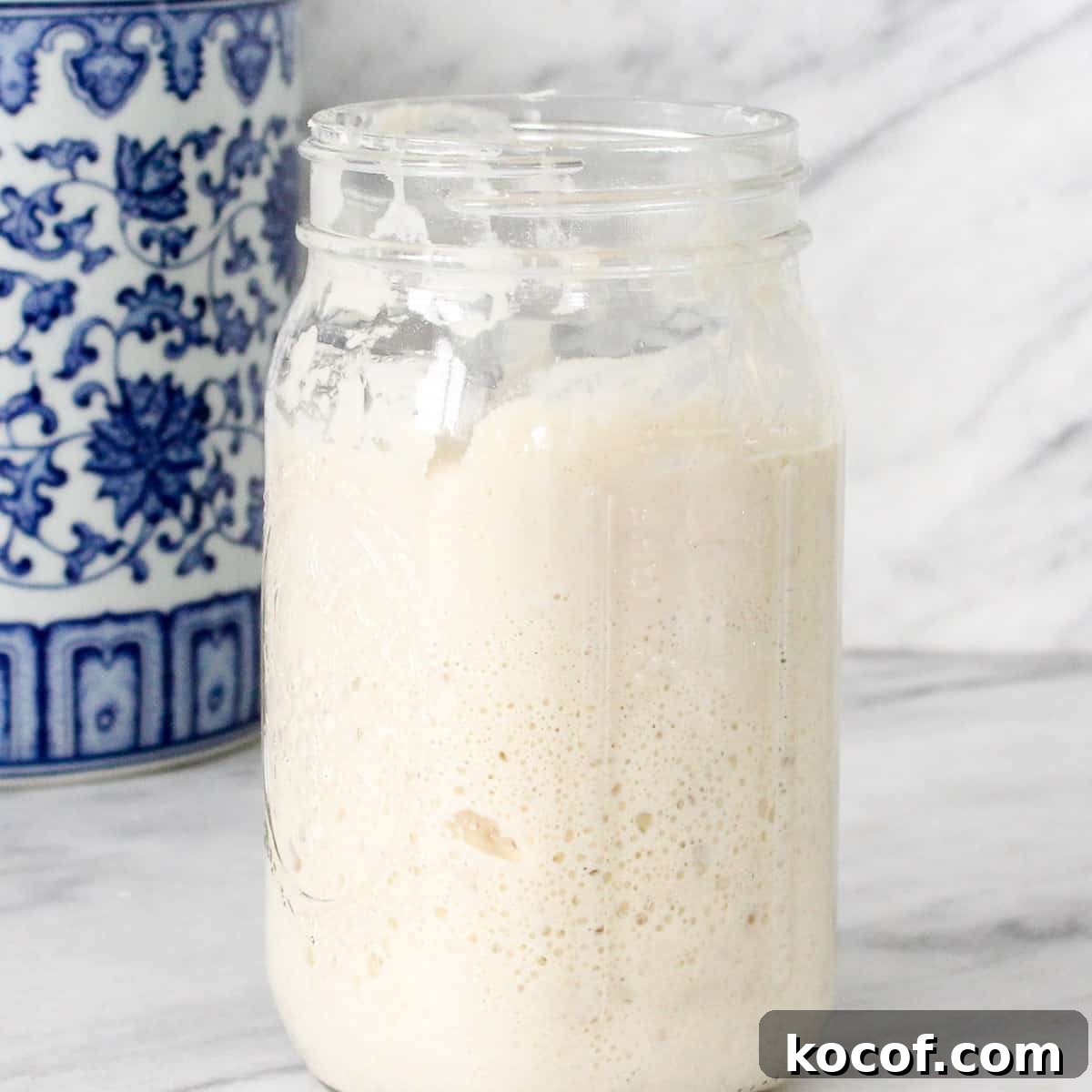
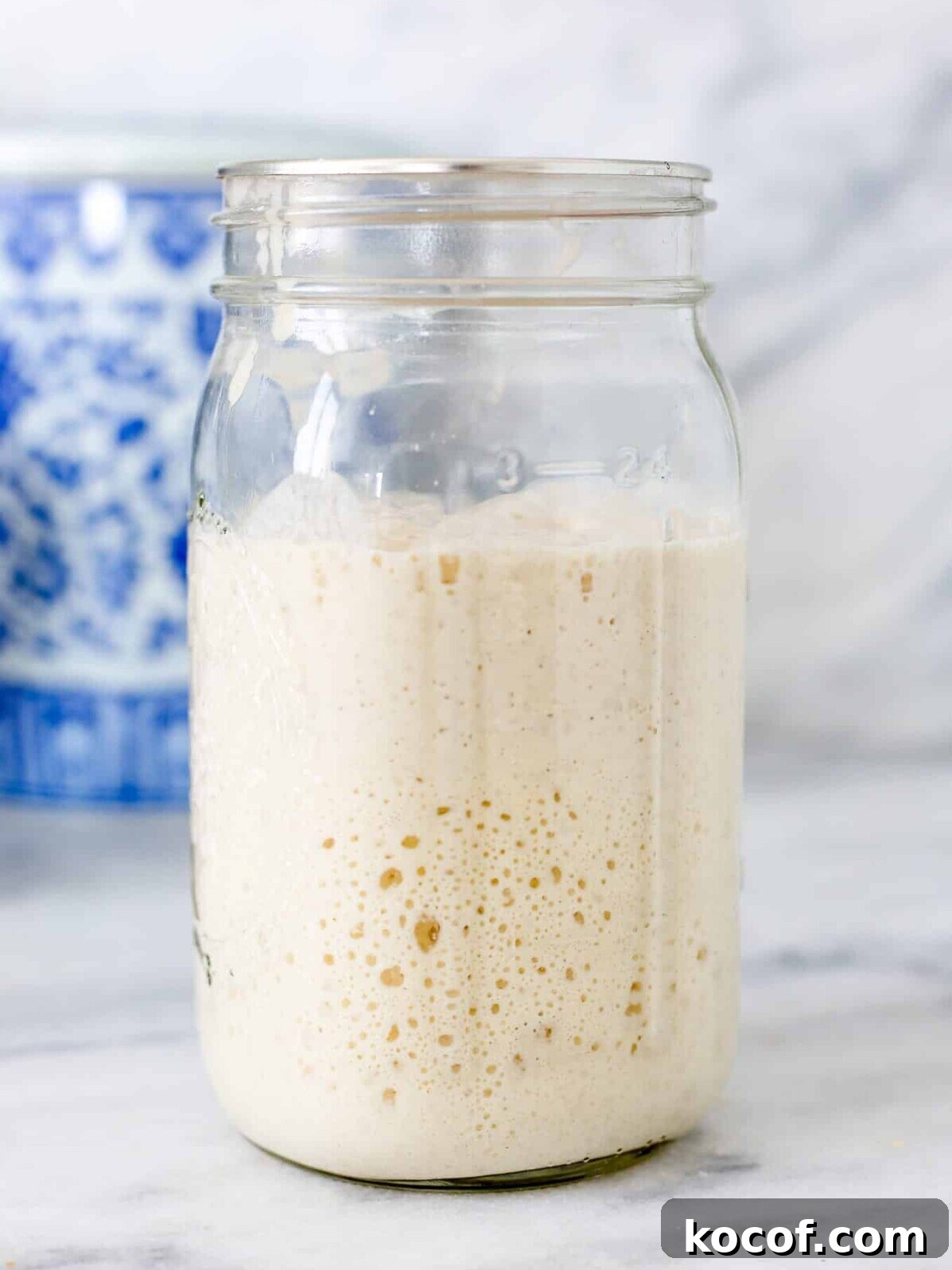
Day 4: Switch to all-purpose flour. Combine 100g all-purpose flour, 100g water, and 100g of the previous day’s starter. Discard the excess, cover, and let sit at room temperature for 24 hours. Expect a noticeable doubling and larger air pockets.
If it hasn’t doubled yet, keep feeding with rye for another day before switching.
Day 5: Repeat Day 4. By now the starter is often tripled and ready to use for bread.
Days 6 & 7: Continue the Day 4 routine to maintain consistency.
Feeding your starter for the long term: When your starter is active, choose a feeding schedule and ratio based on whether you want a stiff or liquid levain:
Stiff levain ratio example:
100g water
10g previous day’s starter
100g all-purpose flour
Liquid levain ratio example:
125g water
10g previous day’s starter
100g all-purpose flour
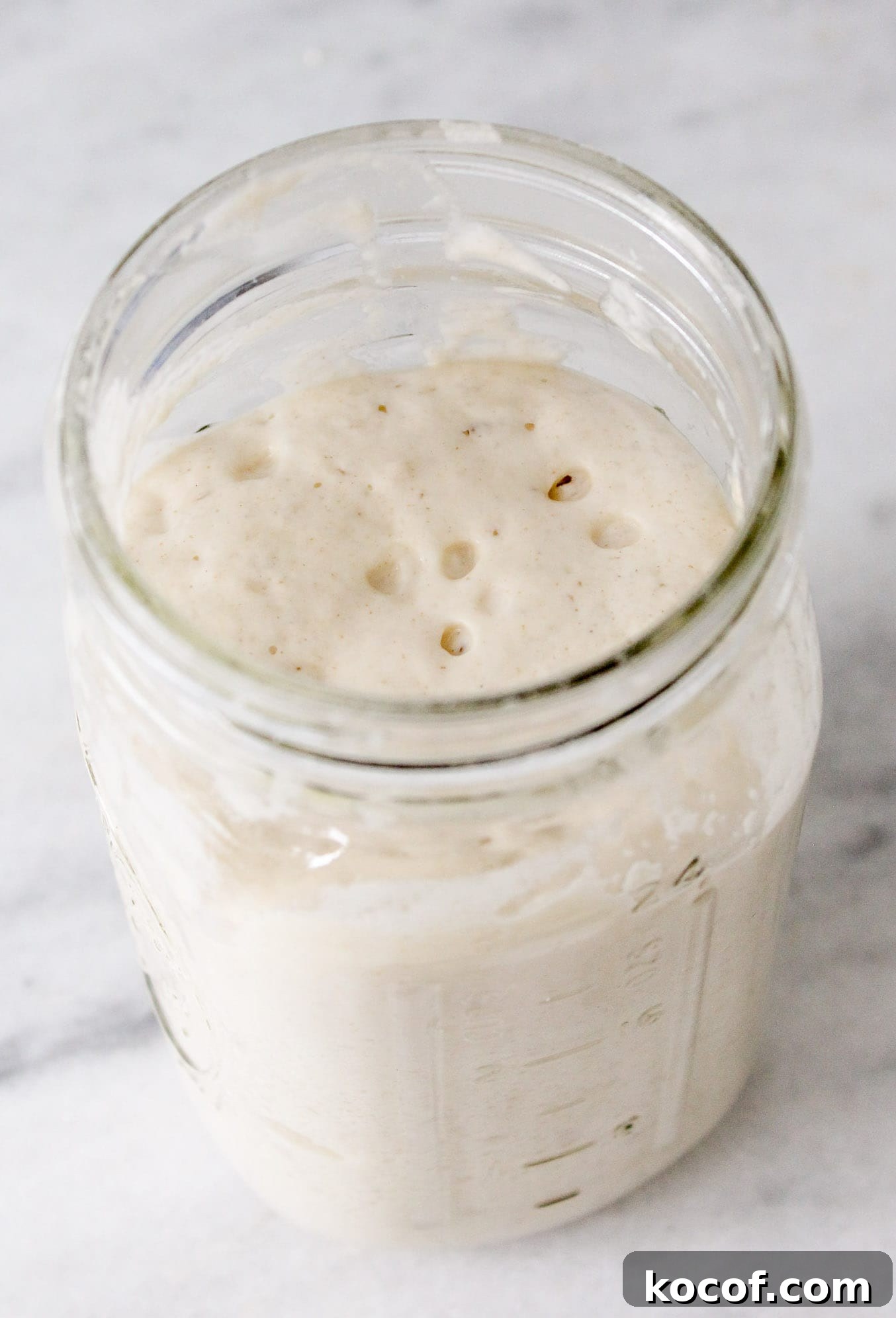
Chef Lindsey’s Recipe Tip
Scrape the jar sides clean and mark the level of freshly fed starter with a rubber band to track rise and peak times. This makes it easy to know when the starter has doubled or is at its peak.
Recipe FAQs
Store starter in a covered glass jar. Keep it at room temperature if feeding daily; otherwise refrigerate and feed every two weeks. You can freeze starter for longer storage, but regular fridge maintenance keeps it strongest.
Don’t panic — most starters can be revived. If hooch (a dark liquid) forms, it means the starter is hungry. Let it sit at room temperature for several hours and resume feeding. For long-neglected starters, feed consecutively until it regains activity.
Save discard in a separate jar in the fridge and use it for discard recipes like pancakes, waffles, crackers, or pizza dough to avoid waste and add flavor.
Color varies with the flour used. Rye starters can be brownish or grey; switched-to-AP starters usually become cream-colored. If you see pink or orange hues, discard the starter—that indicates contamination.
Recommended Sourdough Bread Recipes
Sourdough Bread Recipes
Easy Sourdough Bread Recipe
Sourdough Bread Recipes
Sourdough Raisin Bread
Dinner Roll Recipes
Sourdough Rolls
Sourdough Bread Recipes
Cherry Sourdough Bread
If you tried this recipe and enjoyed it, please leave a star rating and share your experience in the comments. I love hearing from you!
Sourdough Starter Recipe
Comment
Print Recipe
Ingredients
- 300 g rye flour
- 700 g water
- 400 g all-purpose flour
Instructions
-
Day 1: Combine 100g of rye flour and 100g of water in a clean container, cover, and let sit at room temperature for 24 hours. Ensure all flour is hydrated.
-
Day 2: Mix 100g rye flour, 100g water, and 100g of the Day 1 mixture in a clean container. Discard the remainder. Cover and leave at room temperature for 24 hours. Bubbles and activity should appear.
-
Day 3: Repeat Day 2. The starter should be roughly doubled or more.
-
Day 4: Combine 100g all-purpose flour, 100g water, and 100g of the previous day’s starter. Discard the remainder, cover, and let sit at room temperature for 24 hours. Expect a pronounced doubling and larger air pockets.
-
Day 5: Repeat Day 4. The starter should be active and ready to use for bread.
-
Days 6 & 7: Continue the Day 4 feeding routine to maintain the starter.
-
Feeding for long-term maintenance:
Stiff levain example:
100g water
10g previous day’s starter
100g all-purpose flourLiquid levain example:
125g water
10g previous day’s starter
100g all-purpose flour
Video
Notes
Watch the video for a day-by-day visual guide.
Flavor Tips — The starter’s flavor reflects the flour used to feed it. For versatility, feed with unbleached all-purpose flour; to emphasize whole-grain flavor, feed with whole wheat or rye.
Technique — For best activity, let the starter rest at room temperature for 8–12 hours after removing it from cold storage, then feed and allow it to ferment overnight.
Storage — Keep starter in a covered glass jar to prevent drying. Refrigerate if not feeding daily and refresh by feeding before use.
Nutrition
Before You Go
I hope creating your starter was enjoyable and successful. Now that you have a strong levain, explore other sourdough recipes like cinnamon rolls or rolls to make the most of your starter.