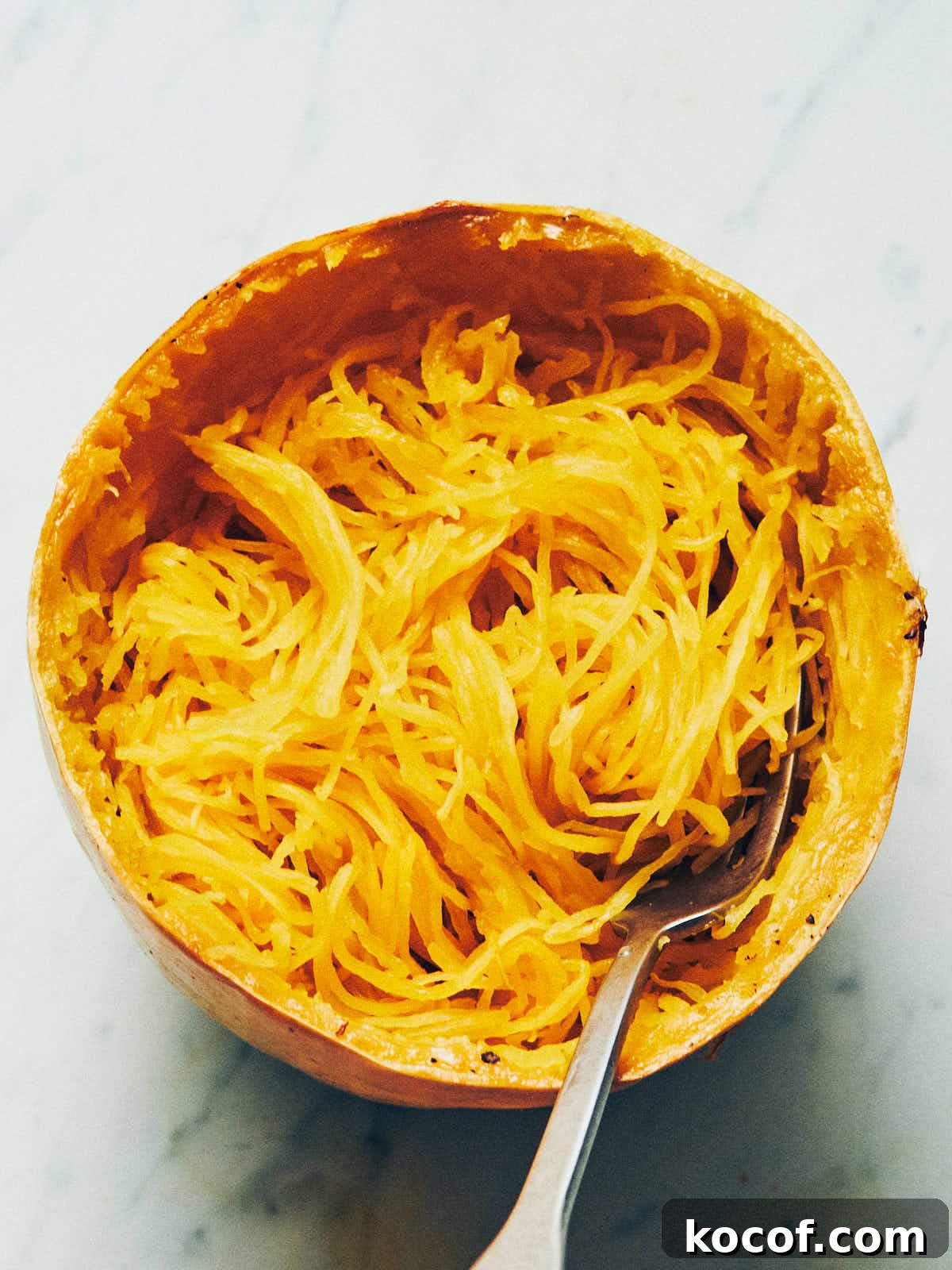
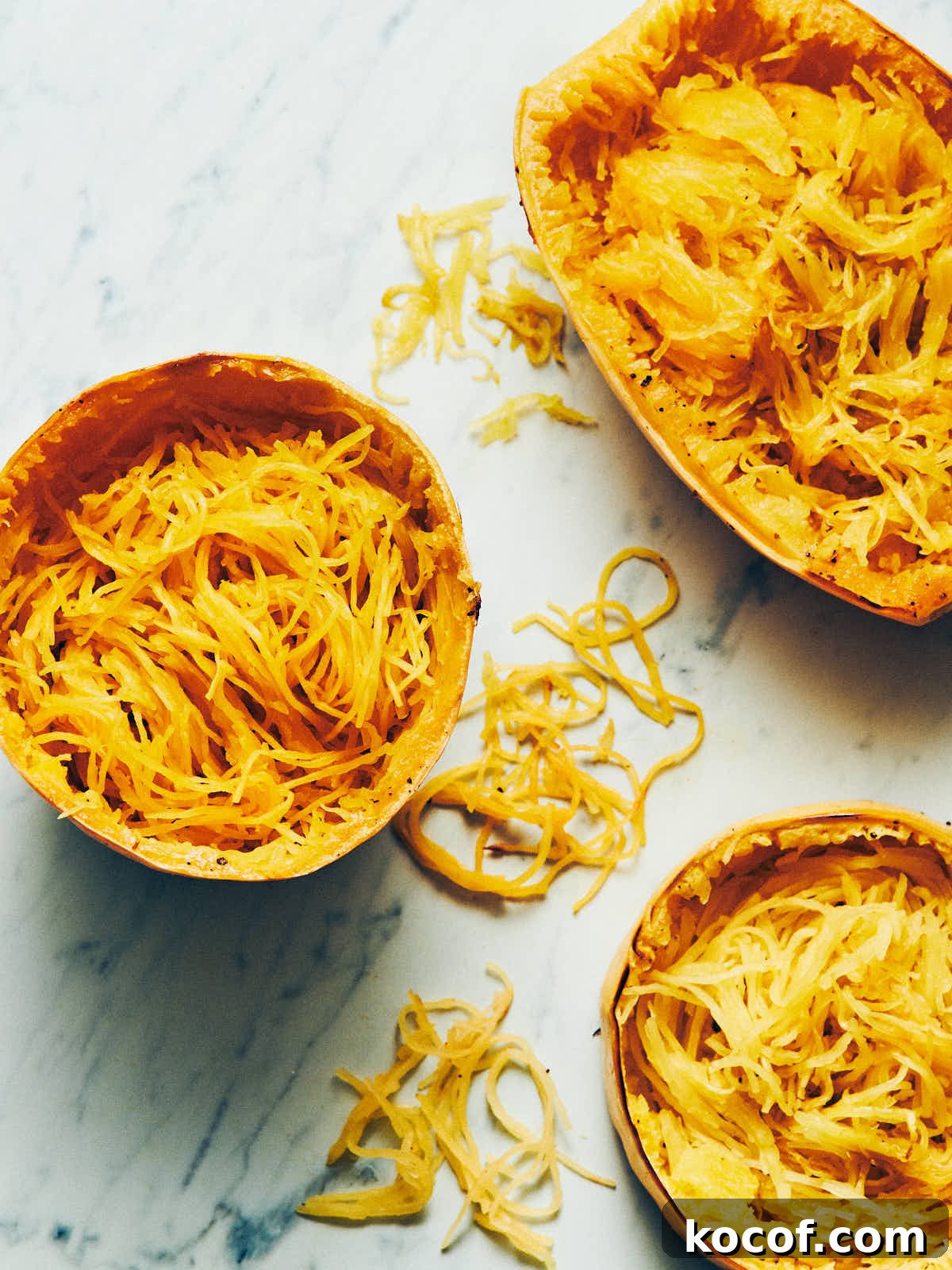
There are several ways to cook spaghetti squash, but after extensive testing we identified the best approach for cutting and roasting it. Below you’ll find everything you need to know about spaghetti squash — what it tastes like, how to clean it, the pros and cons of different cutting methods, and our recommended recipe for perfectly textured strands.

What does it taste like?
Spaghetti squash has a very mild, neutral flavor with a faint sweetness that many people describe as subtle to nearly imperceptible. Because its taste is gentle, it pairs well with seasonings, sauces, cheeses, proteins, and herbs. One of its main appeals is that it’s a low-calorie, nutrient-rich vegetable that transforms into noodle-like strands when cooked, offering a lighter alternative to traditional pasta.
How to clean it?
Like other winter squashes, spaghetti squash holds seeds and fibrous strands inside, so you’ll want to clean it before cooking. Start by washing the outside to remove any dirt. After cutting the squash open, use a spoon to scoop out the seeds and the slimy membrane. You can discard the seeds or rinse, season, and roast them for a crunchy snack.

Best way to cook it?
There are multiple cooking methods — baking, boiling, microwaving, and steaming — but baking is our preferred method. Roasting in the oven avoids adding water that can make the strands soggy, concentrates flavor, and requires minimal hands-on time. Below we tested three ways to cut the squash and roasted each to compare the results.
Method 1: Cutting in half lengthwise
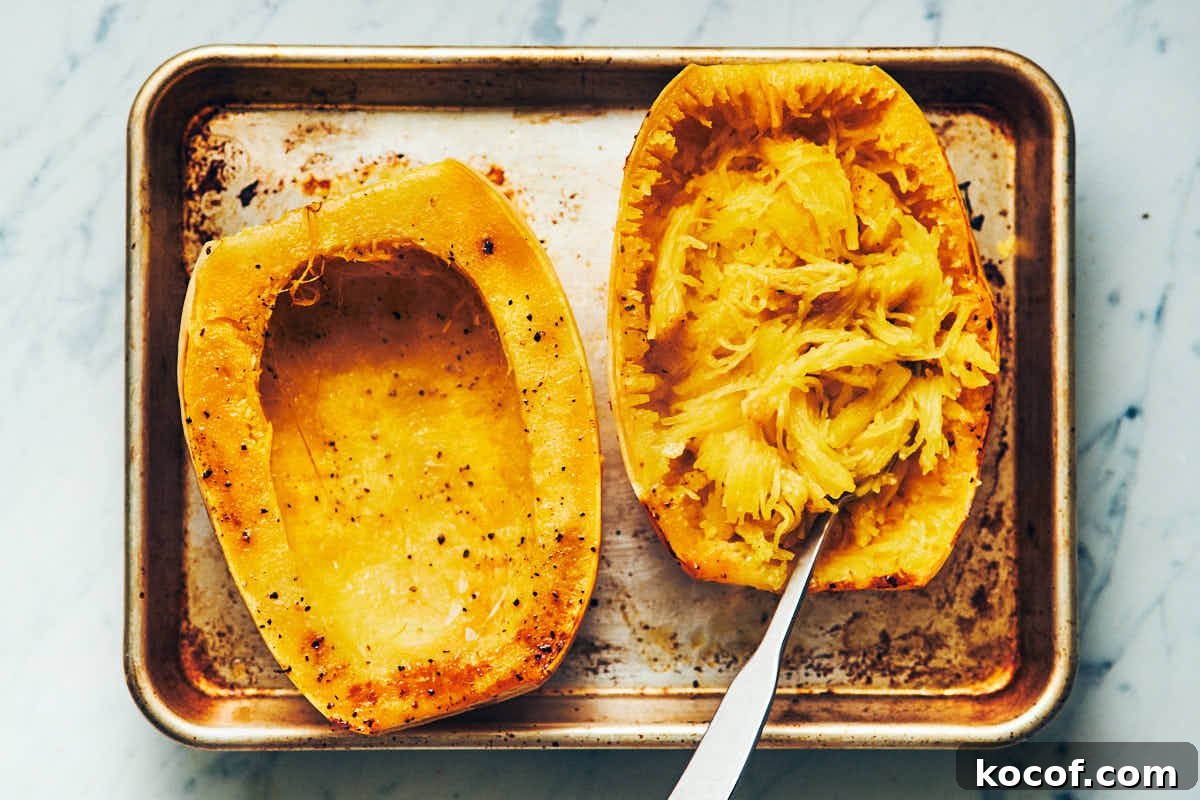
Cutting a spaghetti squash lengthwise is common and gives you two “boats” that are easy to fill. Steps:
- Trim both ends of the squash.
- Stand the squash upright on a trimmed end for stability.
- Slice down the length of the squash.
- Scoop out the seeds and membrane.
- Drizzle cut sides with olive oil, season with salt and pepper, place cut-side down, and bake.
Benefits
- Wide openings make scooping seeds simple and create a convenient vessel for toppings.
Drawbacks
- Cutting it can be challenging because you make multiple cuts and must slice through the tough long side.
- The resulting strands are shorter and more likely to break while scraping.

Method 2: Cutting in half crosswise
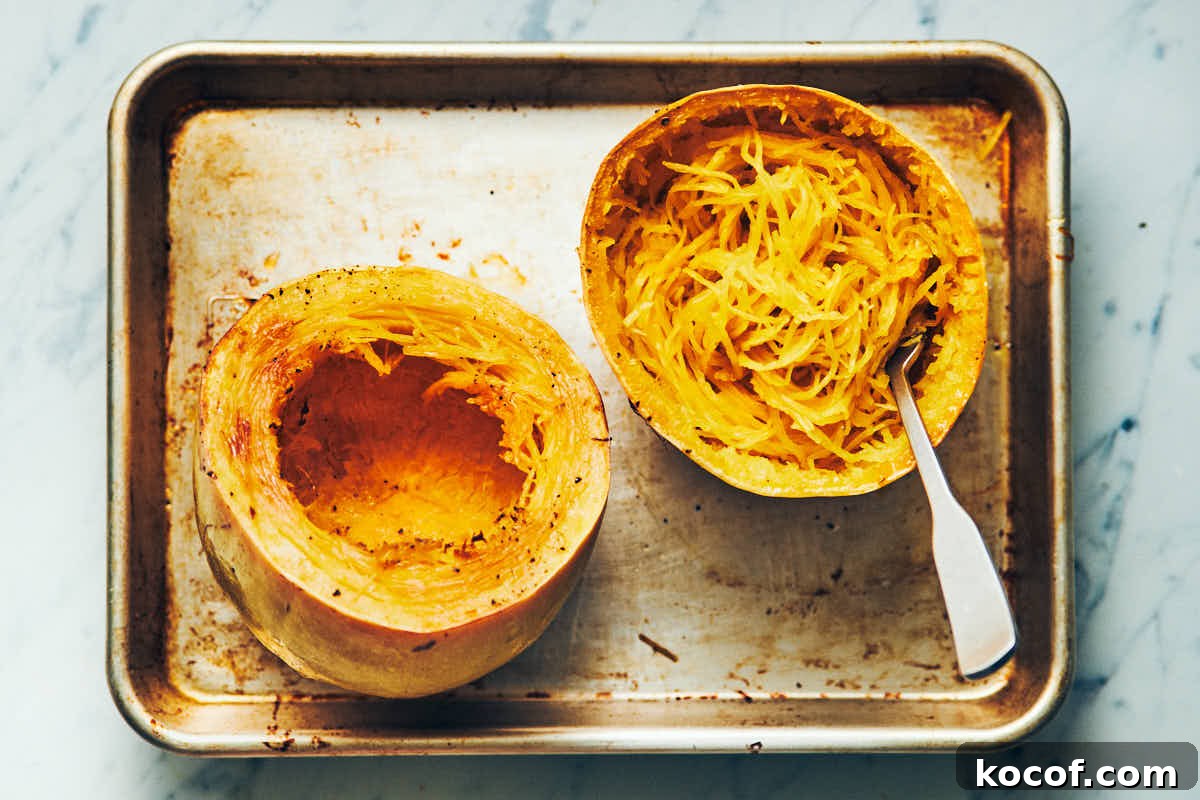
Cutting the squash crosswise (across the short axis) is quicker and produces longer strands. Steps:
- Slice the squash in half across the short side.
- Remove seeds and membrane with a spoon.
- Brush cut ends with oil and season with salt and pepper.
- Place halves cut-side down on a baking sheet and roast.
Benefits
- Only one cut is required, so prep is easier.
- Strands run around the squash’s width, giving longer noodles that hold together better.
Downsides
- Not as useful if you want large, shallow “boats” for piling on toppings; the lengthwise cut offers more surface area for melting cheese or sauce.

Method 3: Cutting into rings
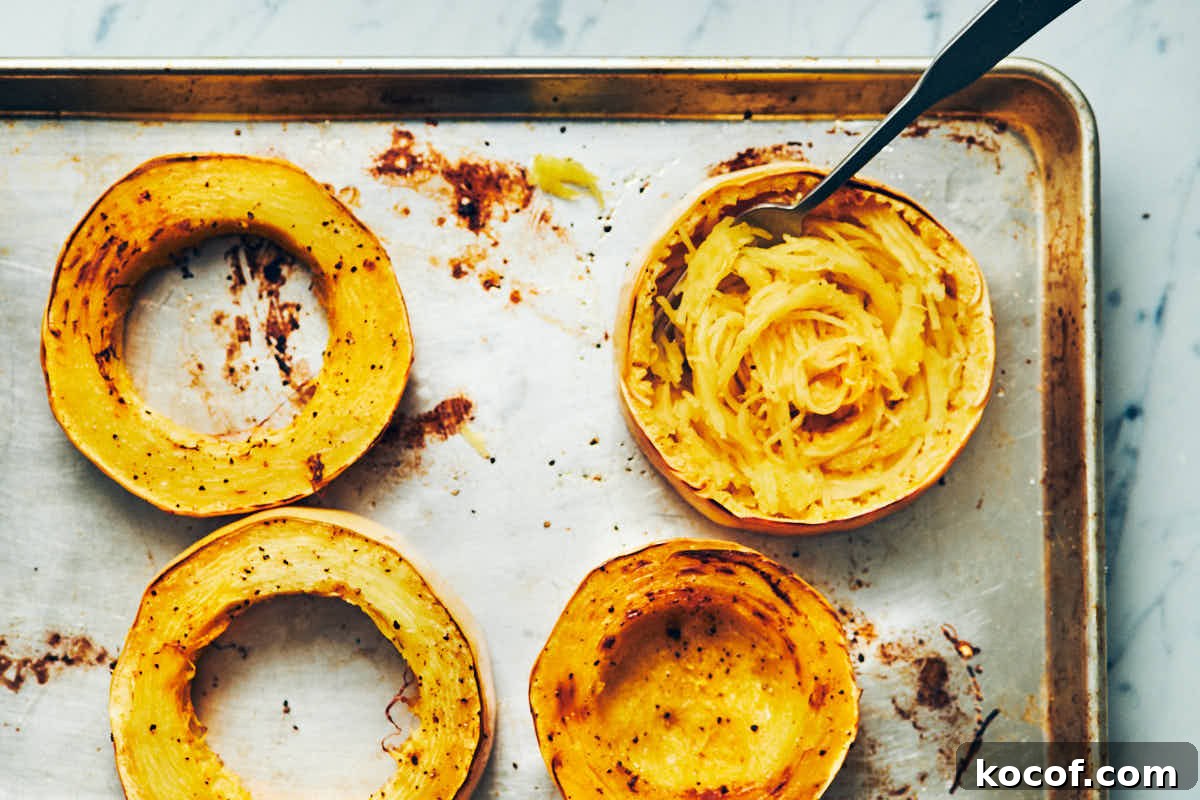
Slicing the squash into multiple crosswise rings yields long strands and makes doneness checks easier. Steps:
- Trim both ends of the squash.
- Slice crosswise into 1-inch (about 2.5 cm) rings.
- Scoop seeds from the center of each ring.
- Brush both sides with oil, season, and bake, flipping halfway through.
Benefits
- Produces long noodles and makes it simple to check for tenderness.
- More exposed surface area helps release moisture, yielding drier strands if that’s preferred.
Downsides
- Requires the most cutting, so prep is more time-consuming and physically demanding.
- Despite smaller pieces, rings didn’t cook much faster in our tests; they can dry out more than halves.

Side-by-side comparison of 3 methods
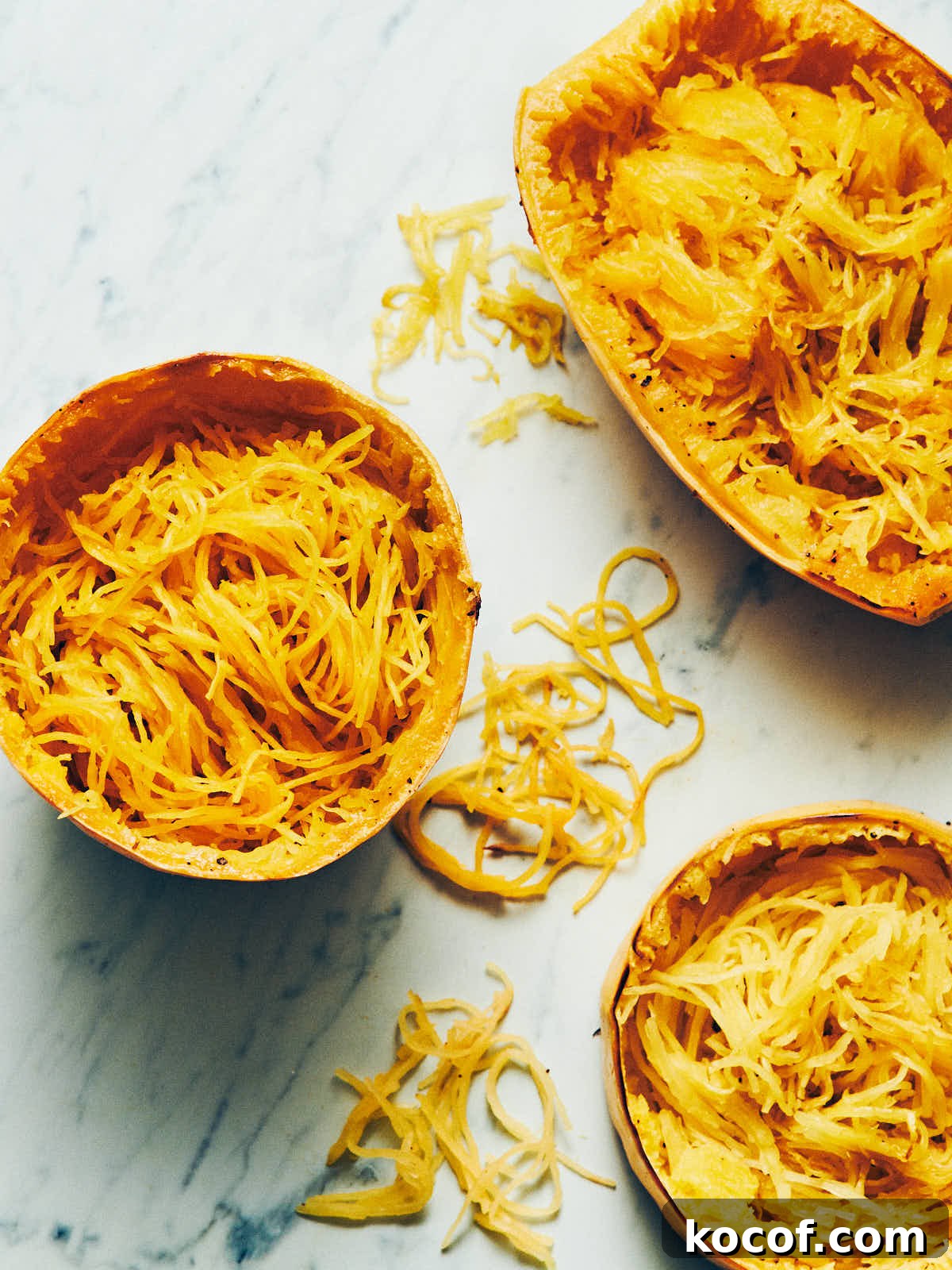
All three techniques work, but they produce different noodle lengths and require different amounts of effort. In a controlled test with similar-size squash roasted at the same temperature for the same time, we observed:
- Lengthwise halves produced short strands.
- Crosswise halves produced notably longer strands.
- Rings also produced long strands but demanded more prep time.

The best method
Our top recommendation is to cut the spaghetti squash crosswise. It’s the quickest method, requires just one cut, and reliably yields long, well-textured strands that are not too mushy or too dry. Be careful not to overcook — aim for fork-tender but still slightly firm strands, especially if you plan to toss them in a hot sauce or finish them on the stovetop. Rings are our second choice for long noodles but require more prep. Lengthwise halves are best when you specifically want squash “boats” with a broad surface for toppings.
Use the recipe below for clear, step-by-step instructions to roast perfect spaghetti squash.

Tips for how to easily cut it
Spaghetti squash is firm and can be hard to cut. Follow these safety and technique tips:
- Stabilize your cutting board — place a damp towel or cloth beneath it to prevent slipping.
- Use a large, sharp chef’s knife. Dull knives are more dangerous and less effective.
- Hold the squash firmly with your non-cutting hand, keeping fingers well away from the blade; use a towel for extra grip if needed.
- Cutting crosswise minimizes work since it usually requires only a single slice.
- If cutting is still difficult, briefly soften the squash in the microwave before slicing (see below).
How to use a microwave to soften squash before cutting
If you need extra help cutting, poke a few holes in the squash skin with a fork or the tip of a knife to allow steam to escape, then microwave for 3–5 minutes. You’re aiming for a slight give when pressing the skin — not a fully cooked squash. This minor softening makes the first cut much easier; once the skin is breached, the knife will pass through more smoothly.
📖 Recipe
How to Cook Spaghetti Squash
Ingredients
- 1 spaghetti squash (about 2½ lbs / 1.1 kg)
- 2 to 3 teaspoons extra virgin olive oil
- Fine sea salt (about ¼ teaspoon)
- Black pepper
Instructions
- Preheat: Preheat the oven to 400°F (200°C).
- Prep squash: Cut the squash in half crosswise. Scoop out the seeds and membrane. Drizzle cut sides with olive oil and season with salt and pepper. Place the halves cut-side down on a baking sheet.
- Bake: Roast until the cut sides are golden and the inside is fork-tender but still slightly firm, about 40–50 minutes. Baking time varies by squash size, so check earlier to avoid overcooking.
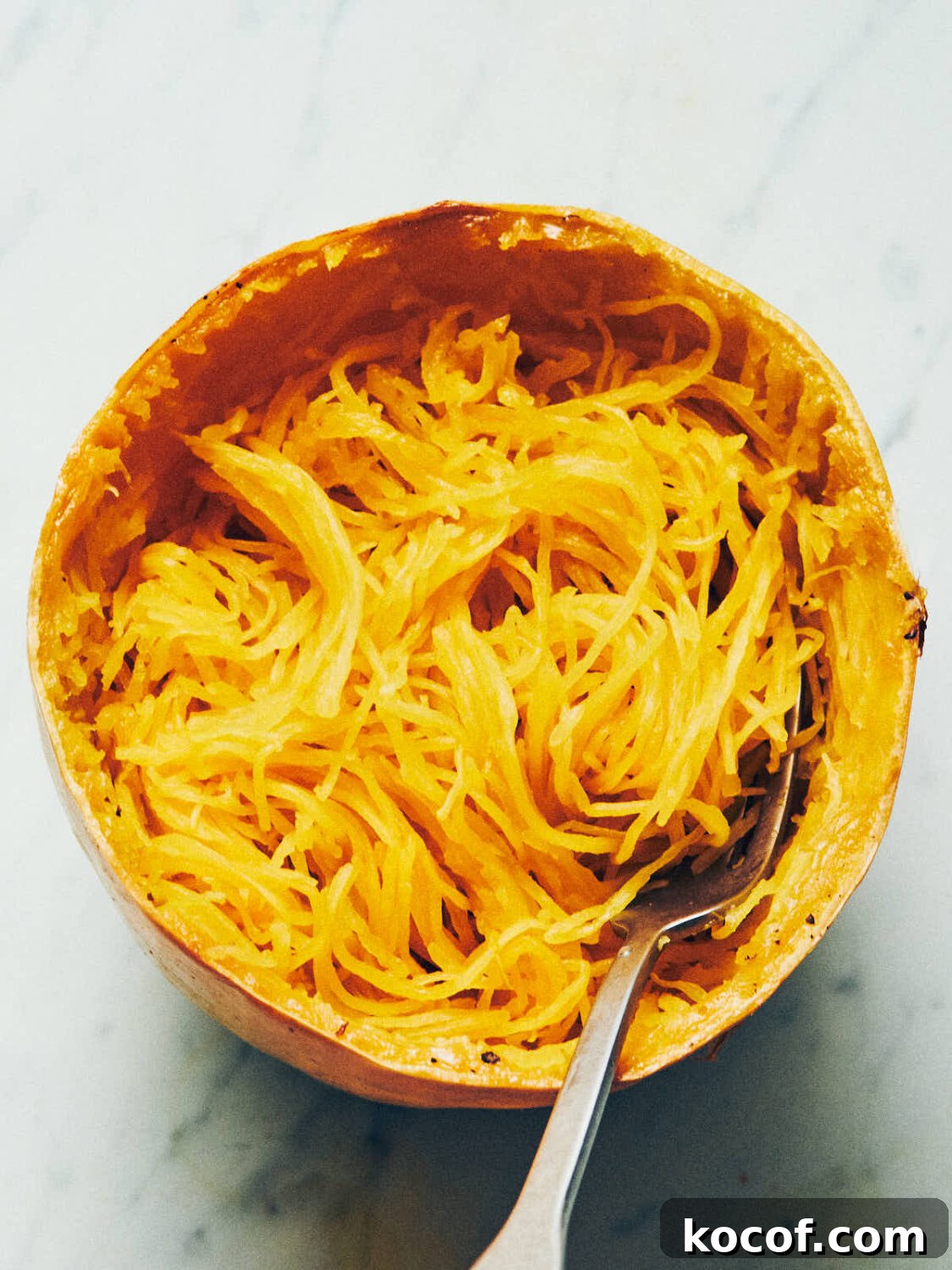
- Cool and fluff: Flip the halves cut-side up to release steam. When cool enough to handle, use a fork to gently separate the flesh into strands. Use immediately or cover and refrigerate.
Notes
- Cutting recommendation: We prefer cutting crosswise for ease and longer noodles. Use lengthwise only when you want wide “boats” for toppings.
- Microwave tip: If cutting is difficult, poke the squash skin with a fork and microwave 3–5 minutes to slightly soften the exterior, then cut.
- Storage: Cooked spaghetti squash keeps in the refrigerator for up to 4 days when covered. Reheat gently to avoid overcooking.
- Yield: Serves about 2–4 people depending on squash size and how you plan to use it.
Nutrition
Carbohydrates: 22 g |
Protein: 2 g |
Fat: 5 g