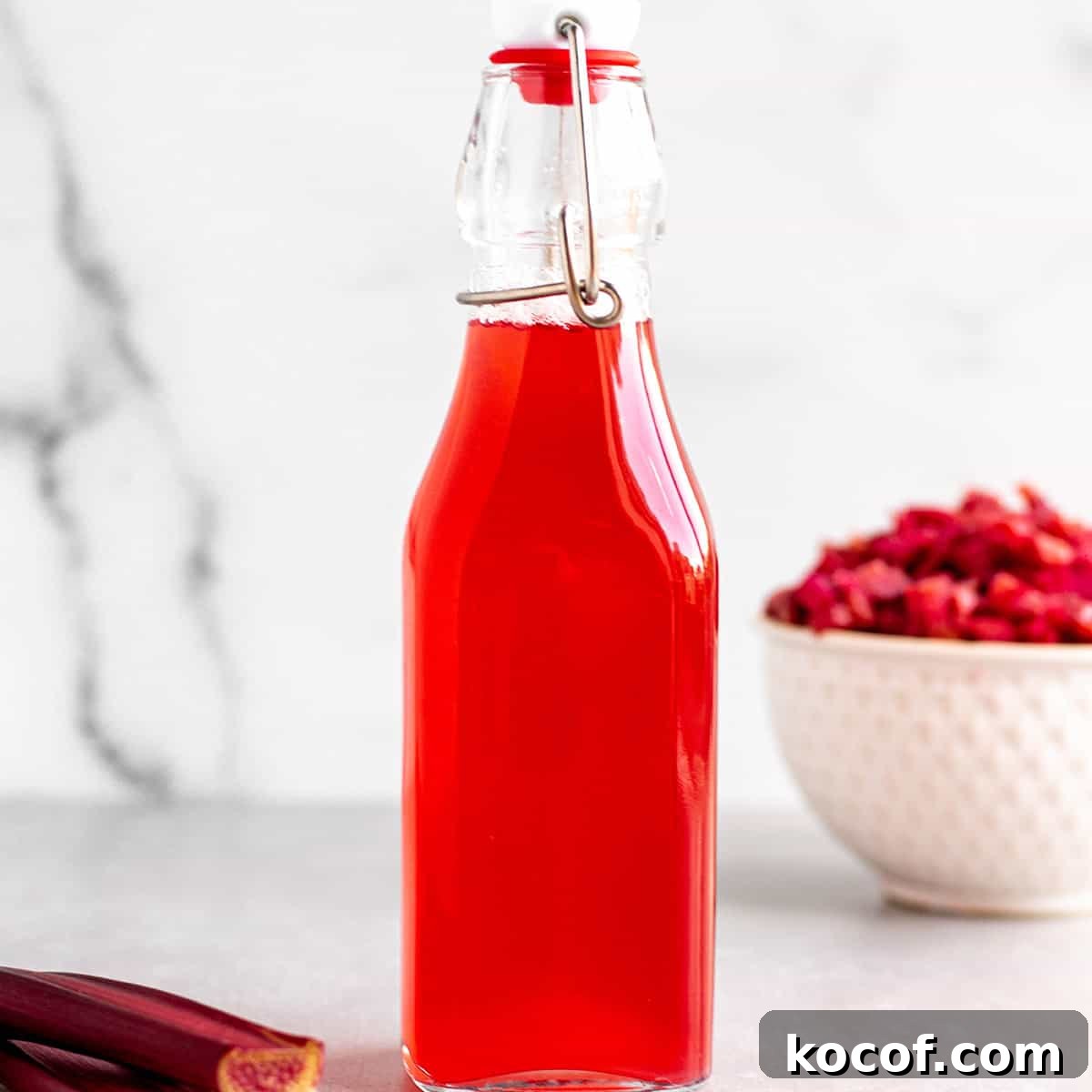
This rhubarb simple syrup is a delightful way to use fresh garden rhubarb. The natural tartness of rhubarb balances beautifully with sugar, creating a versatile syrup you can add to cocktails, lemonades, iced tea, desserts, and more.
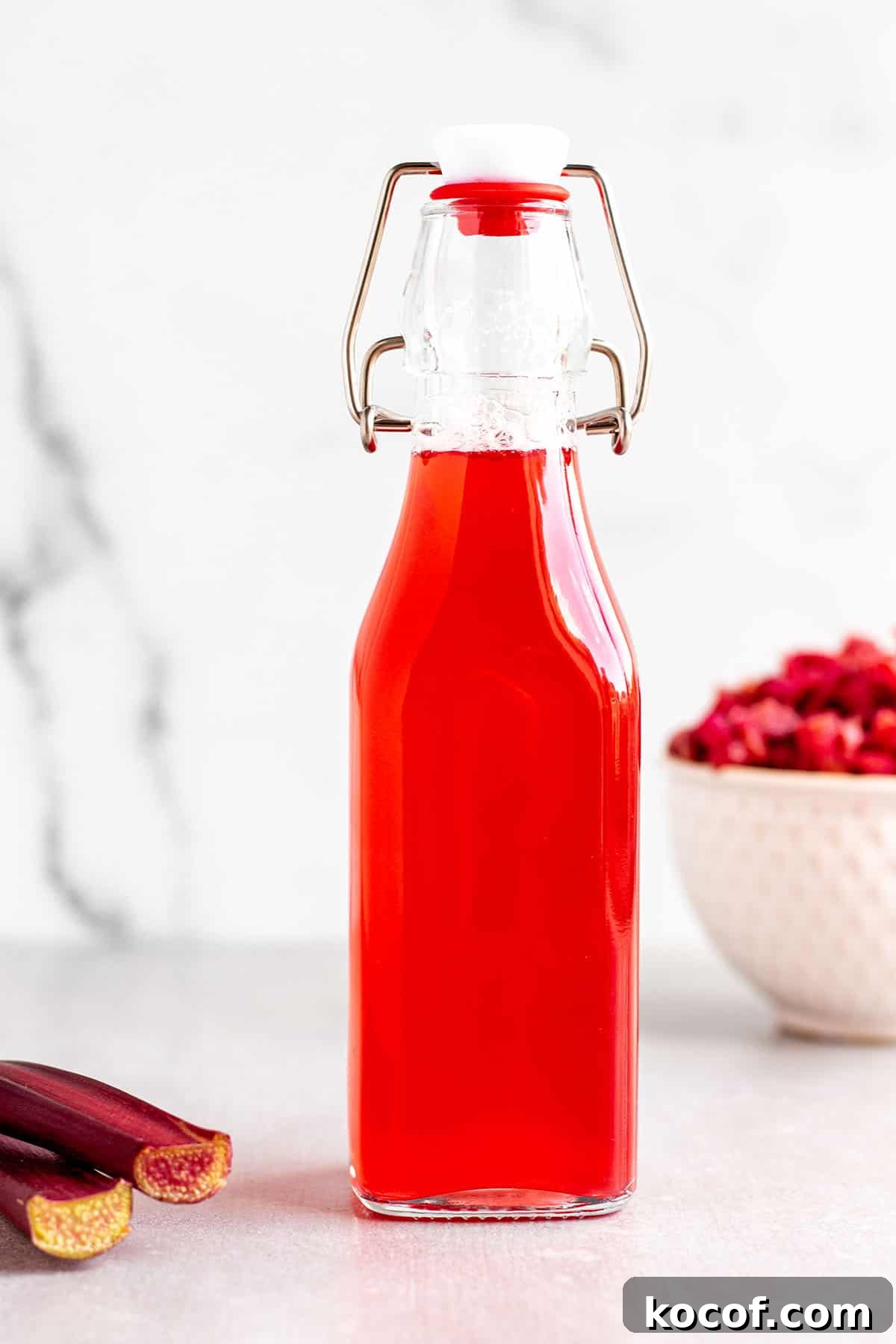
Fresh rhubarb says summer to me. Living near an area famous for rhubarb means an abundant supply all season long. Its bright, tart flavor is distinctive and pairs especially well with sweet fruits like strawberries or in baked treats.
Because rhubarb is quite tart on its own, it’s usually combined with sugar or other fruits. This simple syrup captures that rhubarb flavor in a sweet, pourable form that enhances drinks and desserts without the effort of baking or stewing a full pie.
The syrup is quick and easy to make and becomes a go-to addition for summer drinks. Try it in lemonade, sparkling water, cocktails, drizzle over ice cream, or mix into a smoothie for a rhubarb twist.
Ingredients
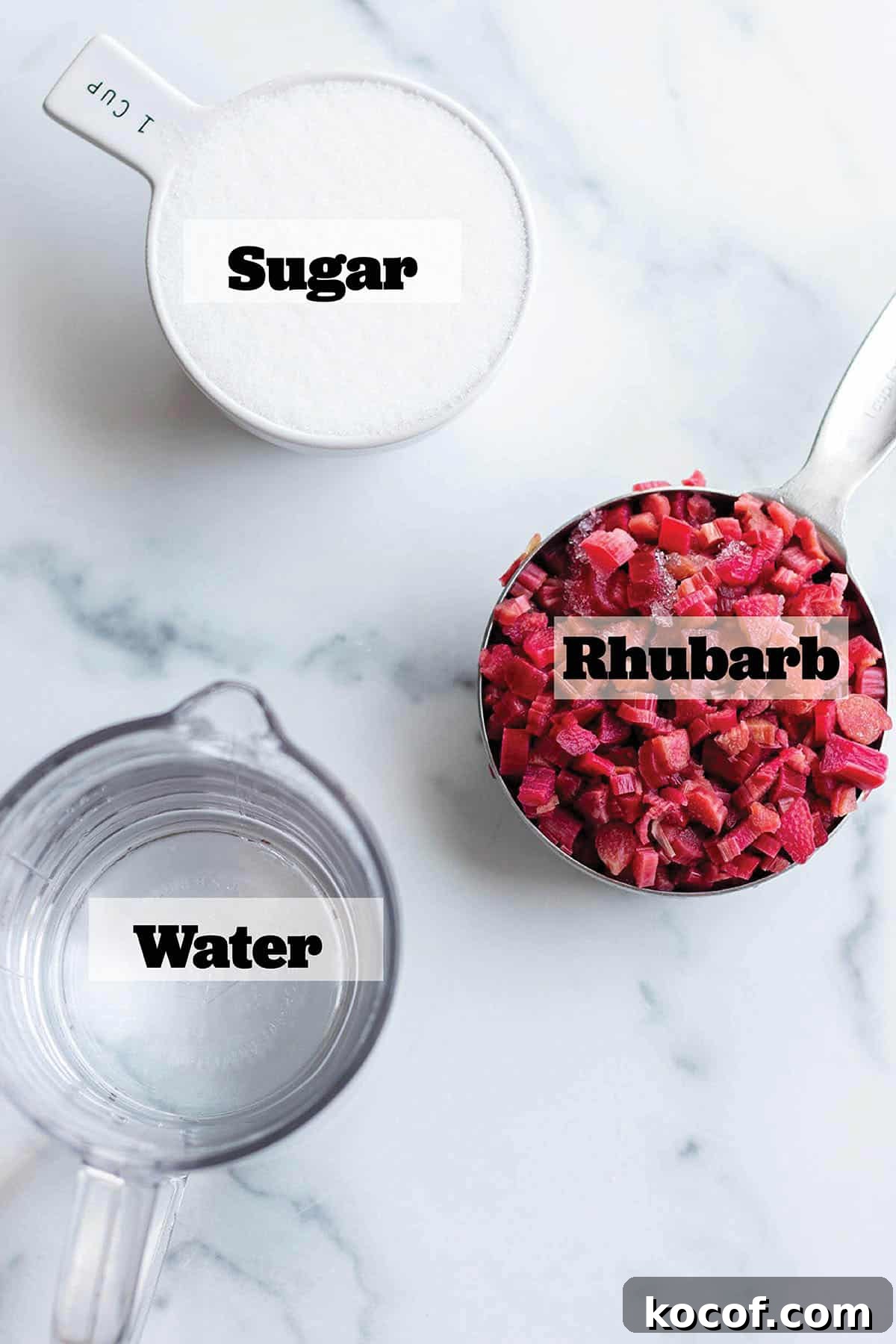
Fresh rhubarb: The recipe uses fresh rhubarb for best flavor, though frozen can be used in a pinch (it may be slightly less flavorful).
Strawberry-rhubarb variation: For a classic strawberry-rhubarb syrup, substitute part of the rhubarb with fresh diced strawberries to add sweetness and depth.
The recipe card includes exact measurements and the full ingredient list.
How to Make
Start by dicing the rhubarb into small pieces, about 1/2″ to 1″.
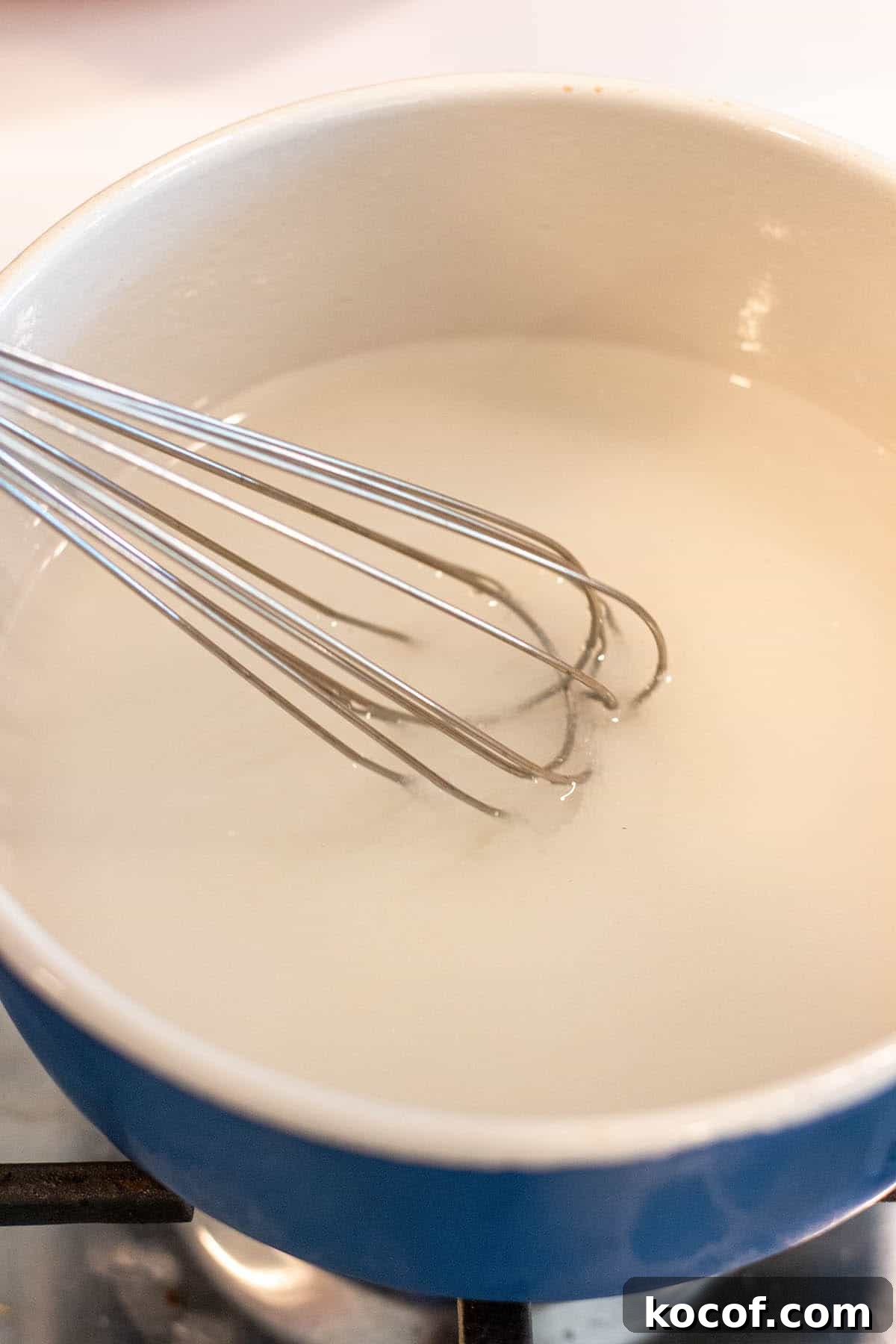
In a small pot, combine water and granulated sugar. Warm over medium heat, stirring until the sugar begins to dissolve.
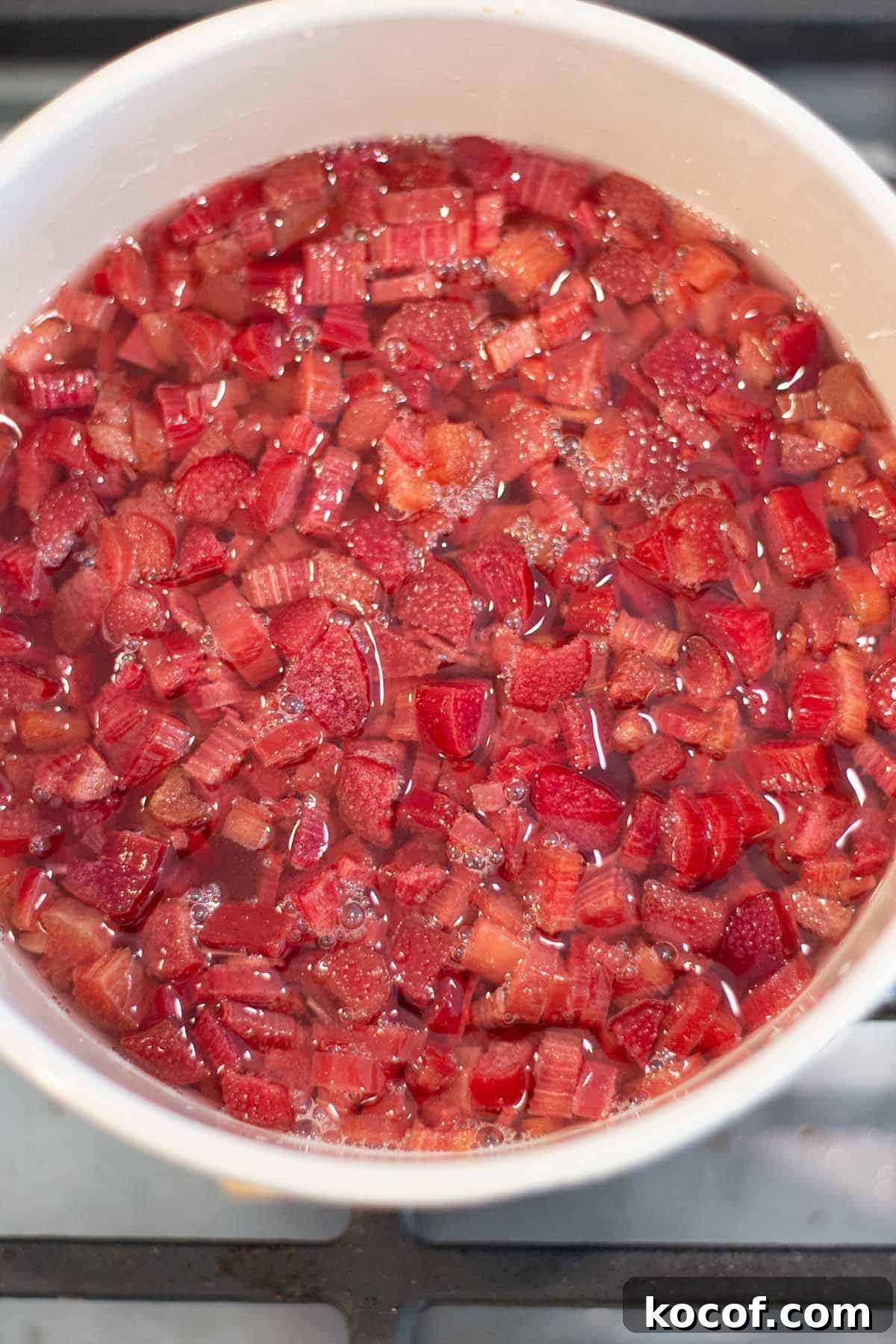
Add the diced rhubarb, stir, and bring the mixture to a boil.
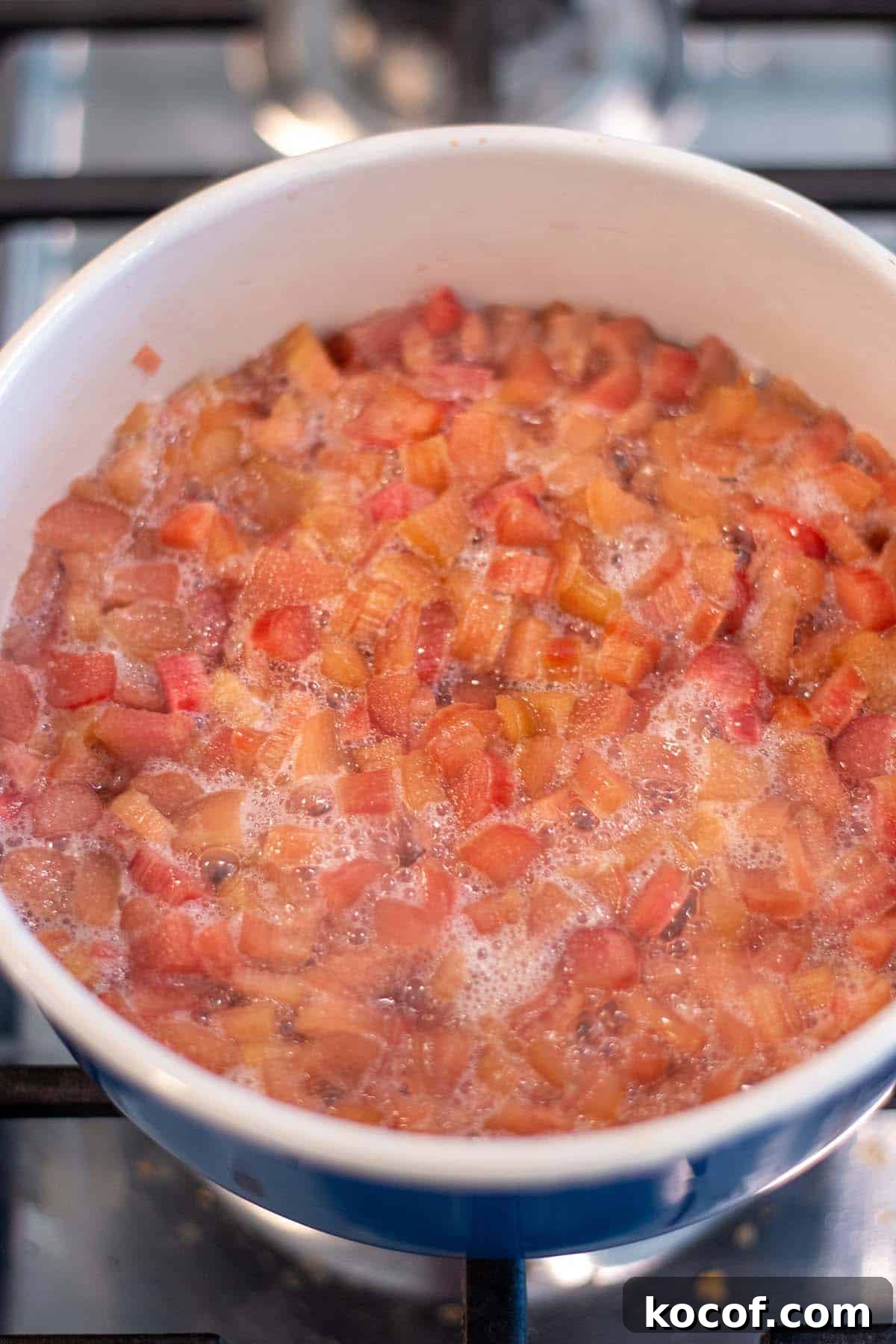
Once boiling, lower the heat to a simmer and cook for about 20 minutes, stirring occasionally so nothing sticks and the rhubarb breaks down.
Remove from heat and let the syrup cool slightly.
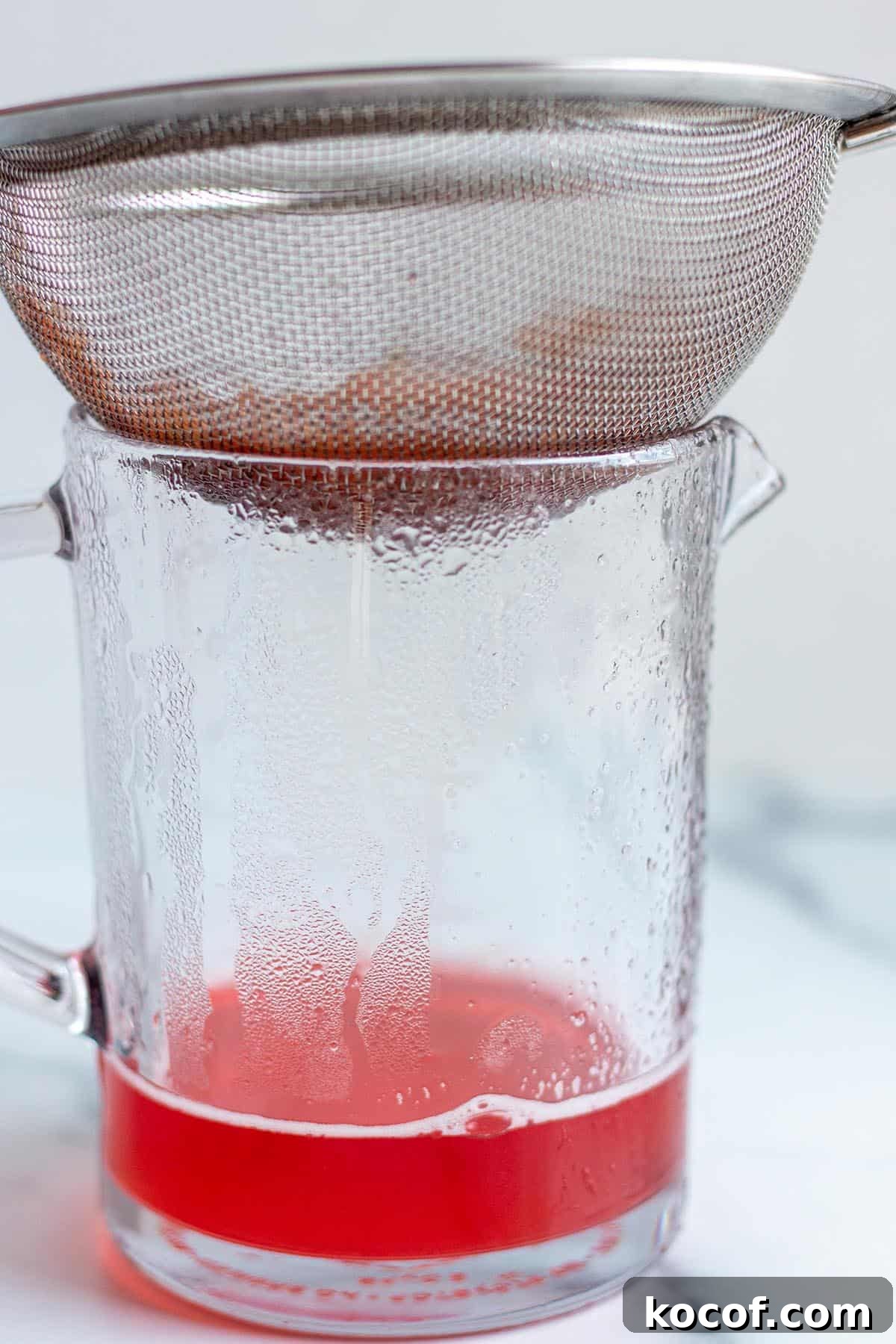
Strain the mixture through a fine-mesh strainer to separate solids from the liquid. Use a spatula to gently move the cooked rhubarb around to help the liquid pass through; avoid pressing hard so the syrup stays clear.
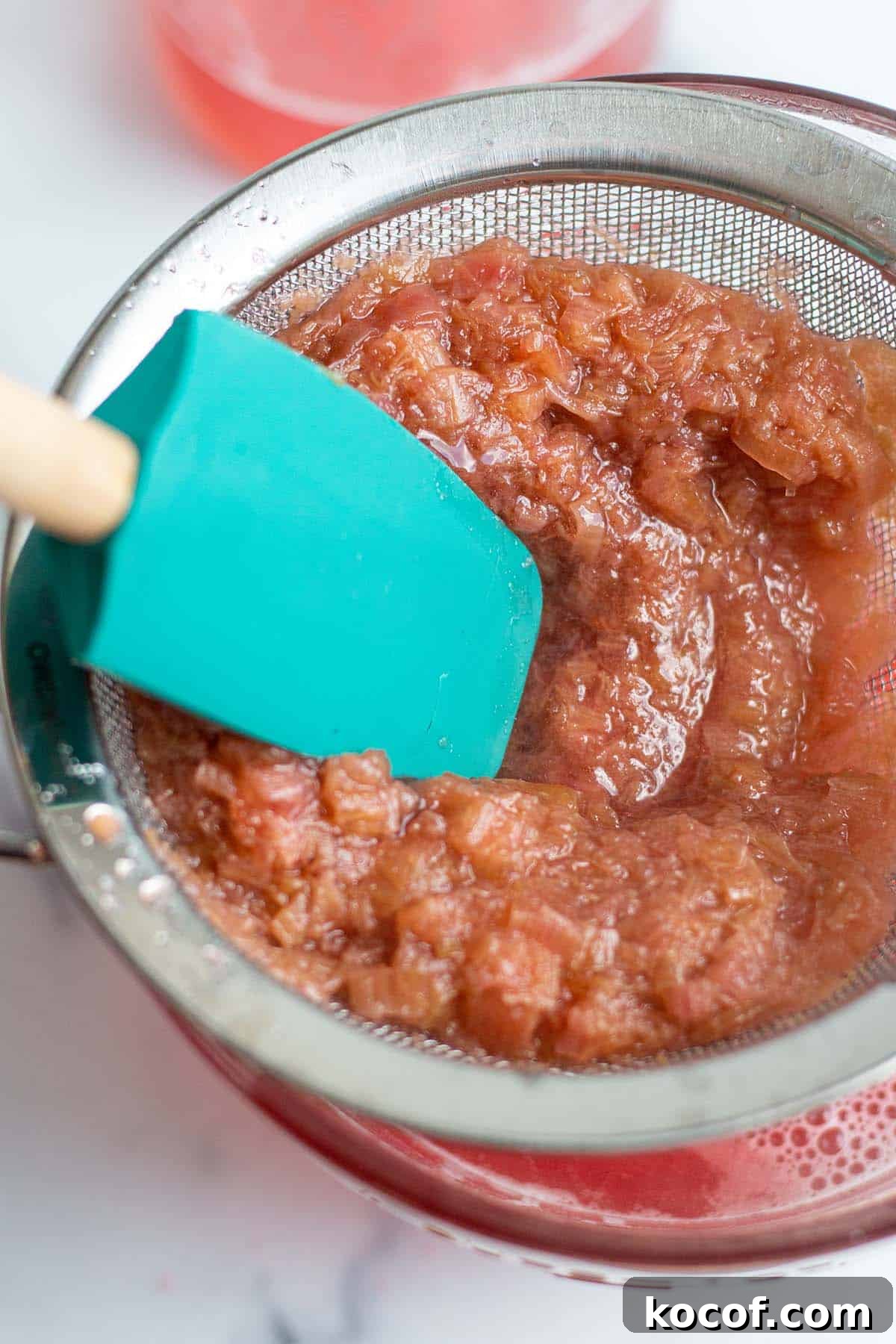
Discard the strained rhubarb or use it as a topping for ice cream or yogurt.
Storage
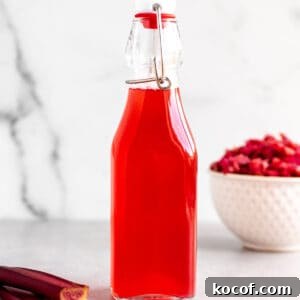
Pour the cooled syrup into a clean glass, airtight container—mason jars or flip-top bottles work well. I prefer a jar that’s easy to pour to reduce spills and make measuring simple.
Refrigerated, the syrup will keep for about one month.
Equipment
Small pot: A 2-quart pot or larger is ideal.
Fine mesh strainer: Needed to remove broken rhubarb pieces and yield a clear syrup.
Glass jars or bottles: Any clean glass storage container works; flip-top bottles make serving convenient.
Serving ideas: Use your rhubarb syrup in lemonades, cocktails, iced tea, sparkling water, smoothies, or drizzled over desserts.
-
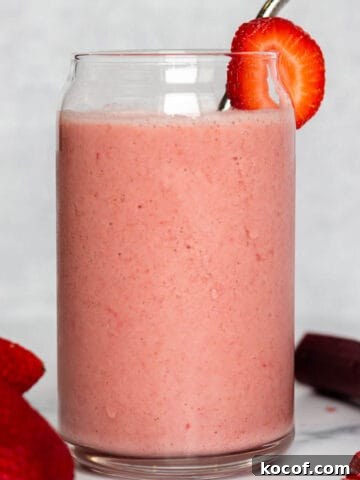
Strawberry Rhubarb Smoothie
-
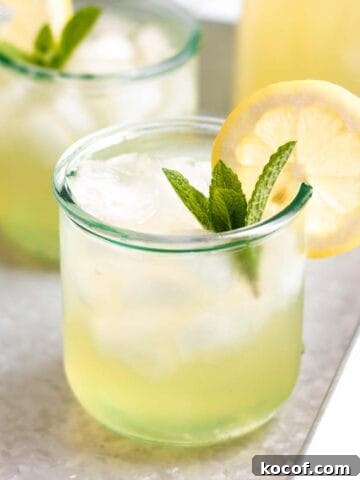
Mint Lemonade
-
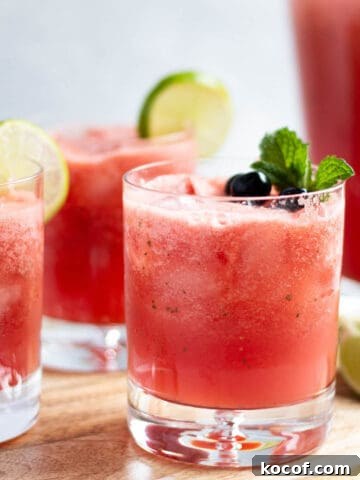
Watermelon Limeade
-
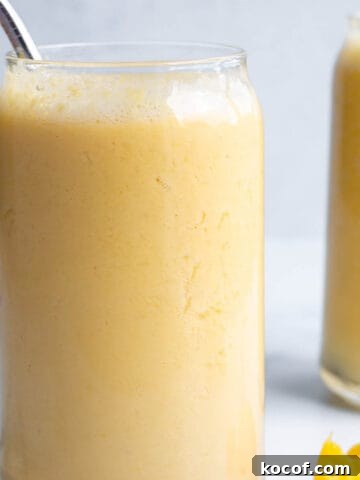
Mango Pineapple Smoothie
Other simple syrup flavors:
-
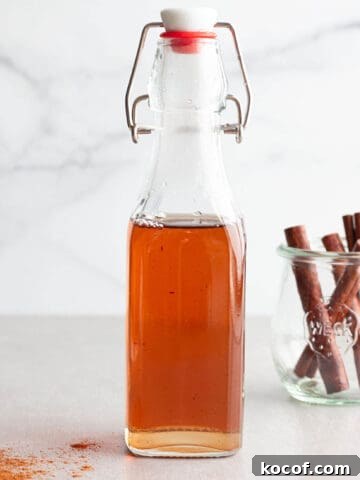
Cinnamon Simple Syrup
-
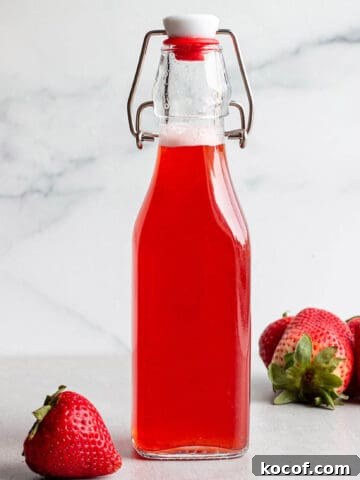
Strawberry Simple Syrup
-
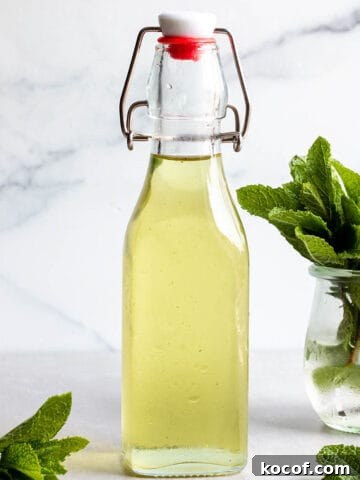
Mint Simple Syrup
-
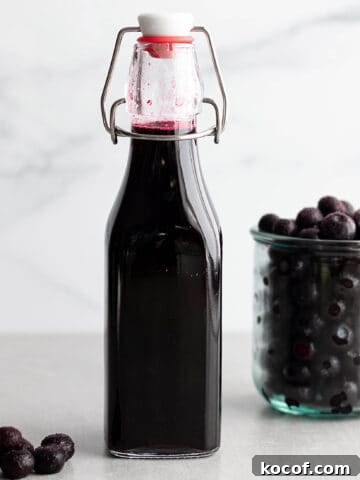
Blueberry Simple Syrup
Did you make it? If you tried this recipe and enjoyed it, please leave a five-star rating and a comment. I love hearing how it turned out for you!
Recipe
Rhubarb Simple Syrup
Equipment
- Small pot (about 2 qt)
- Fine mesh strainer
- Glass jars or bottles for storage
Ingredients
- 1 cup water
- 1 cup granulated sugar
- 1 pound fresh rhubarb, diced (about 3.5–4 cups)
Instructions
- Dice rhubarb into 1/2″ to 1″ pieces.
- In a small pot, combine water and sugar. Warm over medium heat, stirring until sugar dissolves.
- Add rhubarb, stir, and bring to a boil.
- Reduce heat to a simmer and cook for 20 minutes, stirring occasionally, until the rhubarb breaks down and the liquid is infused.
- Remove from heat and let cool slightly.
- Strain through a fine-mesh strainer, gently moving solids with a spatula to allow syrup to pass. Avoid pressing hard to keep the syrup clear.
- Transfer syrup to a clean glass jar or bottle and refrigerate.
Notes
The pot may look crowded at first—rhubarb releases a lot of water as it cooks and will reduce down. Expect to yield about 1½–2 cups of syrup.
Nutrition
Serving size: 2 tablespoons. Calories per serving: 72 kcal. Carbohydrates: 18 g. Sugar: 17 g. Other values approximate.