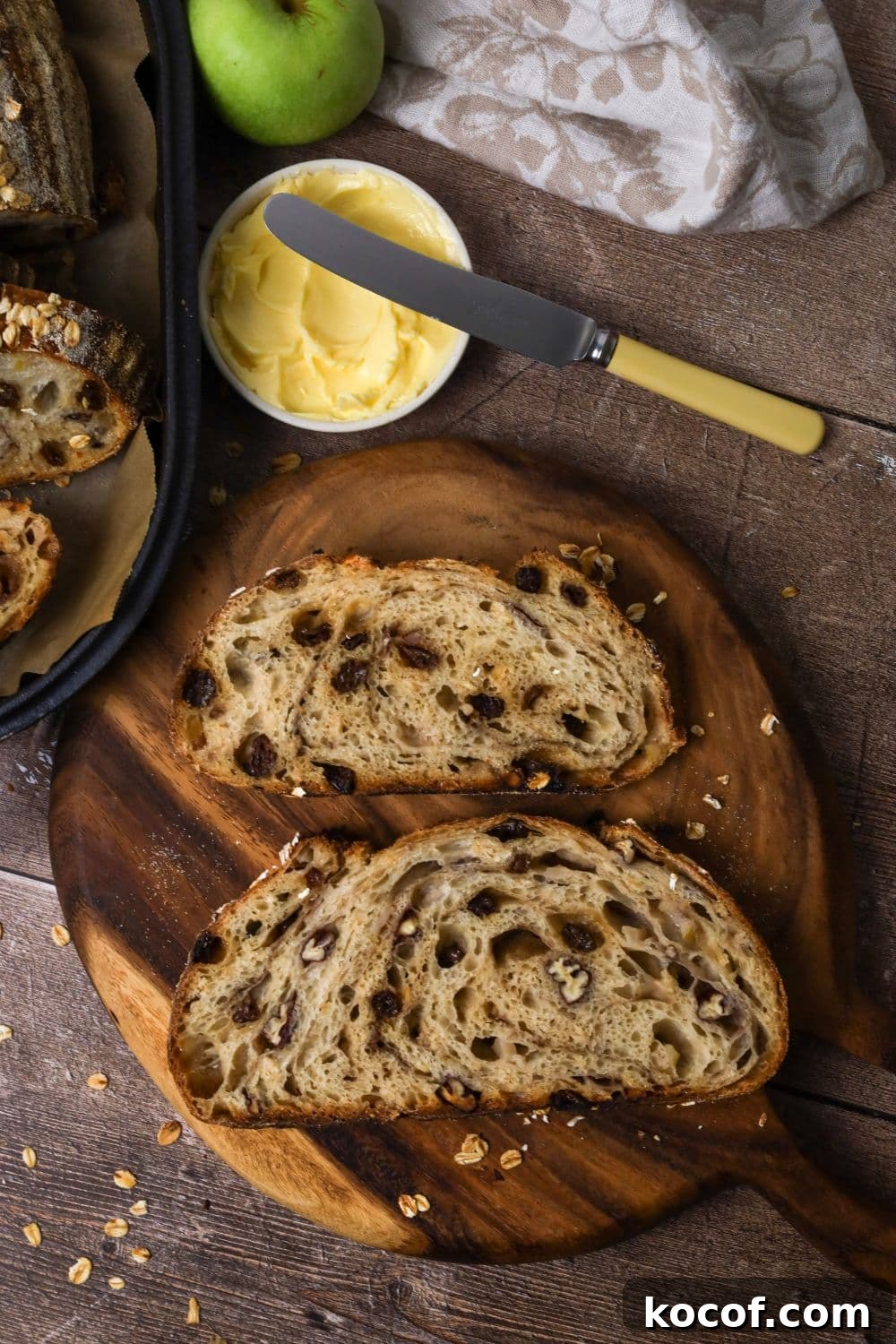
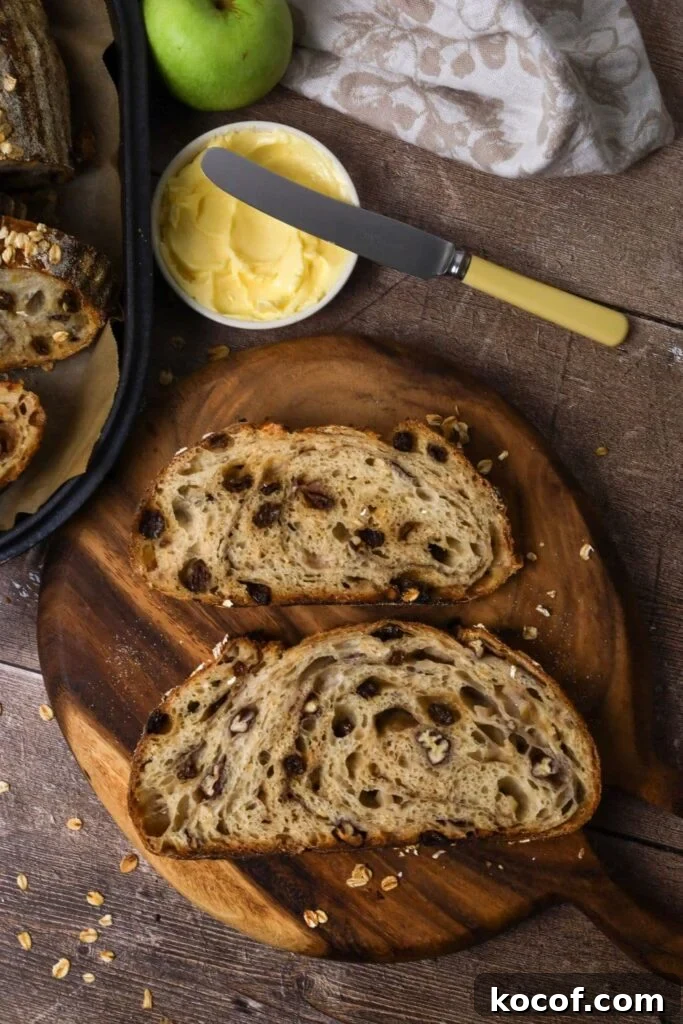
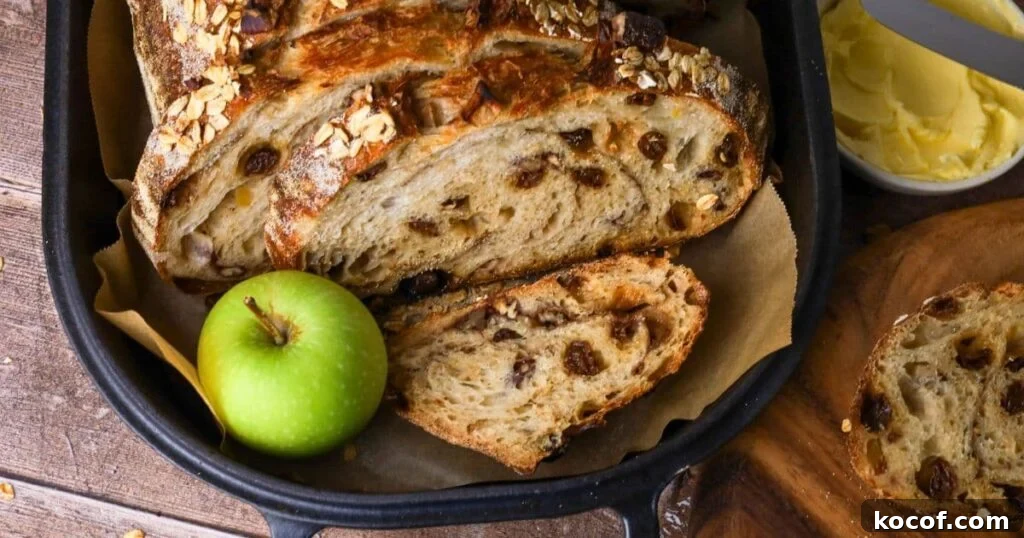
Who doesn’t love the cozy comfort of a warm apple crisp for dessert? I transformed everything that makes apple crisp so satisfying into a sourdough loaf. This bread is warm and comforting, packed with diced apple, rolled oats, honey, raisins and warming spices—like enjoying a slice of apple crisp on a cool autumn evening, but in loaf form.
Why You’ll Love This Recipe
All the flavors of apple crisp in bread form. This loaf borrows the best parts of apple crisp—sweet fruit, oats, spices and crunchy pecans—and integrates them into a tender, tangy sourdough. It’s equally appropriate for dessert or for a special breakfast or brunch.
Beautiful brunch centerpiece. Like other flavored sourdough loaves, this apple crisp loaf looks and smells fantastic on a fall table and pairs well with coffee or tea.
Ingredients
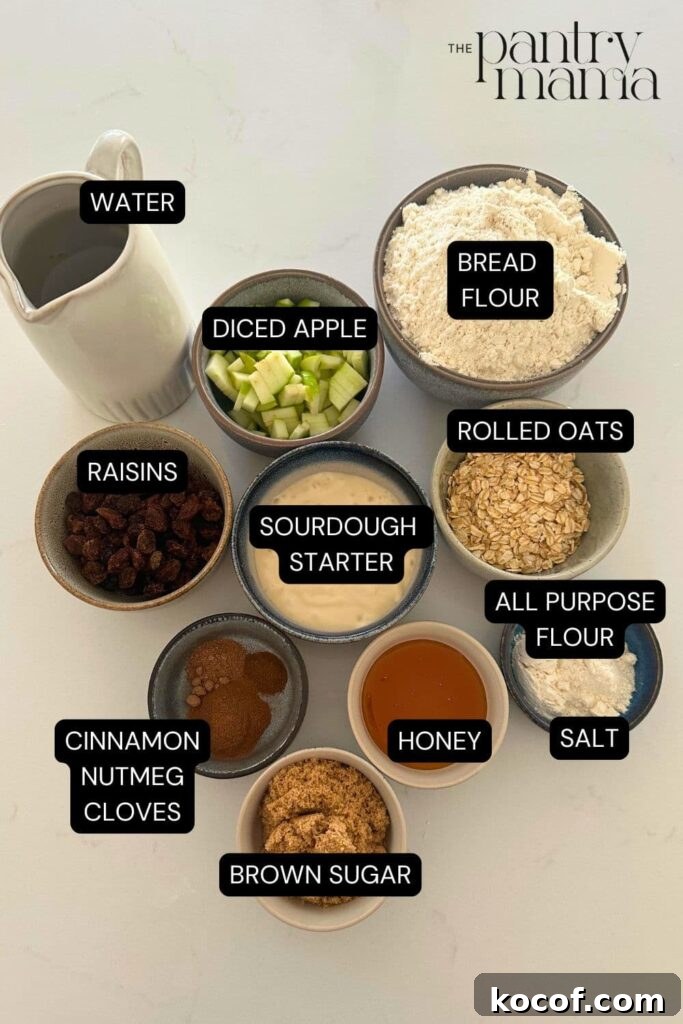
- Sourdough starter — an active, bubbly starter fed a few hours before use.
- Water — lukewarm or room temperature to mix with starter and honey.
- Honey — adds gentle sweetness; maple syrup can substitute.
- Bread flour — provides strength and structure.
- Rolled oats — use traditional rolled oats (not quick oats) for texture; some are tucked into the banneton so they toast on the crust.
- Salt — about 10 g recommended for flavor and gluten development.
- Raisins or sultanas — add sweet pops of flavor and visual interest.
- Apple — a green apple, diced with the skin on for added fibre; any firm baking apple works.
- Warming spices — cinnamon, nutmeg and a pinch of cloves to achieve classic apple crisp notes.
- Brown sugar — for color and caramel-like sweetness in the filling.
- All-purpose flour — mixed into the spice/brown sugar blend to help prevent leaking during cold fermentation.
- Pecans — chopped and optional in the topping; walnuts are a fine substitute.
How To Make a Sourdough Apple Crisp Loaf
This loaf layers flavor throughout the process: some ingredients are added during the initial mix, others during stretch-and-folds, and the spices are incorporated at shaping. The method is similar to enriched sourdough loaves, and the rhythm of mixing, folding and shaping is part of the pleasure of baking this bread.
Pre-mix & Autolyse
Weigh the starter, water and honey into a glass or ceramic bowl and mix until the honey is distributed. Add bread flour, rolled oats and salt and stir with a spatula until the mixture just comes together into a shaggy dough. Cover and rest for about one hour to hydrate the flour.
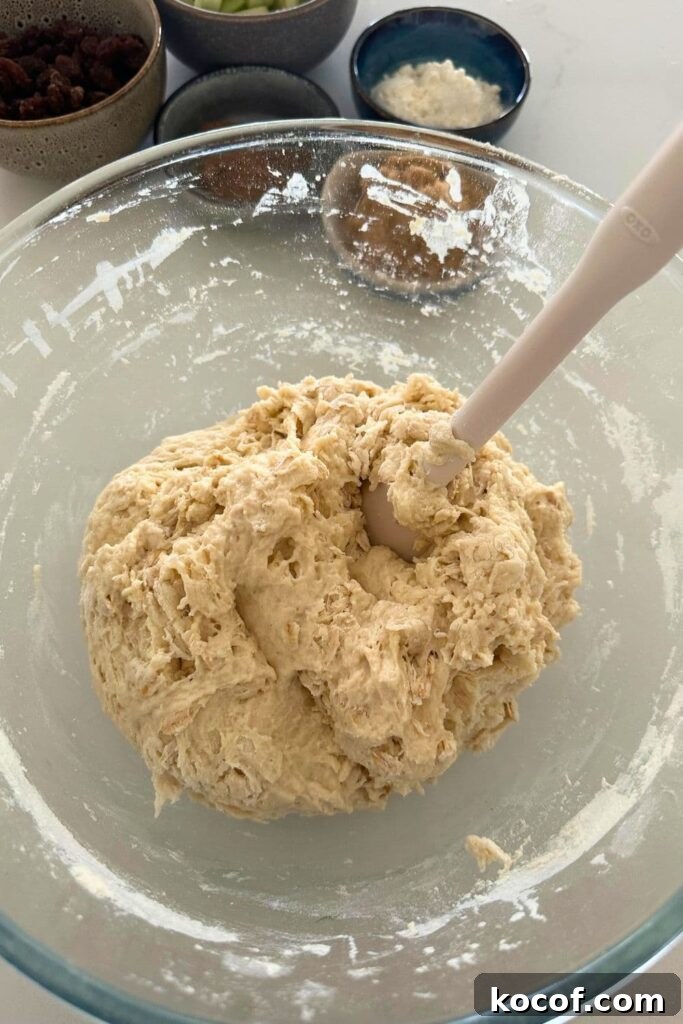
Forming Up Your Dough
Work around the bowl, stretch the dough from the outside and fold it over itself until a smooth ball forms — roughly 20–25 folds should do it. Cover and rest for 30 minutes before beginning stretch-and-fold sets.
Stretch & Fold — Creating Structure
Add the raisins and diced apple during the stretch-and-fold phase, ideally around the second or third set so they distribute without tearing the dough. Complete about four sets of stretch-and-folds, spacing them 15–30 minutes apart.
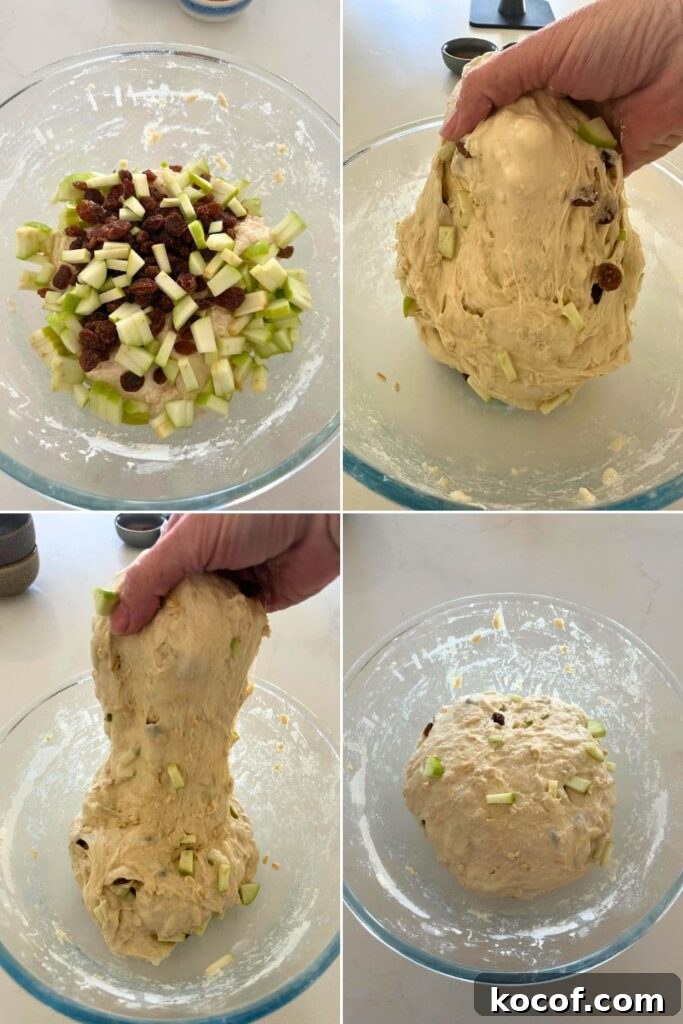
Bulk Ferment
After the final folds, cover and let the dough bulk ferment at room temperature. Because the dough contains honey and fruit, fermentation can progress faster than usual, so watch for appropriate rise rather than relying only on clock time.
While the dough ferments, combine cinnamon, nutmeg, cloves, brown sugar and the all-purpose flour in a small bowl for the spice mixture. Chop pecans if using and set aside.
Shaping Your Dough
When the dough has completed bulk fermentation, shape it to create surface tension and add the spice mixture. This recipe works well as a batard but any loaf shape is fine. Stretch the dough into a rough rectangle, sprinkle a generous amount of the spice/sugar mix (and pecans, if using), fold the top down, fold in the sides, and add more of the mixture as you like. Roll the dough like a burrito and pull it towards you to tighten the surface, then place it seam-side up into a banneton. Sprinkling rolled oats in the banneton before placing the dough will give the crust a toasty oat finish.
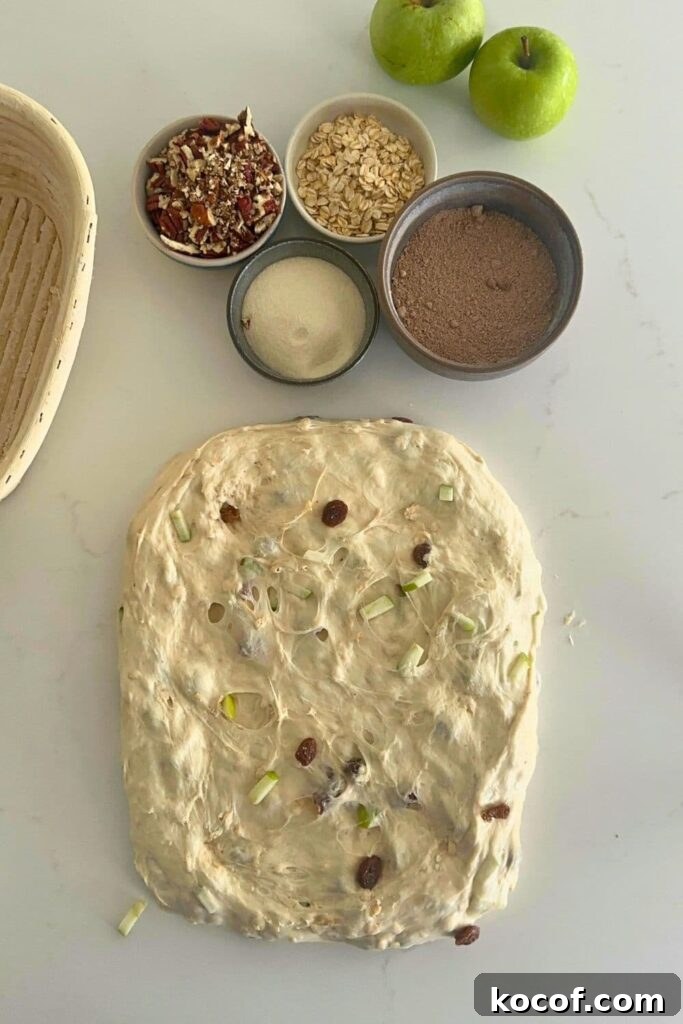
Cold Ferment
Cover the shaped dough loosely and refrigerate to cold ferment. Aim for a minimum of 5 hours and generally no more than 12 hours; too long can cause excess moisture from the apples. Cold proofing helps develop flavor and makes morning baking simple.
Preparing to Bake
Preheat your oven to 230°C (450°F) and place a Dutch oven inside while it heats. Preheat for about one hour so the pot is thoroughly hot — adjust as needed for your oven.
Baking
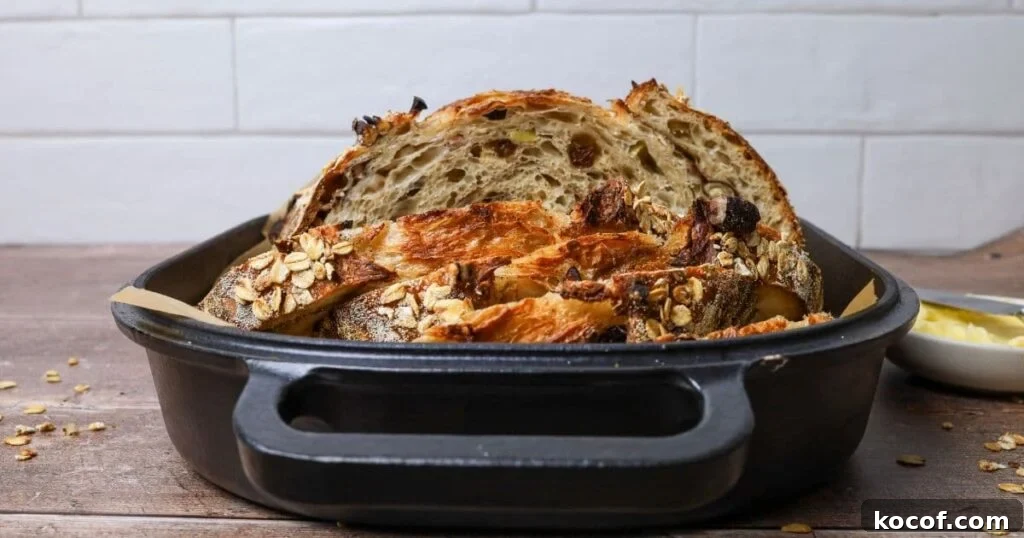
When the oven reaches temperature, remove the dough from the fridge, place it on baking paper, and score the surface with a lame or sharp knife. Carefully transfer the dough (on the paper) into the hot Dutch oven, cover and bake.
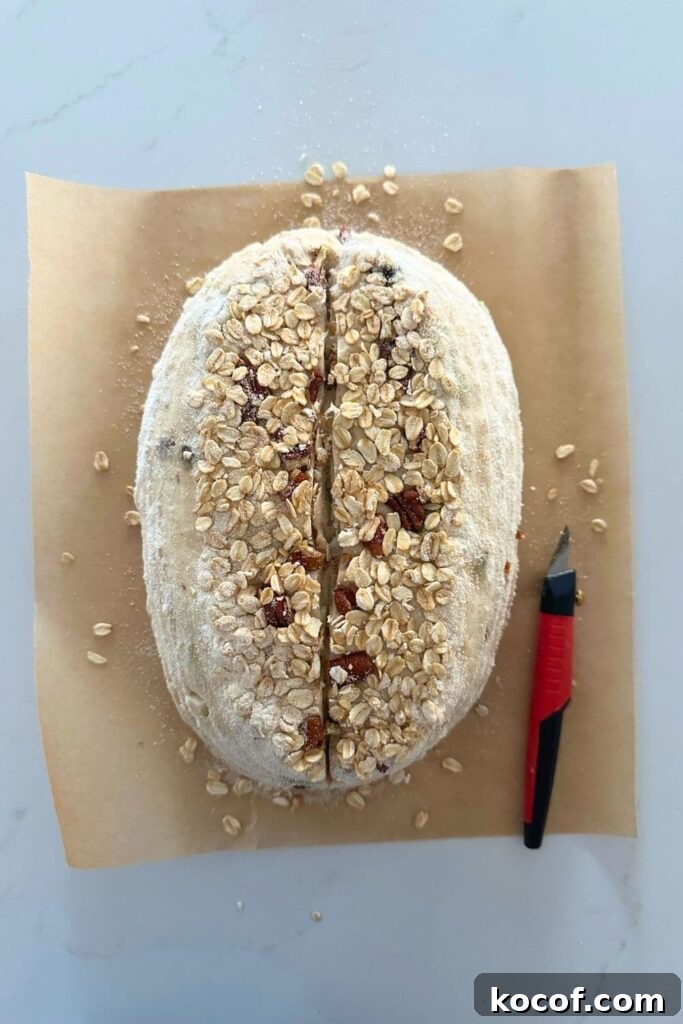
Bake time: 30 minutes covered at 230°C (450°F), then 10–15 minutes uncovered at 210°C (410°F) until the crust is deep golden and the loaf sounds hollow when tapped. If you worry about burning the base, place a baking sheet on the rack under the Dutch oven. Remove the loaf from the pot promptly and cool on a wire rack.
Sample Baking Timeline
Below is a sample schedule you can adapt. I often feed my starter the night before so it peaks in the morning, then begin the formula early. Adjust timings based on your starter activity, room temperature and personal routine.
| Time | Process |
|---|---|
| 9:00 am | Premix and autolyse for about an hour; form the dough and rest 30 minutes. |
| 11:00 am | First stretch and fold. |
| 11:30 am | Second stretch and fold; add half the diced apple and raisins. |
| 12:00 pm | Third stretch and fold; add remaining inclusions. |
| 12:30 pm | Fourth stretch and fold. |
| 1:00 pm | Bulk ferment at room temperature; monitor since honey speeds fermentation. |
| 6:00 pm | Shape into a batard, place in banneton and transfer to refrigerator for cold proof. |
| Next morning | Bake: preheat oven, score and bake as directed. |
Sourdough Apple Crisp Loaf
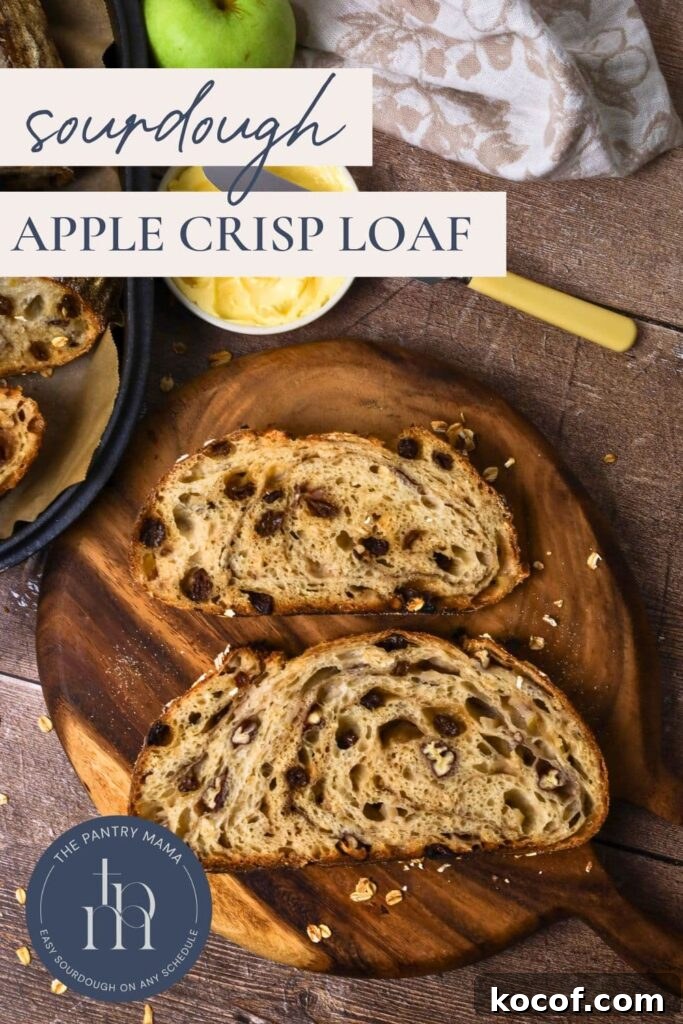
Inspired by classic apple crisp, this sourdough loaf combines diced apples, raisins, rolled oats and warm spices to create a seasonal bread you’ll want all autumn long.
Equipment
- Mixing bowl
- Digital scale
- Banneton (proofing basket)
- Dutch oven
Ingredients (summary)
- 100 g sourdough starter
- 350 g water
- 40 g honey (or maple syrup)
- 500 g bread flour
- 50 g rolled oats (not quick oats)
- 10 g salt
- 100 g raisins
- 100 g diced apple (skin on)
- 1 tsp ground cinnamon
- 1/2 tsp nutmeg
- 1/4 tsp ground cloves
- 40 g brown sugar
- 20 g all-purpose flour
- 50 g chopped pecans (optional)
Instructions (concise)
- Pre-mix & autolyse: Mix starter, water and honey. Add flours, oats and salt and let rest covered for 1 hour.
- Form dough: Fold until a smooth ball forms, rest 30 minutes.
- Stretch & fold: Perform about four sets, adding raisins and apple during the second and third sets.
- Bulk ferment: Cover and ferment at room temperature until adequately risen. Prepare the spice/brown sugar/flour mix while fermenting.
- Shape: Stretch into a rectangle, sprinkle the spice mix and pecans, fold, roll and create surface tension. Place seam-side up in banneton.
- Cold ferment: Refrigerate 5–12 hours.
- Bake: Preheat Dutch oven to 230°C/450°F. Score the cold loaf, bake covered 30 minutes at 230°C, then 10–15 minutes uncovered at 210°C/410°F. Cool on a rack.
Notes
- Starter readiness: Use an active starter that peaks after feeding. If your starter is slower or your kitchen is warm, adjust the starter amount or timing accordingly.
- Handling inclusions: Adding lots of fruit and dried fruit can stretch the dough; if it tears, allow rest and it will recover.
- Spice mix and flour: Including all-purpose flour with the brown sugar helps prevent excess leakage during cold proofing.
- Baking tips: To prevent a burnt base, place a baking sheet under the Dutch oven. If the interior seems underbaked, turn off the oven and leave the bread on the rack with the door ajar for a few hours. Allow the loaf to cool 4–6 hours before slicing for best texture.
Nutrition (approximate)
Serving size: 100 g. The nutrition values below are an estimate and should be used as a guideline only.
- Calories: 3136 kcal (entire loaf)
- Carbohydrates: 605 g
- Protein: 79 g
- Fat: 49 g
- Fiber: 34 g
- Sugar: 86 g
Nutrition information is automatically calculated and is an approximation.
Enjoy baking this seasonal sourdough. If you try it, leave a note or share your experience with friends and family.