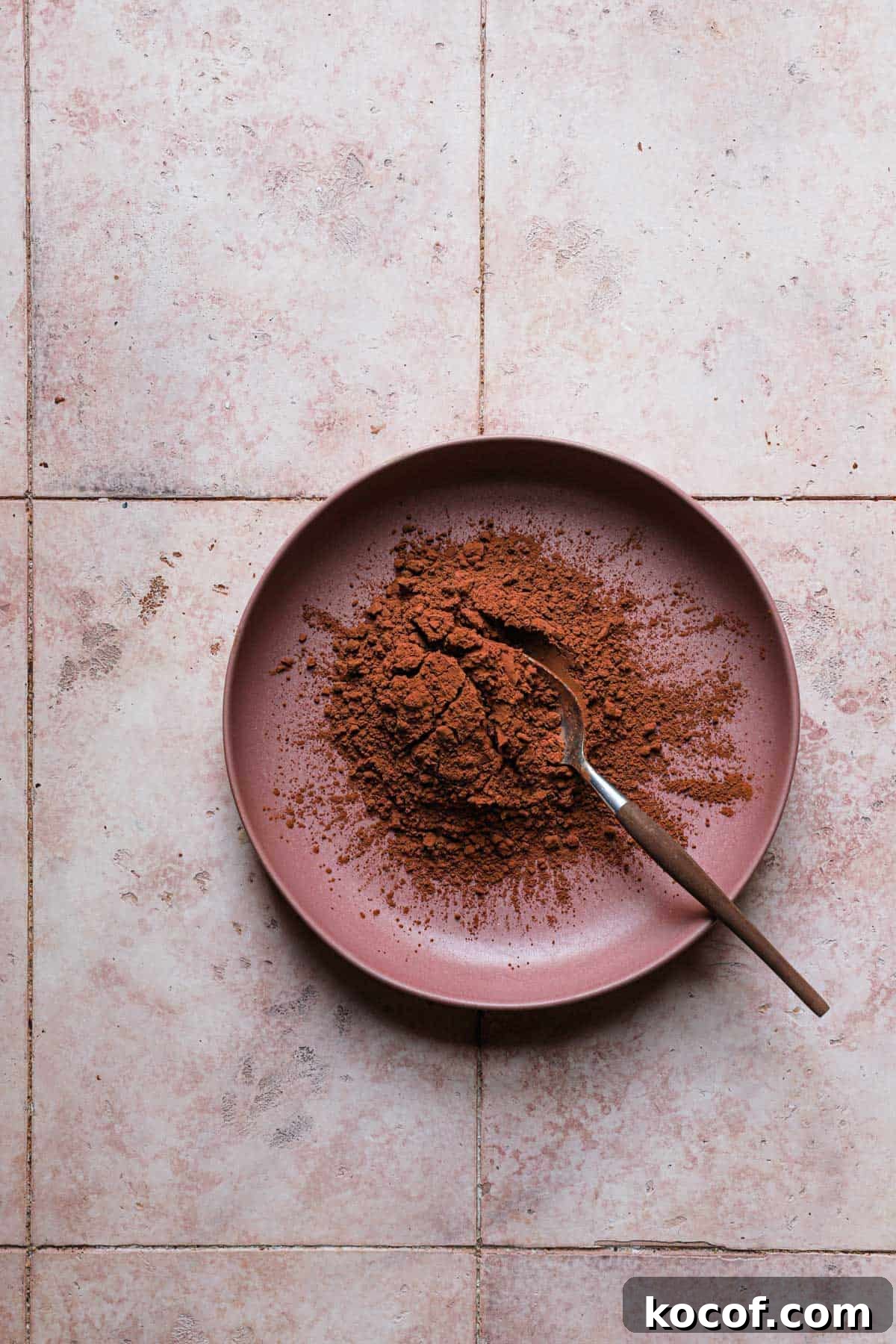
Do you know what cocoa powder is? It sounds like a simple question, but the details are more interesting than you might expect.
In this article I’ll explain what cocoa powder is, how it’s produced, the different varieties, and how to use it effectively in baking to improve your results.
This post is part of my chocolate series. If you’re curious about other topics in chocolate and baking, check these related articles:
What Is Unsweetened Chocolate?
What Is Tempered Chocolate?
How to Temper Chocolate?
Dutch vs. Natural
What Is Ganache?
What Is Dark Chocolate?
What Is White Chocolate?
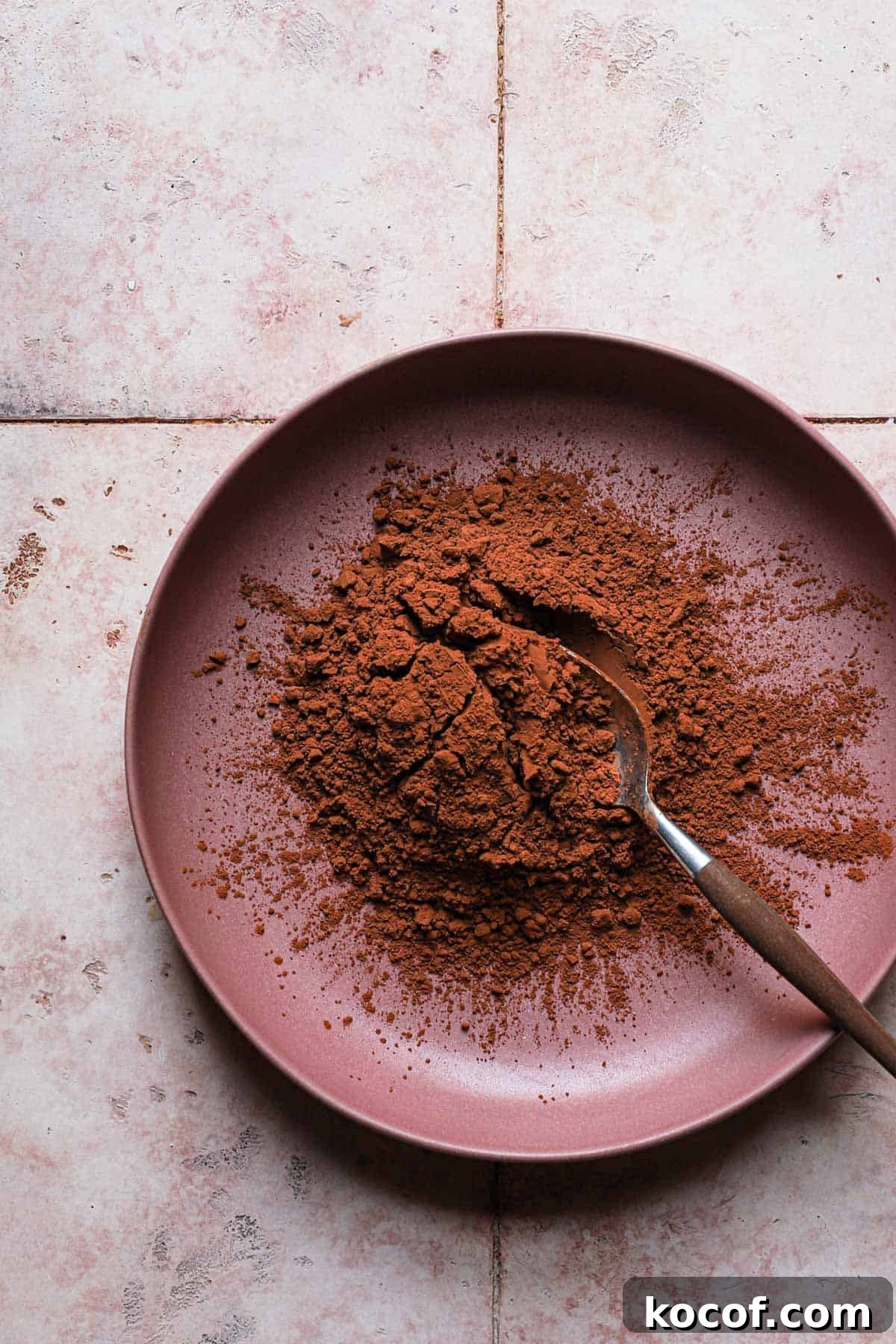
What Is Cocoa Powder?
Cocoa powder—often called chocolate powder—is the dry, unsweetened powder left after removing most of the cocoa butter from roasted cocoa beans or chocolate liquor. It offers concentrated chocolate flavor without added sugar or fat. Key facts:
- In its natural form it has a rich chocolate aroma, a red-brown color, and a slightly acidic pH around 5–6.
- It contains mostly cocoa solids; composition varies by processing, but commercial standards require a minimum fat content (about 10–12% in the US, higher in some regions).
- Pure cocoa powder contains no added ingredients. It is different from hot cocoa mix, which includes sugar and milk powder.
- “Cacao” typically refers to less-processed products; cacao powder is made from raw or minimally heated beans and is distinct from roasted cocoa powder.
How Is Cocoa Powder Made?
Cocoa powder originates from cocoa beans. The basic production process includes harvesting, fermenting, roasting, removing shells to produce nibs, grinding the nibs into a paste (chocolate liquor), and pressing that liquor to separate cocoa butter from the solids. The pressed solids are then dried and milled into cocoa powder.
- Harvest – Cocoa pods are harvested and seeds removed.
- Fermentation – Beans ferment to develop flavor.
- Roasting – Roasting deepens the chocolate notes and loosens shells.
- Grinding – Nibs are ground into chocolate liquor (a thick paste).
- Pressing – The liquor is pressed to extract cocoa butter, leaving dry cocoa solids that become powder.
Baking With Cocoa Powder
Cocoa powder is a versatile dry ingredient in many chocolate recipes—from cakes and brownies to cookies and frostings. It behaves differently from melted chocolate because it’s mostly cocoa solids with much less fat. Keep these practical tips in mind when baking with cocoa:
- Absorbs liquid: Cocoa contains starch and will take up moisture. Too much cocoa can dry a batter. To compensate, reduce flour by the same amount of cocoa or add about 1/4–1/3 cup extra liquid for every 1/2 cup of cocoa powder.
- Unsweetened and bitter: Cocoa powder has no sugar, so you may need to increase a recipe’s sugar to balance flavor.
- Doesn’t dissolve easily: Cocoa won’t dissolve like hot cocoa mixes do. Blooming cocoa in hot liquid (mixing it in hot water or coffee) releases flavor and helps incorporate it evenly.
- Substitute ratio: To make a baked good chocolatey, try replacing about 15% of the flour with cocoa powder.
- Watch pH: Cocoa’s acidity affects leavening. Acidic natural cocoa activates baking soda, speeding set time and reducing spread. Alkalized (Dutch-processed) cocoa is neutral and requires baking powder or other leaveners.
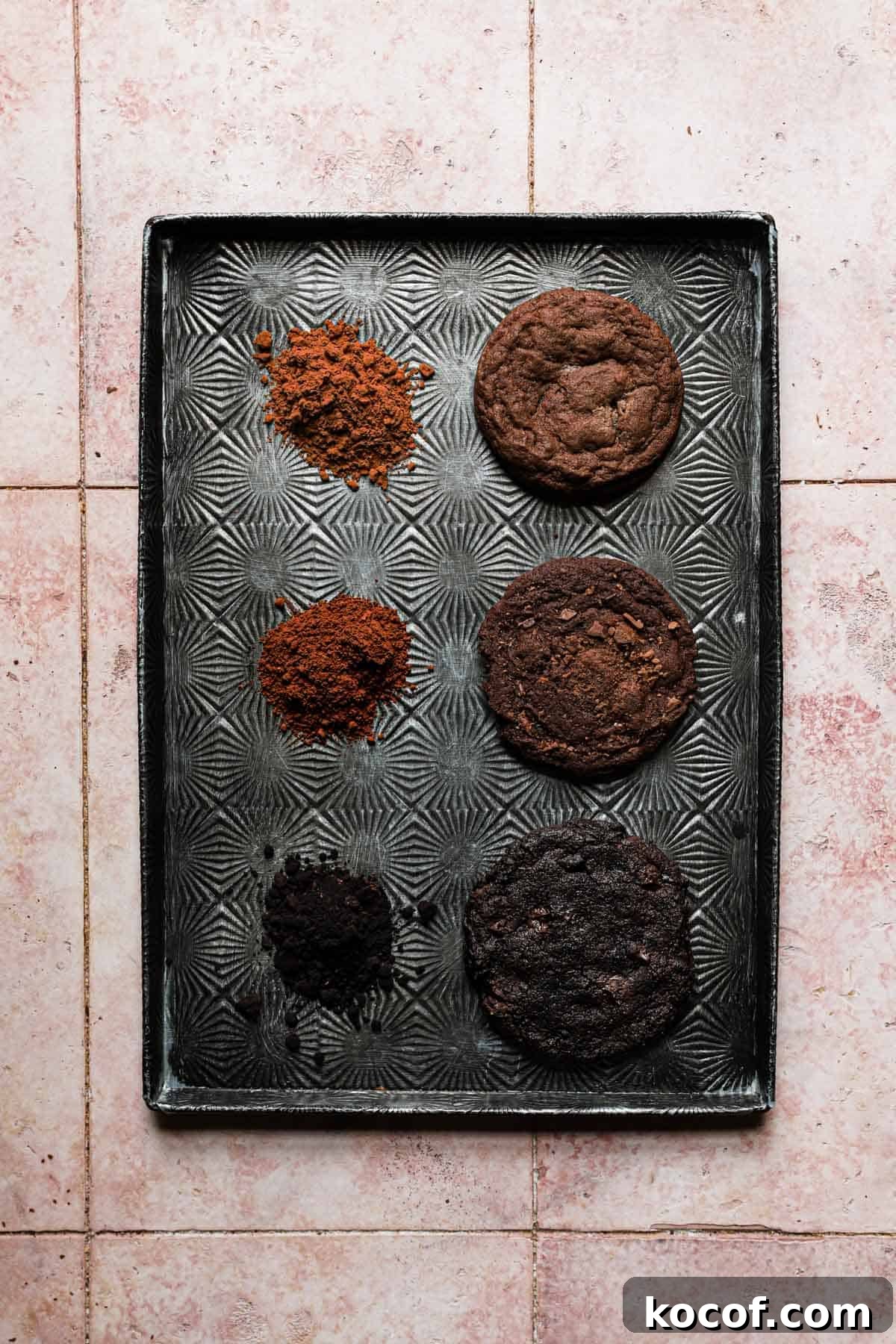
Practical Example: Cookies Baked With Different Powders
I baked the same cookie recipe three times using natural, Dutch-process, and black cocoa powders. Each produced different color, spread, and bake time:
- Natural (top): Lighter color, puffed more due to acidity activating baking soda, baked faster and had a subtle chocolate taste.
- Dutch (middle): Darker color, spread more and required a couple extra minutes in the oven, with a richer chocolate flavor.
- Black (bottom): Deepest color and greatest spread; required longer bake time and resulted in a drier texture if overbaked.
Different Types
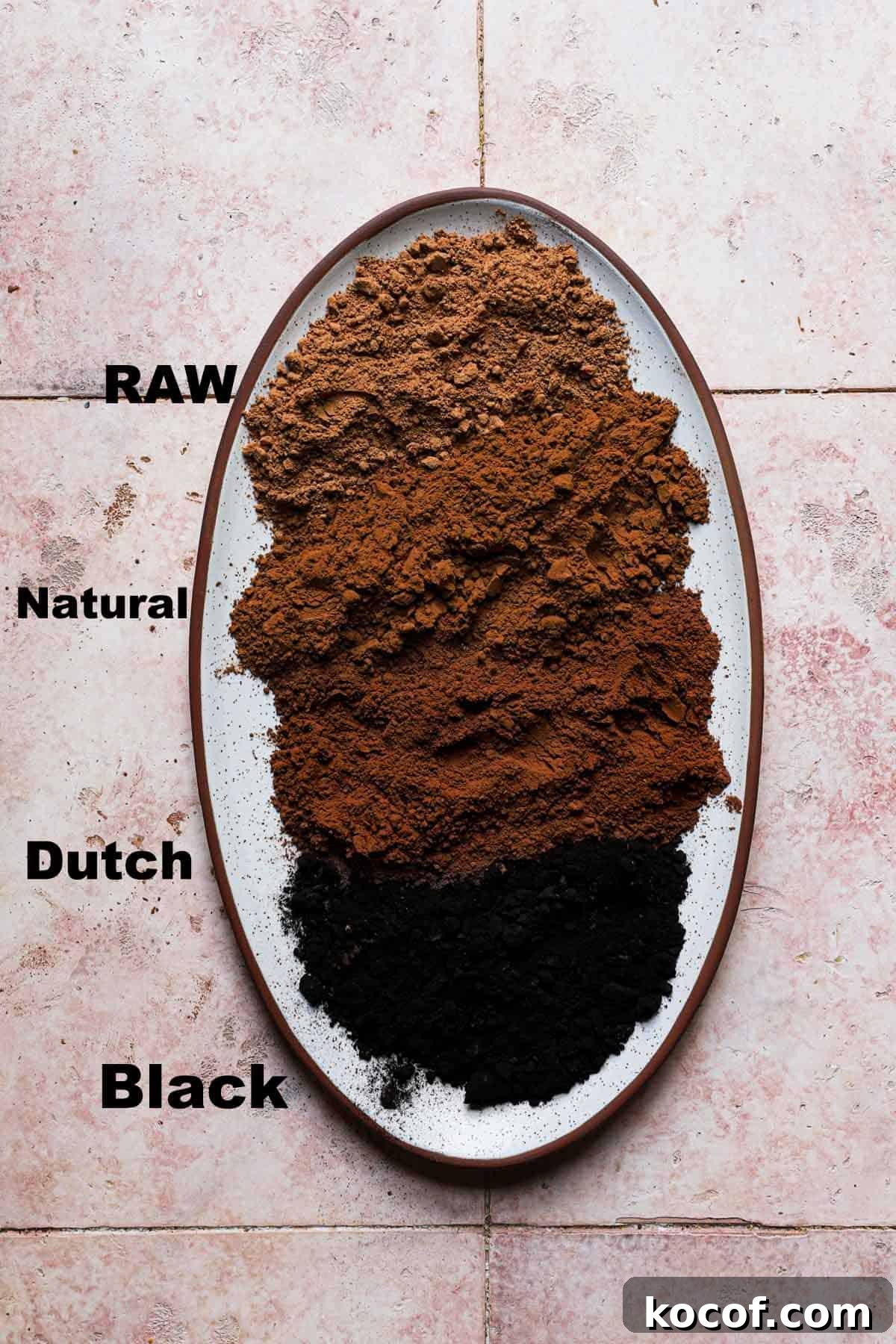
Cocoa powder comes in several varieties, each with distinct flavor, color, and chemical properties that influence baking results.
Natural
How it is made
Produced by pressing chocolate liquor to remove cocoa butter and milling the remaining solids into a fine powder.
pH level
About 5–6 (acidic). Reacts with baking soda to help leavening.
Appearance and taste
Fine red-brown powder with bold, slightly bitter chocolate flavor.
Baking tips
Use baking soda to react with its acidity. A general guideline is 1/4 teaspoon of baking soda per 1/3 cup of natural cocoa, but always follow the recipe’s overall chemistry.
Where to buy
Common in most grocery stores in the baking aisle.
Dutch Process
How it is made
Natural cocoa treated with an alkaline solution (dutching) to neutralize acidity.
pH level
Around 7 (neutral).
Appearance and taste
Smoother, darker brown with a mellower chocolate flavor.
Baking tips
Because it’s neutral, it won’t activate baking soda. Use baking powder or another acid if a recipe depends on chemical leavening.
Where to buy
Widely available; check labels for “alkalized” or “Dutch-processed.”
Black Cocoa Powder
How it is made
Alkalized multiple times to produce an intensely dark, near-black powder.
pH level
Typically between 7 and 8 (alkaline).
Appearance and taste
Very dark color with a milder, less acidic chocolate flavor.
Baking tips
Use sparingly to achieve dramatic color; it won’t react with baking soda. Because black cocoa has less fat, it can alter texture—swap up to about 1/4 of the cocoa called for with black cocoa for best results.
Where to buy
Often found in specialty food stores or online.
Raw Cacao Powder
How it is made
Made from unroasted or minimally heated cacao beans and processed to retain more natural compounds.
pH level
Similar to natural cocoa (acidic) and will react with baking soda.
Appearance and taste
Lighter brown, slightly more bitter and less developed in classic roasted chocolate notes.
Baking tips
Because roasting develops much of chocolate’s deep flavor, raw cacao may produce a different, less intense chocolate profile in baked goods.
Where to buy
Available at health food markets and many grocery stores.
What Is The Best Cocoa Powder For Baking?
There’s no single “best” cocoa powder. The right choice depends on the recipe and the flavor, color, and texture you want. Natural cocoa gives brighter, tangier results and works with baking soda. Dutch-process offers smoother, richer flavor and deeper color but needs neutral leavening. Black cocoa provides dramatic color for cookies and decorations. Consider each powder’s pH and fat content when adapting recipes.
Storing
Store cocoa powder in a cool, dry place in an airtight container away from strong odors and heat. Proper storage preserves flavor and prevents clumping.
I hope this guide helped clarify what cocoa powder is and how to use it. With a little attention to type and chemistry, you can choose the best cocoa for your cakes, cookies, brownies, and other chocolate treats.
More chocolate recipes you might like
Matcha Brownies, Chocolate Covered Pecans, Chocolate Covered Graham Crackers, S’mores Pies, Brownie Pizza.
Did you find this useful?
If you tried a recipe from One Sarcastic Baker, please rate and comment at the end of the recipe. Your feedback and questions are valued and help improve future posts. You can also tag me on Instagram.