The bright white paint on the walls was cleaner and the lighting a little softer than one might expect in such a place, but there was no doubt this was a prison cell — temporarily transformed into a pop-up restaurant for one weekend by the food collective We, the Animals.
The evening felt strange from the start. We sat on the steps outside the Henry Moore Institute, watching a northern city move from the last glare of daylight into the early hours of night — that odd crossover time when workers head home and the evening crowd begins to emerge. We tried to spot others who knew the Town Hall’s secret that night, but there were few signs of the crowd we’d imagined. For a moment I wondered whether we might be alone or that the whole thing would be a flop, as pop-ups sometimes are. A hopeful sign arrived when I saw an advance party from Laynes Espresso carrying equipment toward the Town Hall, so I knew at least the coffee would be in good hands.
The first real surprise was discovering there really is a jail beneath the Town Hall. When I booked tickets to this We, the Animals event I half-expected a theatrical set or a cleared-out basement pretending to be a cell, but these rooms had clearly served as a correctional facility. Iron rings set into the walls hinted at how Victorian inmates were restrained, and the cell door had a weight and presence that suggested it tolerated no nonsense.
The prison is small — just a run of three compact cells in the basement, down a passage next to the main steps and beneath a weathered stone lion. These cells were used as late as the early nineties as an overflow drunk tank, likely because of their proximity to the city’s busiest bars, and earlier they held people awaiting magistrates upstairs. The walls felt like they could tell countless stories.
For the pop-up, each of the three cells, the connecting corridors and a makeshift bar were dressed in bunting made from pages of a Dickens novel, with rope lights and candles softening the harsh brick and the claustrophobic architecture. The effect warmed the space and made it unexpectedly welcoming, while retaining a faintly eerie edge.
We sat in the middle cell with six or seven others at a large table that filled the room. Then the food began to arrive: warm homemade bread with peppery radishes and sea-salted butter; a heritage tomato gazpacho, ice-cold and pristine; spring onions charred on a griddle and served with a Calcot-style sauce; and Coeur-de-boeuf tomatoes so excellent that the anchovies and marjoram on top felt almost superfluous.
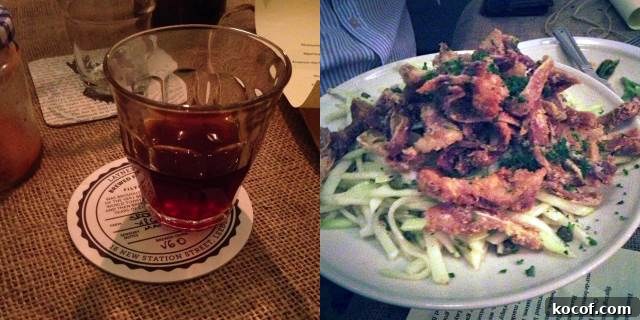
The dishes kept coming: raw courgettes dressed with lemon and borage, skewers of lamb’s liver crusted in cumin, quick-seared mackerel fillets cooked on a bed of bay leaves whose scorched scent married garden and sea, and thinly sliced pig’s ears, deep-fried to crisp, gelatinous perfection.
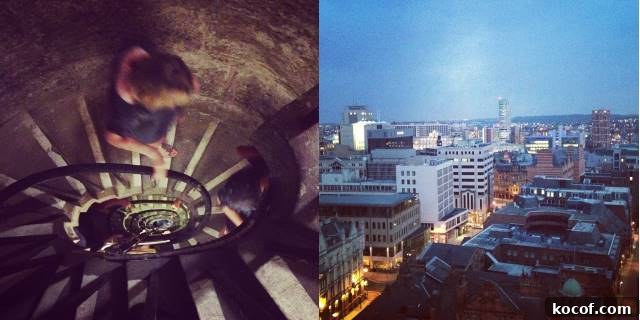
Partway through the evening we climbed to the top of the clock tower, standing before the massive clock faces and looking out over the city’s rooftops as the sun set. Leeds’ skyline — a blend of Victorian grandeur and modern ambitions — took on the cool blue tones of twilight.
Back in the basement there were bowls of cherries on ice, madeleines and fresh berries, a strawberry gazpacho and Laynes’ excellent coffee, served with a note describing the origin of the beans. The menu was seasonal and perfectly suited to a hot day: bright, clean flavours and varied textures that relied on outstanding ingredient quality. It was a clear demonstration of the principle that sourcing superb produce and cooking simply forms the basis of any memorable meal.
Writing about We, the Animals struggles to capture the full brilliance of the night — the way location, presentation, service and food combined so effectively. Executing a meal for many people in such an unusual environment must have been logistically challenging, yet everything ran like clockwork: a slick, well-planned and professional operation.
The evening left me inspired by the cooking — how flavours were balanced, when ingredients were coaxed and when they were left to speak for themselves. I was impressed by the ingenuity required to present such a menu in so unconventional a venue. That kind of courage deserves admiration and celebration.