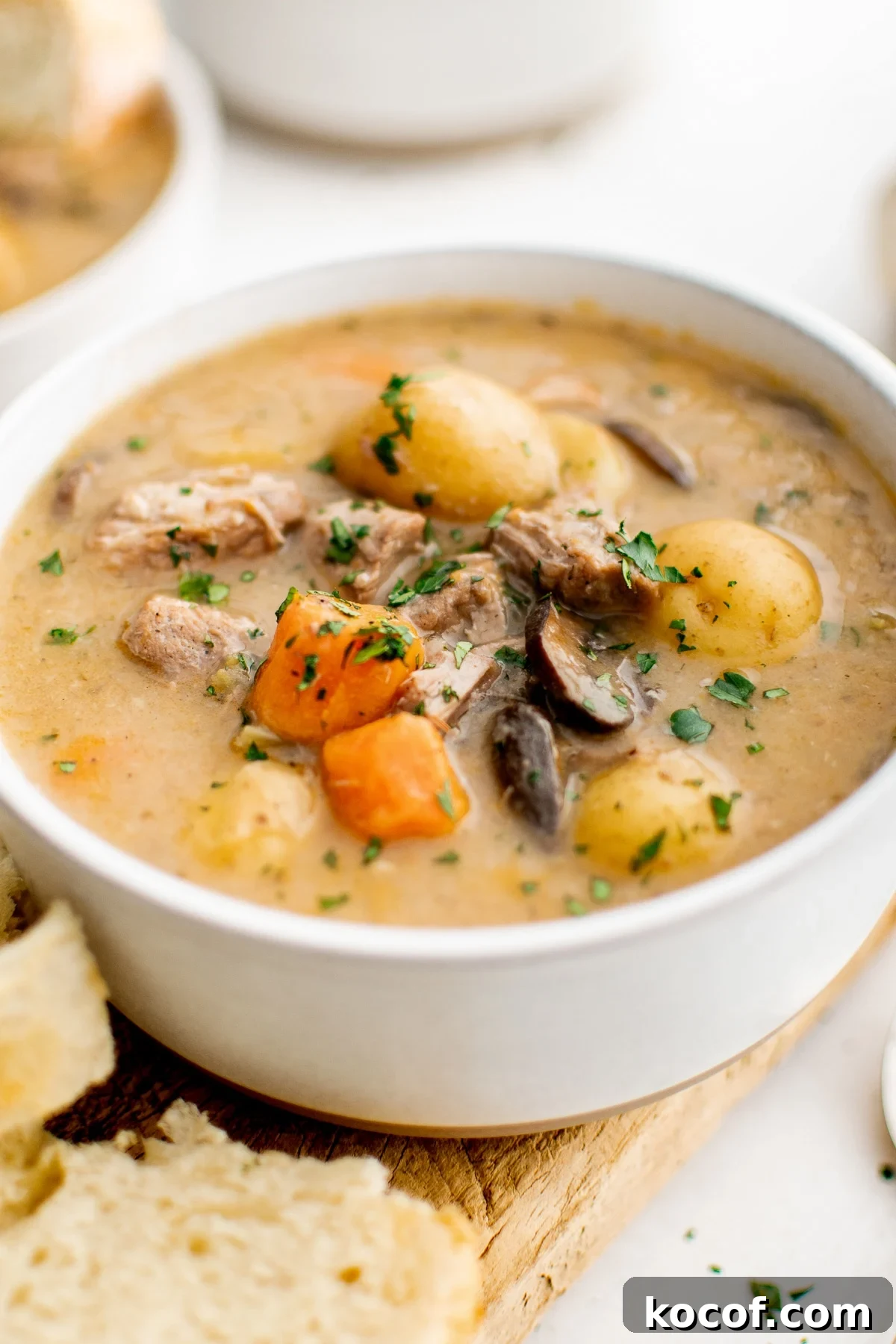
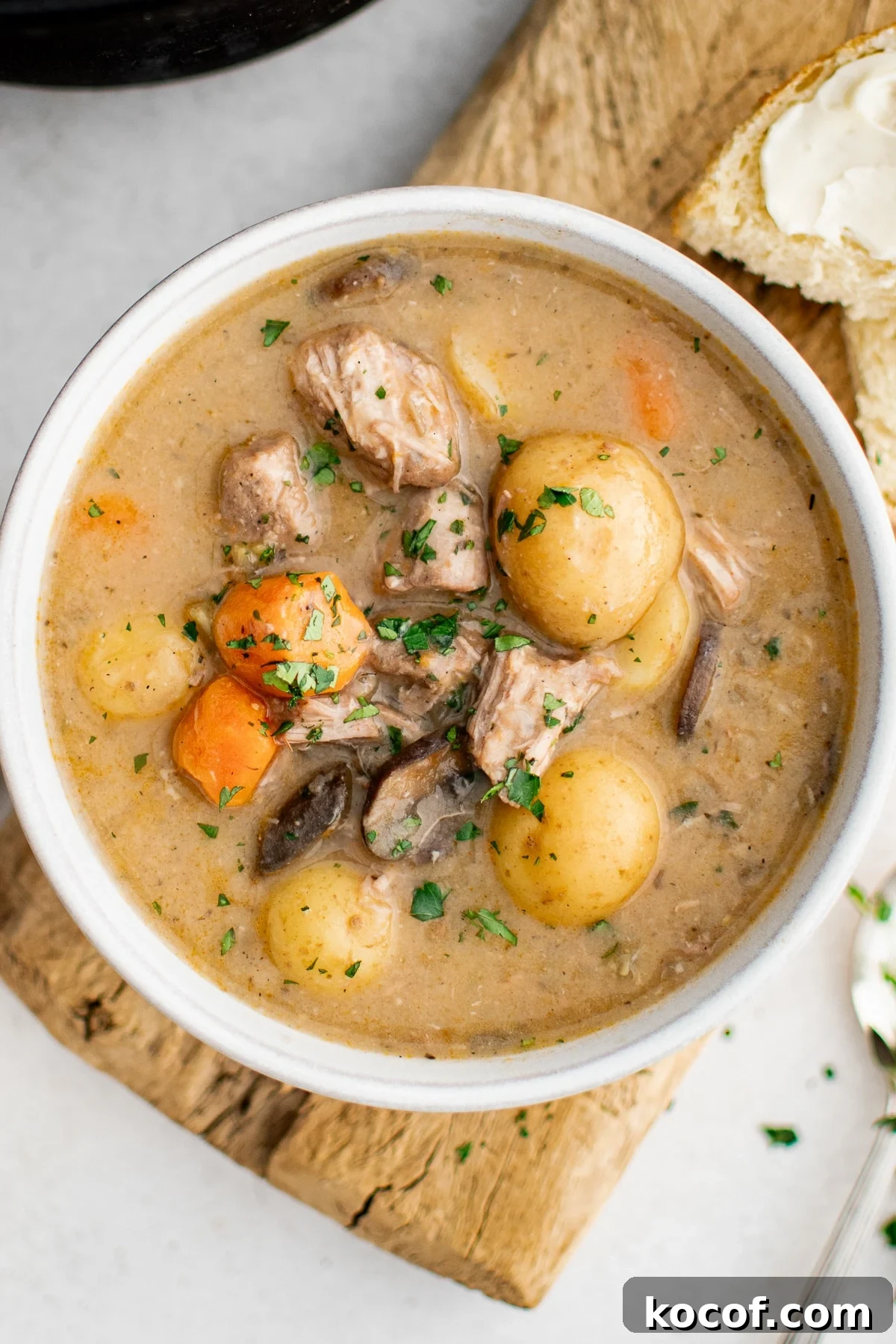
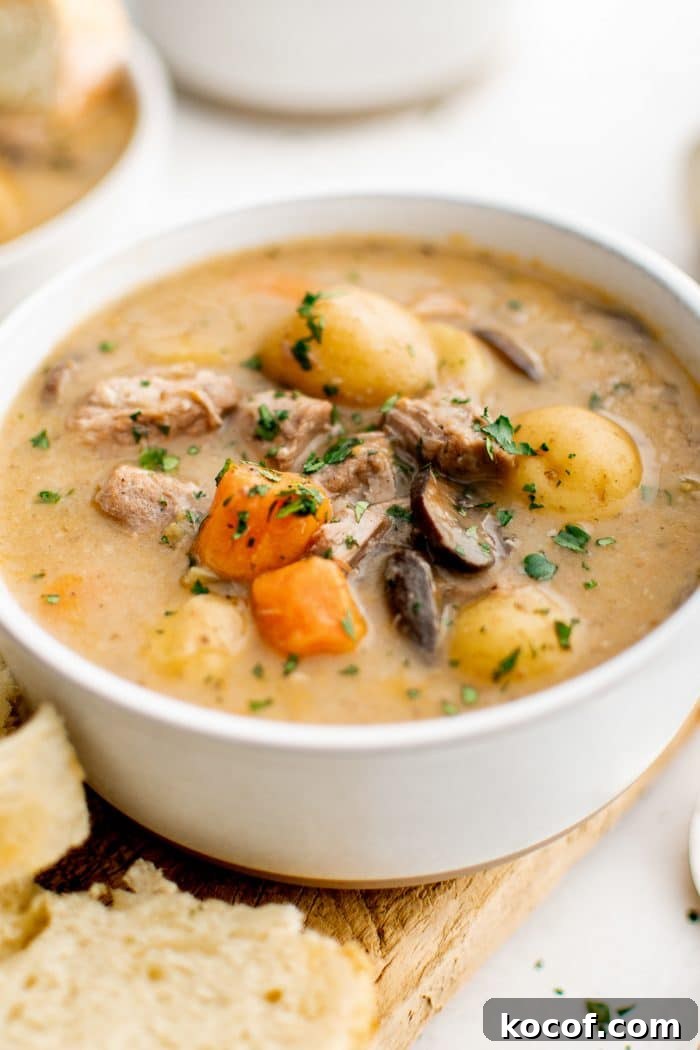
Loaded with mushrooms, dry white wine, and savory root vegetables, this comforting Stovetop Pork Stew delivers tender pork in a rich, gravy-like broth. An easy one-pot dinner that warms you from the inside out.
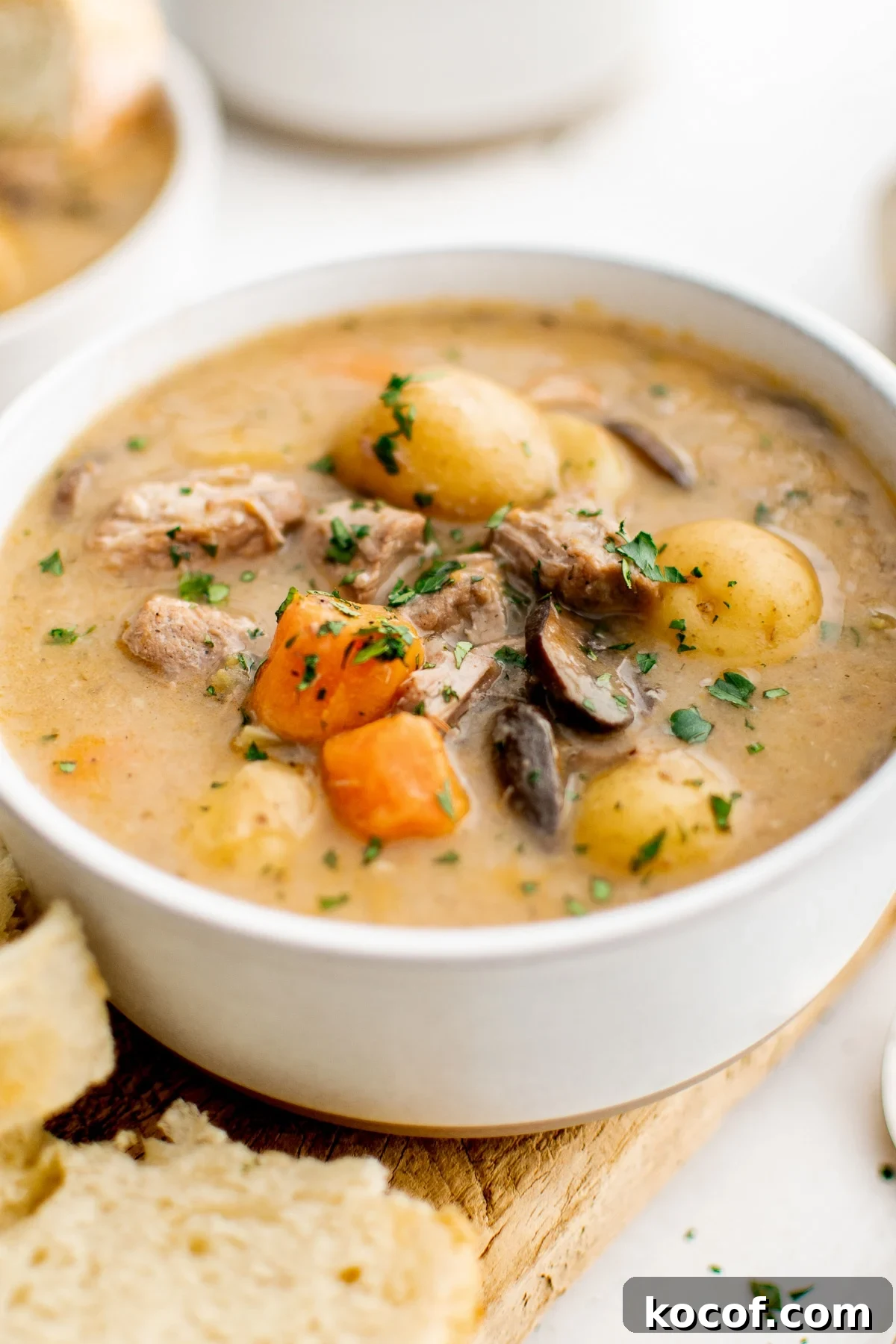
This classic stovetop pork stew is a hearty, feel-good meal made for chilly nights and hungry families. Filled with melt-in-your-mouth pork and tender vegetables, the stew builds deep savory flavor from dry white wine, mushrooms, and a touch of Dijon. It’s straightforward to make, economical, and tastes even better the next day.
It’s easy to adapt—swap vegetables you already have on hand and still end up with a cozy dinner everyone will enjoy. The best part: everything cooks in one pot and leftovers reheat beautifully.
Table of Contents
- Pork Stew Ingredients + Substitutions
- How to Make Pork Stew
- Jessica’s Recipe Tips
- How to Serve Pork Stew with Mushrooms
- Leftovers and Freezing
- More Hearty Stew Recipes
- Stovetop Pork Stew Recipe
Pork Stew Ingredients + Substitutions
This stovetop pork stew uses simple, everyday ingredients but results in a dish that tastes like it simmered for hours. Browning the pork first, then simmering with white wine, mushrooms, and a touch of Dijon produces a savory, gravy-like broth with garlic and herb notes.
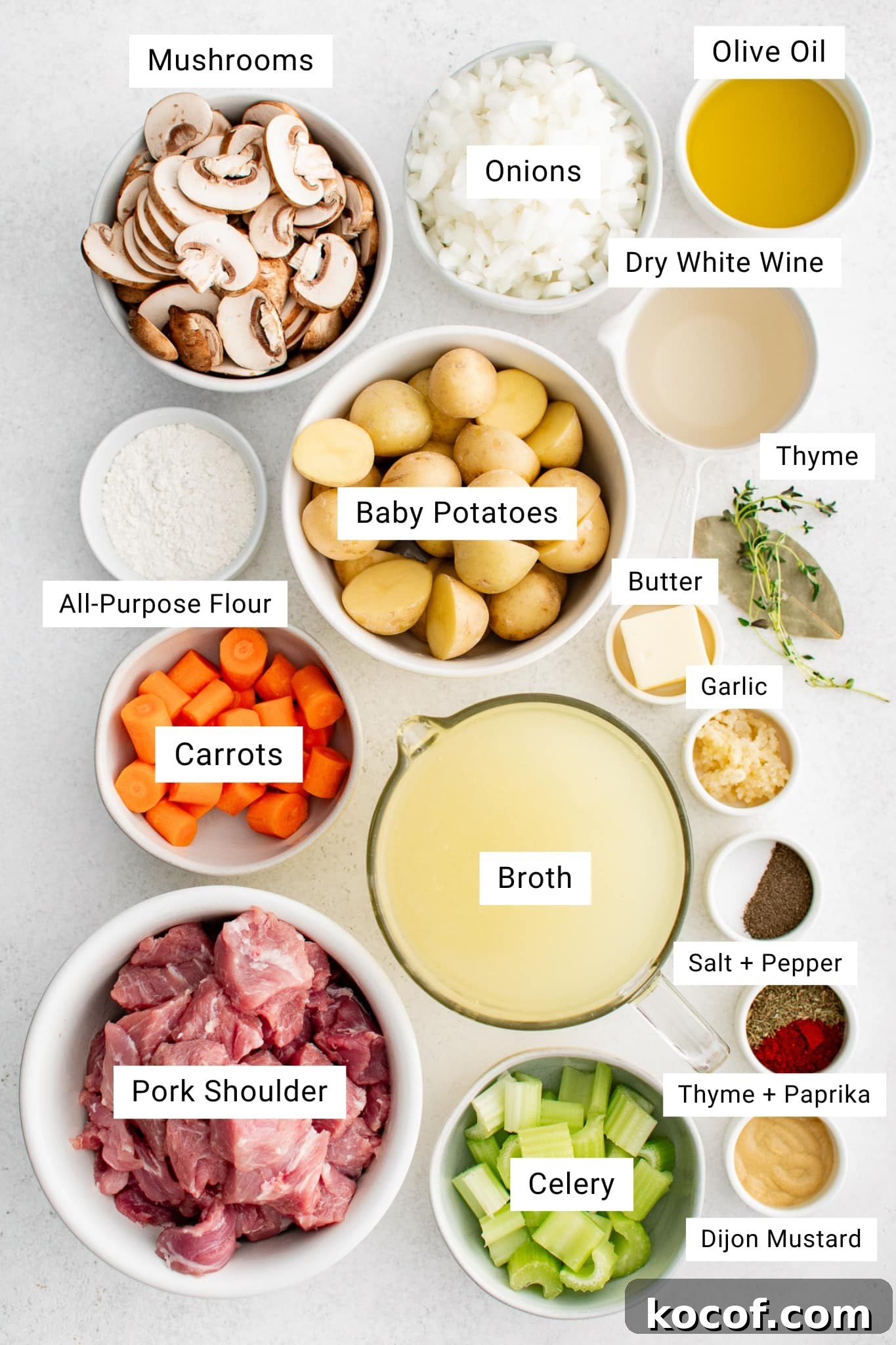
- Pork stew meat – Use pork butt (Boston butt) or pork shoulder cut into 1–2 inch chunks for best results. These well-marbled cuts stay moist during simmering and become tender.
Pro Tip: Avoid lean cuts like pork loin, tenderloin, or most pork chops for stew—they can dry out and become chewy.
- Dry white wine – A splash of dry white wine lifts the browned bits from the pot and adds depth. Choose a crisp, dry wine such as Sauvignon Blanc, Pinot Grigio, or an unoaked Chardonnay. Substitute: extra broth plus 1 tablespoon white wine vinegar or lemon juice to brighten the flavor.
- Olive oil + butter – Using both prevents butter from burning while adding a rich, savory finish to the stew.
- Carrots, celery, and onions – This classic mirepoix forms the flavor base. As they soften, they add natural sweetness and body to the broth.
- All-purpose flour – Flour coats the pork and helps thicken the broth into a gravy-like consistency. Substitute: a 1:1 gluten-free flour blend, or thicken at the end with a cornstarch slurry (1 tbsp cornstarch + 1 tbsp cold water).
- Garlic – Fresh minced garlic is best. If needed, use 1/4 teaspoon garlic powder per clove and add with the dried seasonings.
- Mushrooms – Cremini or button mushrooms add earthy umami that deepens the stew’s flavor and makes it taste slow-cooked.
- Dijon mustard – A small amount brightens and balances the richness without making the dish taste strongly of mustard. Whole grain mustard can substitute, or 1–2 tsp yellow mustard in a pinch.
- Thyme – Fresh and dried thyme gives a classic herbaceous note that pairs well with pork and mushrooms. If substituting, rosemary is stronger (use less) and sage leans more “holiday.”
- Seasoning and spices – Salt, black pepper, paprika, and bay leaf round out the flavor.
- Potatoes – Baby potatoes hold their shape and cook evenly. Yukon Gold or red potatoes are good alternatives; russets will be softer and may break down more.
Pro Tip: Cut larger potatoes into similar-sized pieces so they cook evenly.
- Broth (chicken or vegetable) – Broth is the primary cooking liquid. Use low-sodium if possible so you can control final seasoning.
How to Make Pork Stew
Prep the pork shoulder: Trim excess fat and cut into roughly 1-inch pieces. Pat dry and season with salt and pepper.
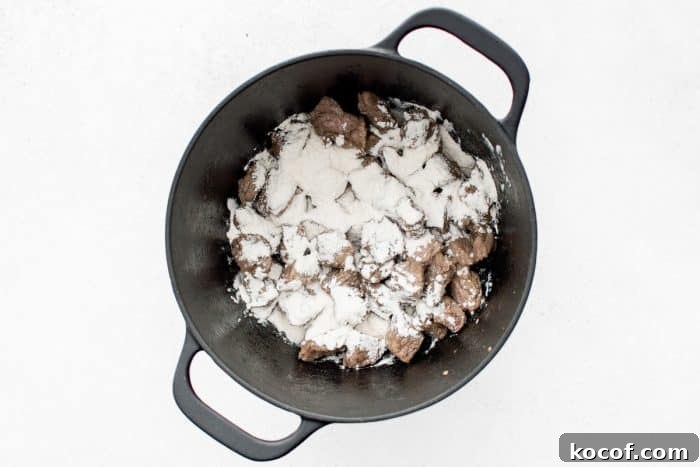
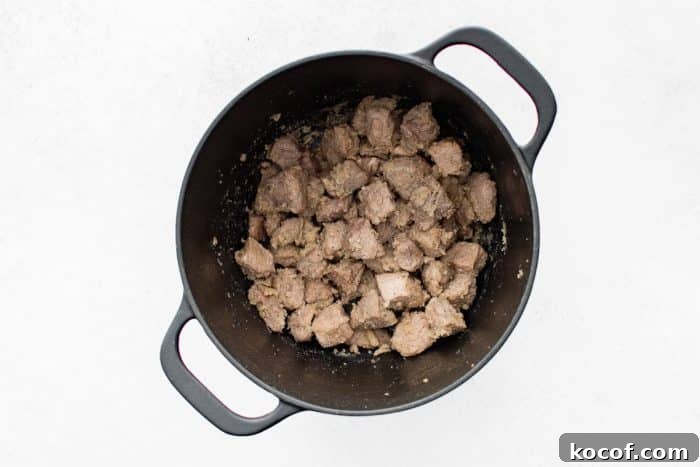
Brown the pork: Heat 2 tablespoons olive oil in a large heavy pot or Dutch oven over medium-high heat. Brown pork in batches until golden, then set aside.
Add flour: Return the pork to the pot and sprinkle with 1/3 cup flour, tossing to coat. Cook about 1 minute to remove the raw flour taste, then transfer pork to a plate.
Deglaze and add butter: Pour in 1/2 cup dry white wine and scrape up browned bits from the bottom of the pot. Stir in 3 tablespoons butter until melted.
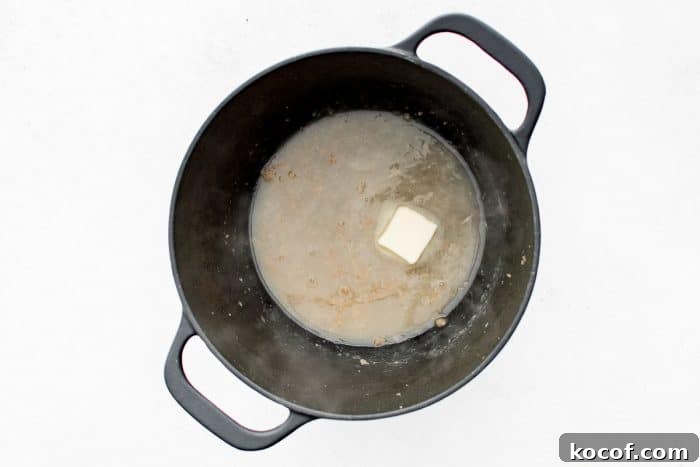
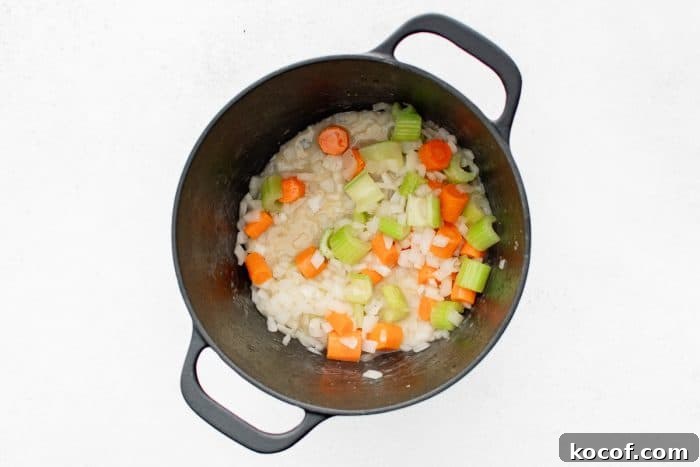
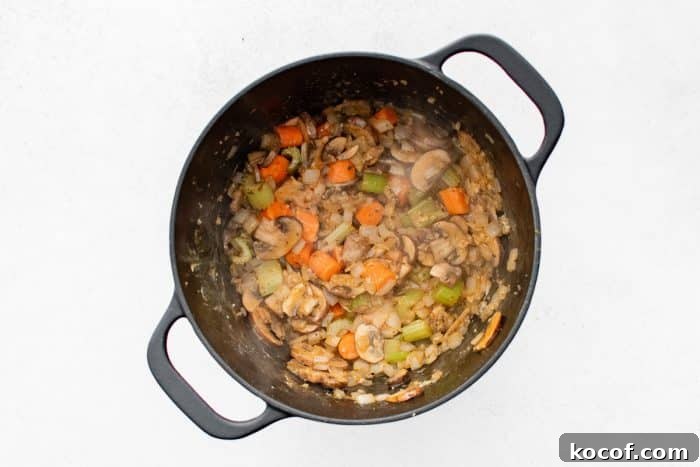
Sauté the vegetables: Add onion, carrots, and celery. Cook 4–5 minutes until the onion softens and the vegetables look glossy.
Add mushrooms, garlic, and seasonings: Stir in mushrooms and cook until they release moisture. Add minced garlic, 1 tsp dried thyme, fresh thyme sprigs, 1 tsp paprika, and the bay leaf; stir for about 30 seconds until fragrant.
Stir in the Dijon: Add 1 tablespoon Dijon and mix to coat the vegetables, cooking another minute.
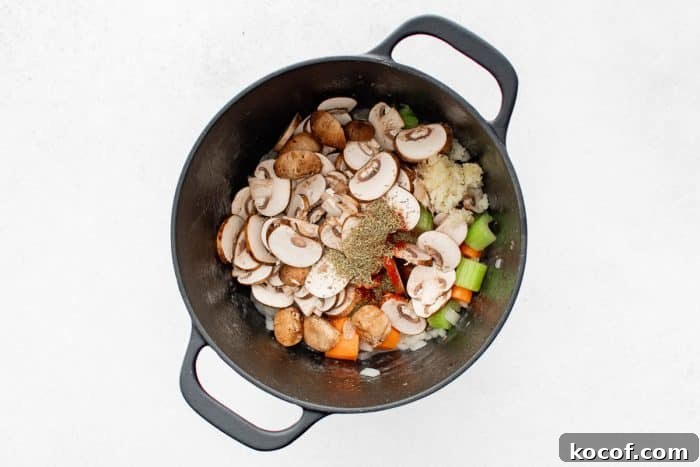
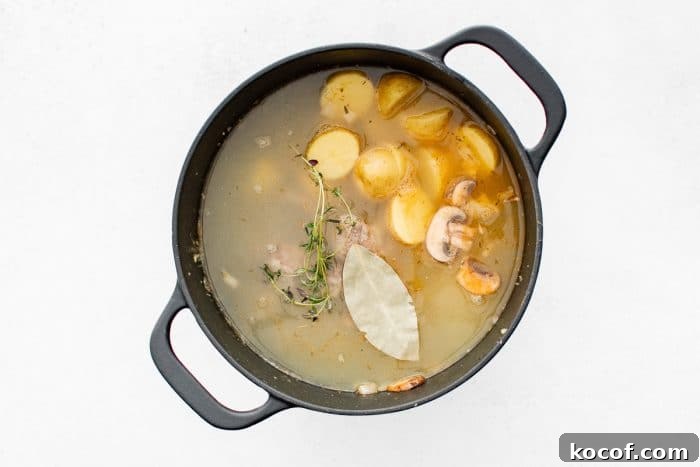
Add broth, potatoes, and herbs: Pour in 4 cups of broth, add halved baby potatoes, the bay leaf, and thyme sprigs if using fresh. Return the pork and any accumulated juices to the pot. Bring to a gentle simmer.
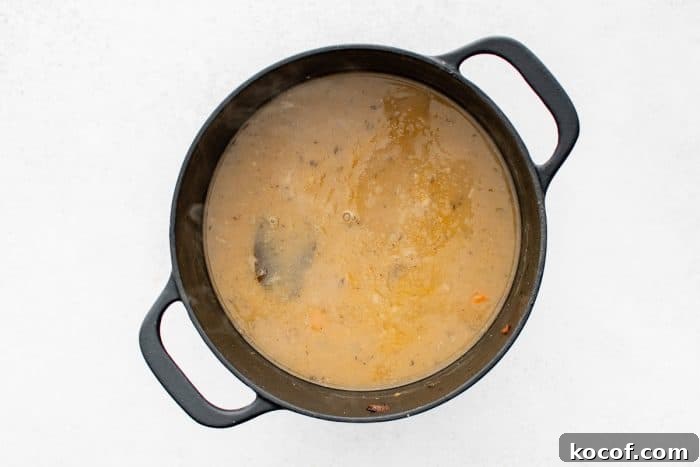
Simmer until tender: Reduce heat to low, cover, and simmer 75–90 minutes, stirring occasionally, until the pork is fork-tender and the potatoes are cooked through. The broth will reduce and thicken into a gravy-like stew. Remove bay leaf and thyme sprigs, then adjust seasoning to taste.
Jessica’s Recipe Tips
- Use pork butt or shoulder: The fat marbling keeps the meat tender during long simmering.
- Deglaze properly: Scrape the bottom of the pot after adding wine so you lift the flavorful browned bits into the sauce.
- Keep a gentle simmer: Avoid a hard boil to prevent tough pork and falling-apart potatoes.
- Let it rest: A 10-minute rest off the heat allows the gravy to thicken slightly and flavors to meld.
Want a thicker gravy? Simmer uncovered for the final 10–15 minutes or mash a few potatoes against the pot side and stir them back in.
How to Serve Pork Stew with Mushrooms
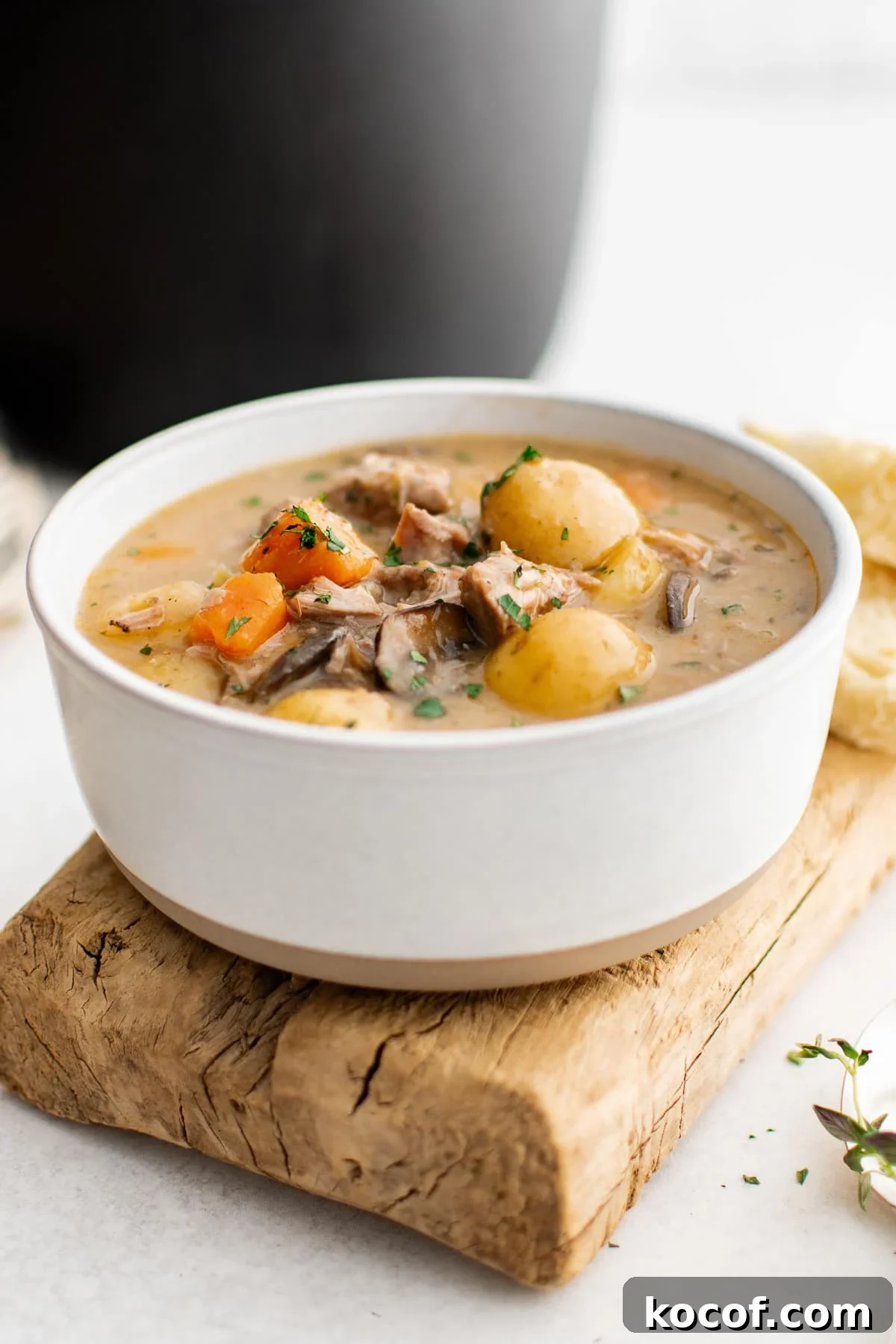
Serve with crusty bread to soak up the gravy, flaky buttermilk biscuits, or a slice of sweet cornbread. A fresh seasonal salad or simply roasted vegetables are nice lighter sides to balance the richness. This stew also pairs well with roasted Brussels sprouts, roasted zucchini, or air-fried green beans.
Leftovers and Freezing
Leftovers develop even more flavor after resting overnight. Cool to room temperature, then store in an airtight container.
- Refrigerator: Keep for up to 4 days. Reheat gently on the stovetop over medium-low heat or in the microwave. Add a splash of broth or water if the gravy thickens too much.
- Freezing: Freeze in airtight, freezer-safe containers for up to 3 months. Thaw overnight in the refrigerator before reheating.
Reheating tip: Warm slowly over low heat to keep the pork tender and prevent the potatoes from breaking apart.
More Hearty Stew Recipes
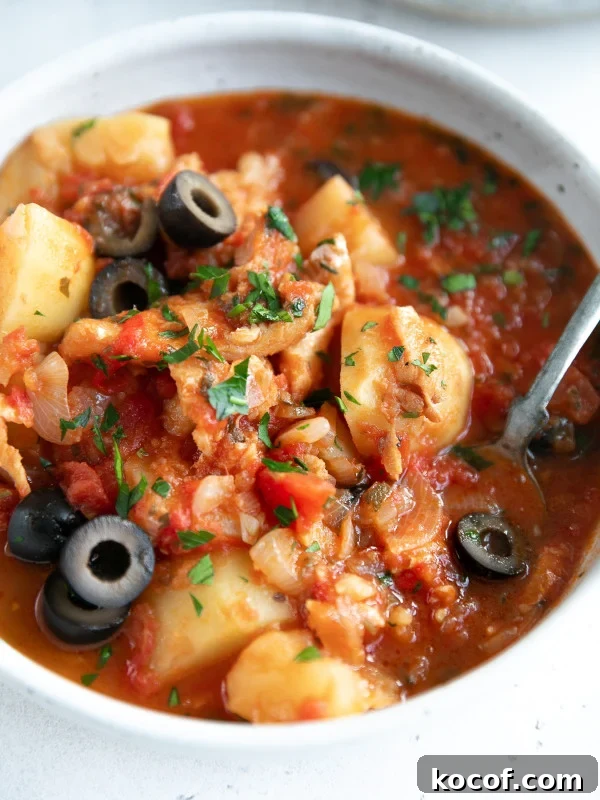
Norwegian Salt Cod Stew (Bacalao)

Cioppino Recipe (Seafood Stew)
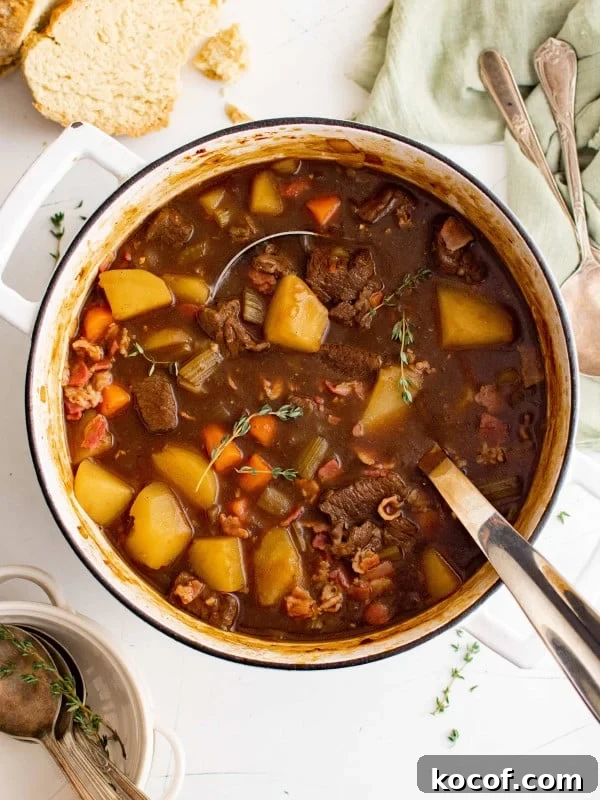
Guinness Beef Stew
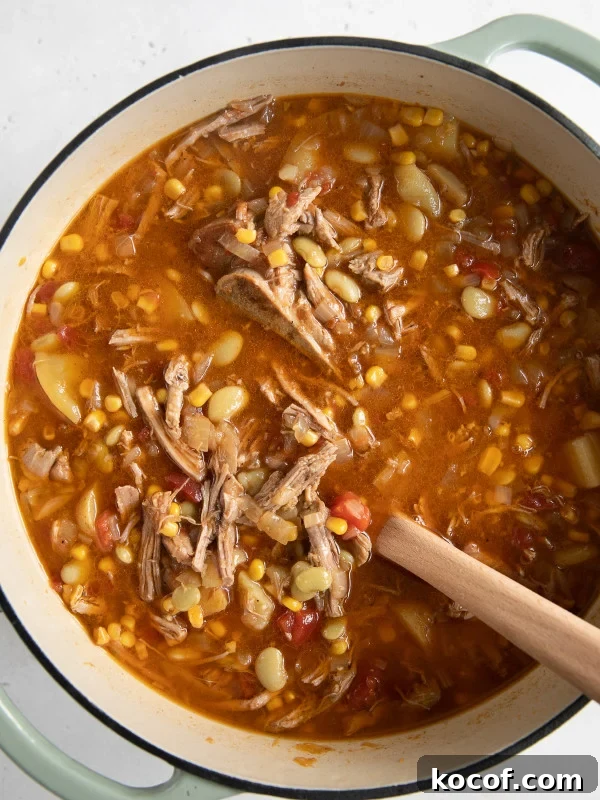
Brunswick Stew
Prefer the slow cooker? A slow-cooker pork shoulder makes another easy, comforting meal when you want dinner to cook itself.
If you try this stovetop pork stew, please leave a comment and a rating — your feedback helps others find and enjoy the recipe. Thank you!
Stovetop Pork Stew
 Jessica Randhawa
Ingredients
- 3 pounds pork shoulder (or pork butt), cut into 1 to 1½-inch chunks
- 1 teaspoon salt, plus more to taste
- ½ teaspoon black pepper, plus more to taste
- 2 tablespoons olive oil
- ⅓ cup all-purpose flour
- ½ cup dry white wine (or extra broth)
- 3 tablespoons unsalted butter (or more olive oil)
- 1 large yellow onion, diced
- 3 large carrots, peeled and cut into chunks
- 2 celery ribs, chopped
- 8 ounces mushrooms, sliced (cremini or button)
- 4 cloves garlic, minced
- 1 teaspoon dried thyme
- 2 sprigs fresh thyme
- 1 teaspoon paprika
- 1 tablespoon Dijon mustard
- 1 bay leaf
- 4 cups chicken or vegetable broth, low sodium if possible
- 1½ pounds baby potatoes, halved (or quartered if large)
- Chopped fresh parsley, for garnish (optional)
Instructions
- Season and brown the pork: Pat pork dry and season with salt and pepper. Heat 2 tablespoons olive oil in a large heavy pot or Dutch oven over medium-high heat. Brown pork in batches until golden, then transfer to a plate.
- Coat with flour: Return pork to the pot, sprinkle with ⅓ cup flour, and stir to coat. Cook about 1 minute, then remove the pork and set aside.
- Deglaze: Pour in ½ cup white wine and scrape up browned bits. Add 3 tablespoons butter and stir until melted.
- Cook the vegetables: Add onion, carrots, and celery. Cook 4–5 minutes until the onion begins to soften.
- Add mushrooms and aromatics: Stir in mushrooms and cook 3 minutes. Add garlic, 1 teaspoon dried thyme, fresh thyme, 1 teaspoon paprika, 1 tablespoon Dijon, and the bay leaf. Stir 30 seconds until fragrant.
- Simmer: Add broth and potatoes. Return pork and any juices to the pot. Bring to a gentle simmer, reduce heat to low, cover, and cook 75–90 minutes until pork is fork-tender and potatoes are done.
- Finish and serve: Remove the bay leaf, adjust seasoning with salt and pepper, garnish with parsley if desired, and serve hot.
Notes
To make this pork stew gluten-free: Replace all-purpose flour with a 1:1 gluten-free flour blend or thicken at the end with a cornstarch slurry (1 tbsp cornstarch + 1 tbsp cold water; stir into simmering stew and cook 3–5 minutes).
If you want a thicker stew: Simmer uncovered for the last 10–15 minutes, or mash a few potatoes against the pot side and stir them back in.
Storage: Cool completely, then refrigerate in an airtight container for up to 4 days. Reheat gently on the stovetop over medium-low heat, adding a splash of broth if needed.
Freezing: Freeze cooled stew in freezer-safe containers for up to 3 months. Thaw overnight in the fridge before reheating.
Nutrition
Calories: 575 kcal | Carbohydrates: 36 g | Protein: 60 g | Fat: 20 g | Saturated Fat: 7 g | Sodium: 633 mg
Nutrition information is an approximation.