
Vertical files in archives hold valuable information about your ancestors — from family Bible copies to previous family trees and unique local documents.
Some of the most exciting genealogy discoveries come from unexpected places — like vertical files housed in libraries and archives. These collections often yield unique items that bring family stories to life.
As a genealogy educator who emphasizes “out of the box” research methods, I’m frequently surprised by how few researchers include vertical files in their strategies. When I ask audiences whether they use these collections, only a few hands go up. That means many family historians miss opportunities to uncover rare and valuable material.
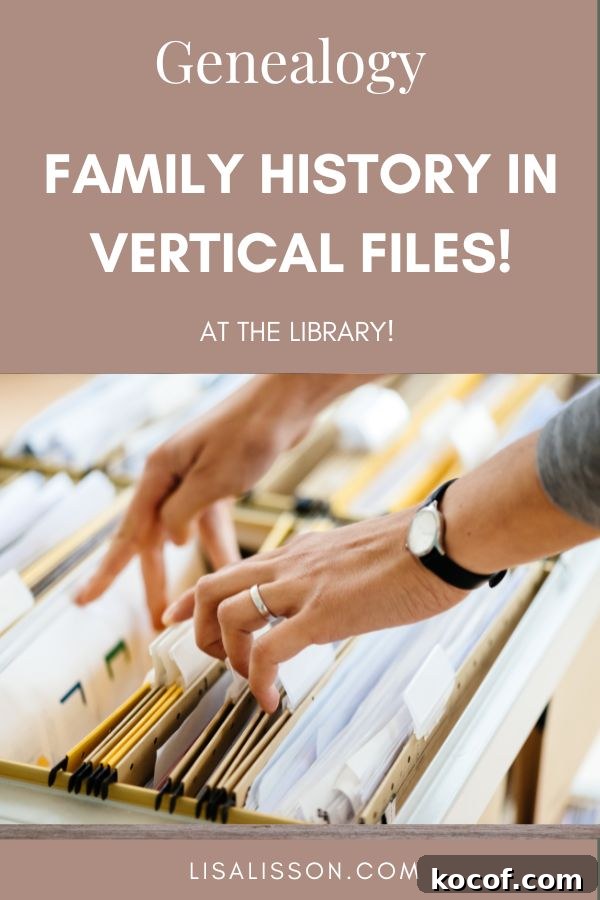
What Are Vertical Files?
Vertical files are collections of documents and ephemera organized around specific surnames, places, or topics that may not qualify as formal archival collections. Traditionally stored in vertical file cabinets, these materials are now preserved in a variety of formats depending on the repository.
Typical organization schemes include:
- Surnames
- Geographic locations (counties, towns, neighborhoods)
- Topics such as churches, schools, businesses, and local events
- Combinations of the above
Because vertical files are often not fully cataloged online, they retain an “analog” quality that makes them especially valuable: many items in these collections are one-of-a-kind and have not been digitized or indexed.
Why Vertical Files Matter in Modern Genealogy Research
In an era dominated by online databases, vertical files provide access to materials that digital resources often miss. Local historians, genealogists, and community members have donated papers, notes, and artifacts that capture the texture of daily life and family connections in ways official records cannot.
The greatest strength of vertical files is their hyper-local focus. While census records and vital statistics document official facts, vertical files preserve personal stories, local histories, and donated research that reveal how ancestors lived, worked, and interacted within their communities.
Many vertical files contain the research notes and correspondence of earlier genealogists. These notes can point to family connections, sources, or oral histories that are otherwise difficult to uncover. Finding a decades-old letter from another researcher, for example, can save you years of detective work.
Additionally, some materials may never be digitized due to copyright limits, privacy concerns, or sheer volume. Incorporating vertical files into your research opens the door to information invisible to those who rely solely on online searches.
When you approach a repository, ask the librarian or archivist how their vertical files are organized. If you’re searching for a specific topic — such as church records in a particular county — tell them. Staff can point you to relevant files and offer tips for navigating that repository’s system.
What’s Inside Vertical Files: Real Discoveries from the Archives
Vertical file contents range from mundane local notices to remarkable, irreplaceable records. On a recent visit to my local archive I encountered many examples that illustrate their value.
I visited the Lore Room at Cabarrus County Public Library in Concord, NC, where the Lore sisters collected extensive genealogical material on local families. Their vertical files include a wide variety of personal and community documents.
Family research materials are a common and valuable component: compiled family trees, pedigree charts, group sheets, and detailed research notes from local genealogists who spent years on particular family lines. These items often reveal family links that haven’t been added to online trees or databases.
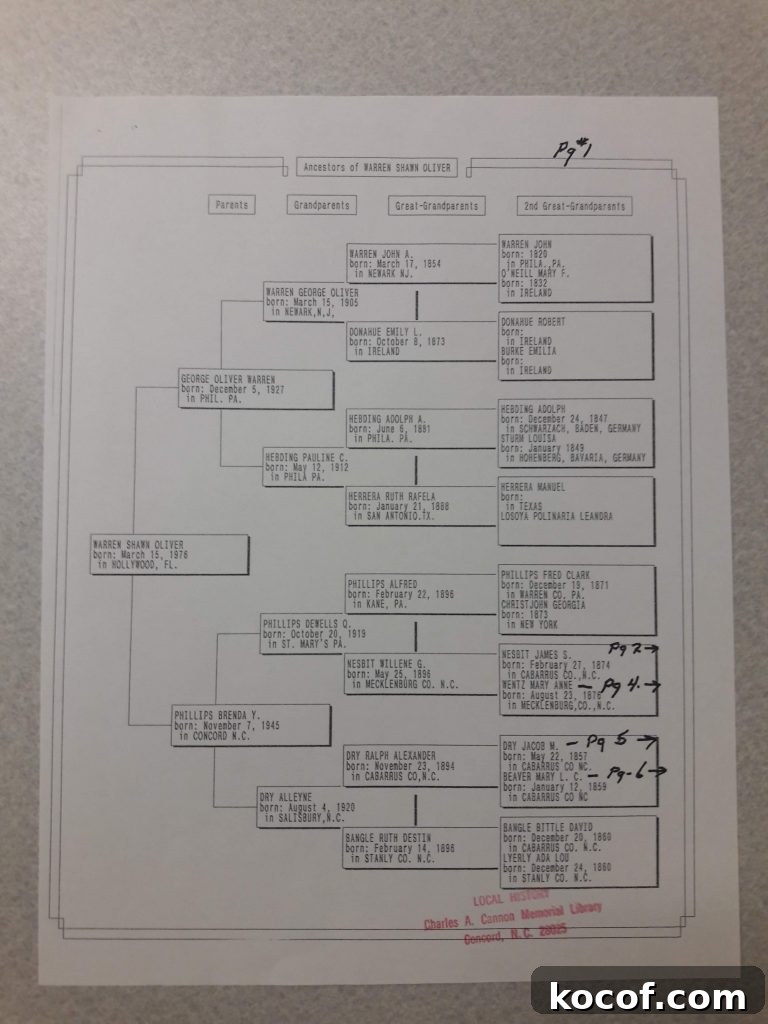
Correspondence between researchers and family members can be especially revealing. Letters often include names, relationship details, migration notes, and family anecdotes that provide important context and new leads.
Historical maps in vertical files can pinpoint where ancestors lived and owned land. Some maps include annotations identifying property owners, making it easier to place family members in a specific location at a specific time.
Photographs are often unique and sometimes original. Donated portraits and snapshots of community events give a visual dimension to family histories that written records can’t provide.
Church and religious materials — directories, written congregational histories, event programs, and membership lists — often surface in vertical files and can clarify religious affiliation, community ties, and social networks.
Local community history materials — event programs, business records, and social club notes — provide the broader context that helps explain ancestors’ daily lives and community roles.
Research Strategies for Vertical Files
Researching vertical files calls for patience and an exploratory mindset. Unlike targeted online searches, success often comes from broad inquiry and lateral thinking. Try these strategies:
- Start broad: Search by surname, then expand to associated family names and locations.
- Think laterally: Look for files on organizations, schools, churches, businesses, or events connected to your family.
- Document everything: Keep a log of what you searched and where, even when you find nothing; it prevents duplicate effort and helps track leads.
- Follow leads: Use names, dates, and references found in vertical files to guide searches in other repositories and databases.
Most vertical files remain undigitized, but there are exceptions. For example, the State Archives of North Carolina offers an online Genealogy Vertical Files Collection. However, searchable online collections are rare; in-person visits or direct contact with repositories are usually necessary.
Taking Action
Ready to use vertical files in your research? Follow these practical steps:
- Identify repositories and libraries in the places your ancestors lived that maintain vertical files.
- Check whether any relevant vertical file collections are available online before you travel.
- Plan visits to repositories with physical vertical files and coordinate with staff in advance.
- Connect with local genealogical societies that may maintain their own vertical file collections.
- Contribute your research to local vertical files to help future researchers and preserve community history.
Digital tools have transformed genealogy, but unique discoveries still live in traditional collections. Make vertical files part of your research routine and you’ll open access to sources many researchers overlook.
Other Posts of Interest:
- 14 of the BEST Genealogy Tips
- Uncommon Genealogy Resources – 6 “Outside of the Genealogy Box” Resources!
- How To Research “Out of the Box” Genealogy – (Round 2)
- 15 Places to Find the Genealogy Records You Need
- 31 Days of “Out of the Box” Genealogy Tips – Volunteer! — Check out the whole 31 Day series!